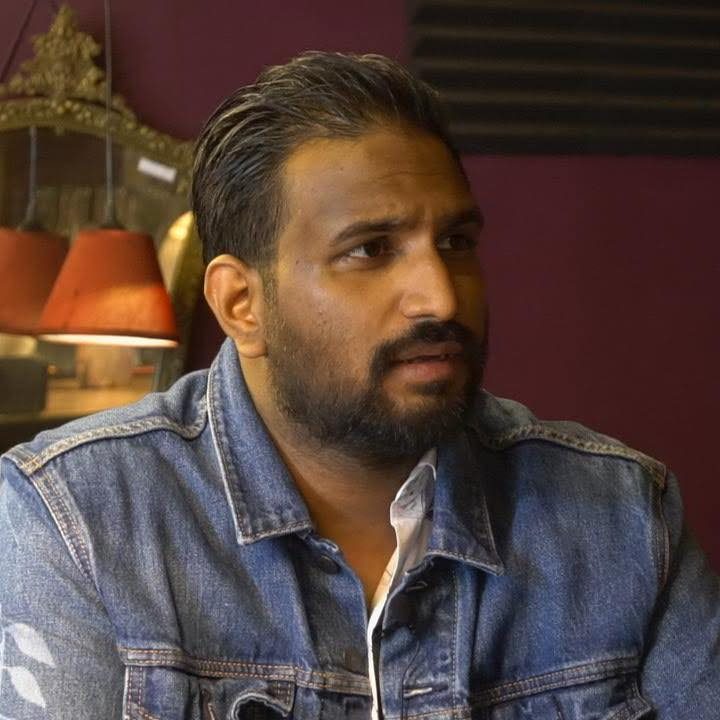
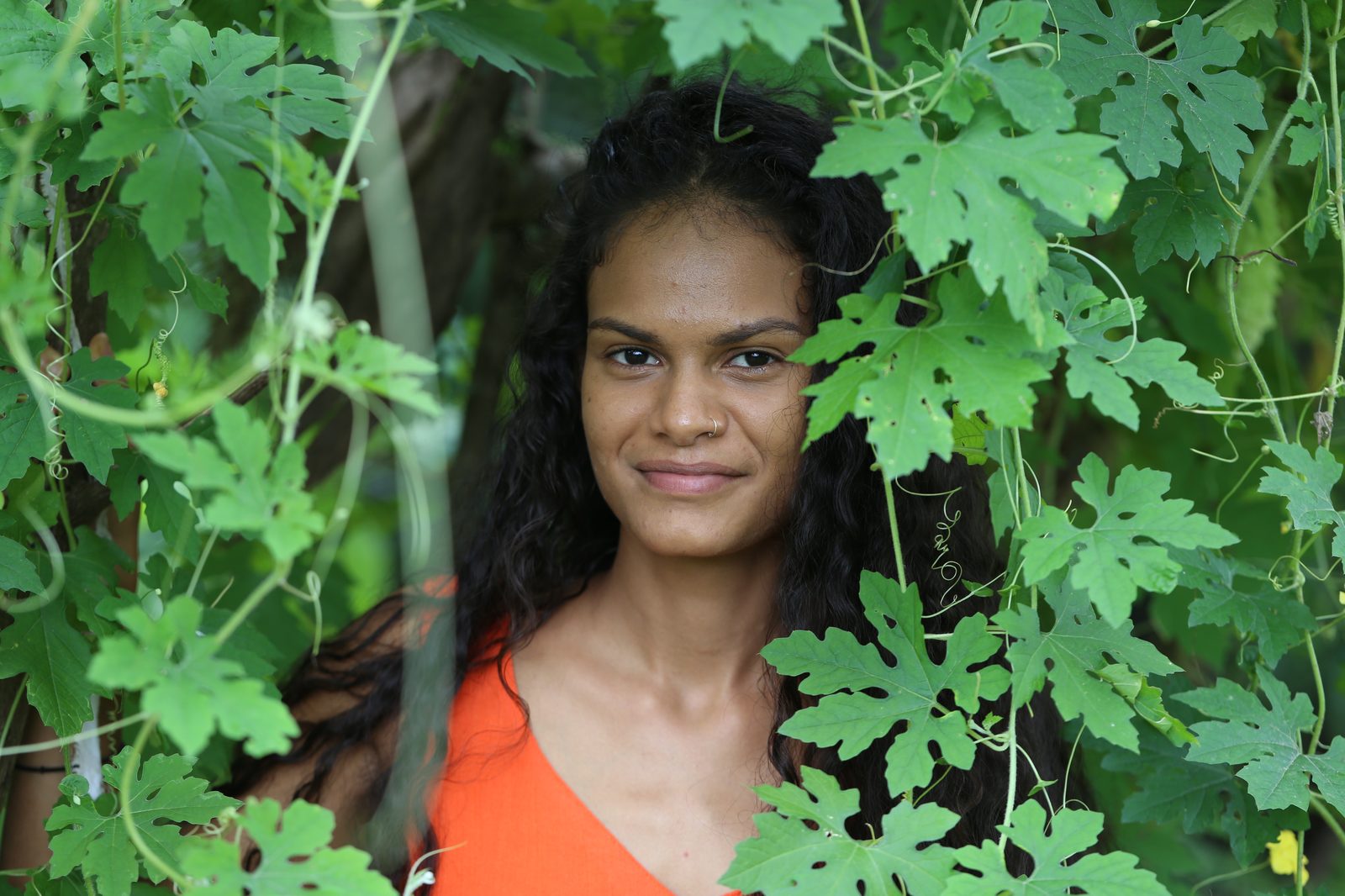
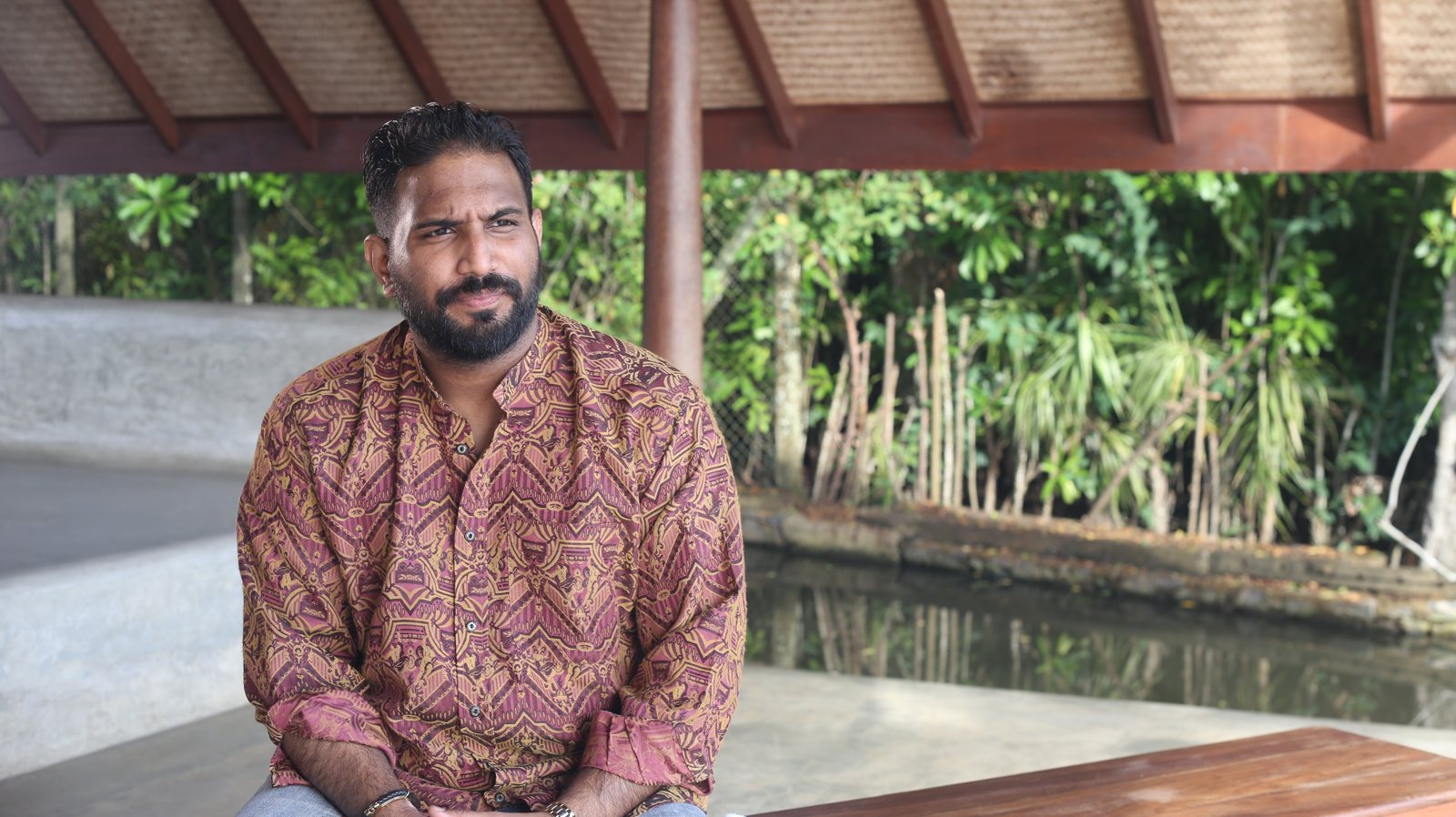
The first Dosage: Sri Lanka’s first digital video magazine, built around health, fitness and the way we live. Ten stories, most of them filmed by our video team as we reported it. Read them again here, with the films beside them.
“What we seek to do with Dosage is to create a space for novelty.”
We seek to create a cusp at which to convene information from various aspects of lifestyle and health, so you don’t have to seek it; it comes to you. At a time when the progressive world keeps us en pointe in everything we do and we seldom have time to assess the things that really matter (our health and our outlook on this existence we call life), that is what we at Dosage do best.
We hope you enjoy the read and stay with us on this journey we are beginning, because we are beginning it together.
The views shared by the professionals interviewed are their own, not the publisher’s. No part of this magazine may be reprinted without written consent from The Dosage or the respective author.
The sound that is Ryan De Mel. The 21-year-old singer on Voiceprint, his trademark cover, and why music heals.
The DosageFirst published December 2015
▶ Watch
From the stirring rendition of Marvin Gaye’s hit single “Sexual Healing,” which has become his trademark cover, to spontaneously rapping out his mother’s grocery list, 21-year-old Ryan De Mel is one of Sri Lanka’s fast-rising musicians. Both a solo artist and a member of the local band Voiceprint, Ryan has made a niche for himself in the island’s music scene as a strong competitor who is here to stay for years to come. Dosage sat down with this budding star, whose personality is as much a compliment to his incredible talent as it is to the magnanimous human being behind the music.
What’s new with you, musically?
A year ago I joined Voiceprint. It’s taken a lot of my time and been keeping me busy. I’m also working on a solo project. I’m doing some covers and I’ll be releasing them individually on my YouTube channel sometime soon.
You’ve been singing since you were a child. How did it all begin?
I’d say I could sing before I could talk. Both my parents come from a musical background and they both sing, so I was born and bred in music. I wasn’t forced into it; it was just something I wanted to do. When I was ten, my mom enrolled me in professional voice training with Marianne David and I’m still continuing to train.
What do you think about your progression from a solo singer to a group singer?
I’ve actually been a group singer from a small age. I sang for the choir, and even though we sang as a group we were trained as soloists. So I wouldn’t say I’ve progressed, but I do see a progression in the genres I choose to sing. Switching from classical to contemporary was hard because they have different techniques. But once I got into it, I was able to go from acoustic to classical and vice versa.
What are your biggest influences, and how has music affected your personality?
My first influence would be my parents. Once I got into music, the artists I follow, like Michael Bublé, Pharrell and Chris Brown, became a huge influence. Music is pretty much my personality. And the artists I like are pretty versatile, so I find influence in jazz, pop and R&B.
You got pretty famous for your cover of Marvin Gaye’s “Sexual Healing.” What’s the story behind it?
Ha! You know how most songs have some deep meaning behind their origin? This one was pretty straightforward. I was practising for a gig with a friend and we wanted to do something that wasn’t so mainstream. When we narrowed it down, we decided on this song. It really paid off and became this huge hit. Now I have to perform it at every gig.
Is it safe to say that music is healing?
Definitely. There are some illnesses doctors can’t figure out, but music can heal. When you’re feeling a little down or lonely, you don’t really need medication. You need music; you need lyrics you can connect with. You’d be amazed how the right song can change your mood at the snap of a finger.
When you’re feeling a little down or lonely, you don’t really need medication. You need music.
What’s one of the funniest things that has happened to you onstage?
(Laughs) I have so many funny stories, but one stands out. I was doing a gig at Gateway, singing “Sexual Healing” (a song I’ve sung a million times) when all of a sudden I blanked on the second word. So I spontaneously rapped out my mom’s grocery list. And the best part was that no one noticed. They were so into it, I was so into it, it didn’t matter that I was rapping about tomatoes, milk and carrots.
How music moves us, reflects our moods, and sometimes says what people cannot.
The DosageFirst published December 2015
Music as an expression, as an art or simply as a way of life, is therapeutic to all who behold it, in its simplicity as well as its complexity. It’s a sense of belonging, or a longing to belong, whichever we are seeking, that connects us to music.
Music undoubtedly affects human emotion. From the classical tones of Bach and Beethoven to contemporary independent genres or the heavier tones of rock, metal or grunge, we tend to listen to what best reflects our moods.
Many people cite music as a route out of distressing times in their lives. And so it is. Music not only reflects but affects temperament, and may help alleviate low moods.
An almost telepathic connection that music has with its listeners is its ability to communicate feeling. Music has emotional components in its nuances that can reflect and draw out sensations ranging from deep, moving sorrow to inexplicable elation, to unsettling fear and even irrepressible anger. Cinema has used this for aeons to move its audiences. It is also the element that makes our hairs stand on end and our hearts flicker with delicious emotion. Music moves. It can move one to tears. This power can thaw almost any cold disposition, and by that argument music can alleviate anger and depression, or help someone see things from your perspective when the need arises.
Sometimes music can speak human emotion in a way that humans cannot.
In a most clichéd retelling of a classic tale, I have had many a friend (and a personal experience) who, unable to express herself to a significant other, sent him a song she had recently heard. After months of silent misunderstanding, neither had been able to communicate their deep-seated needs to the other as that song did. This is something we can all relate to. Whether we choose to share that song or not, it is undisputed that sometimes music can speak human emotion in a way that humans cannot.
From the seven-year-old girl who woke to an Adele song after a week in a coma following a freak accident, to Sam Carter, aged 60, who was given a 30% chance of waking from a coma after severe anaemia but awoke to the Rolling Stones’ “(I Can’t Get No) Satisfaction,” music has proven through the years that its healing powers transcend the conscious.
From going to sleep with Simon and Garfunkel in your head to waking up six hours later with the same song, it is music that defines our very existence. Psychology and physiology are made that much more magical by our relationship with, and response to, the therapeutic phenomenon with a universal language and communicating power that is music.
Certified the fittest in Sri Lanka in the 2015 Reebok CrossFit Games Open, the golfer-turned-trainer explains the sport of fitness.
The DosageFirst published December 2015
▶ Watch
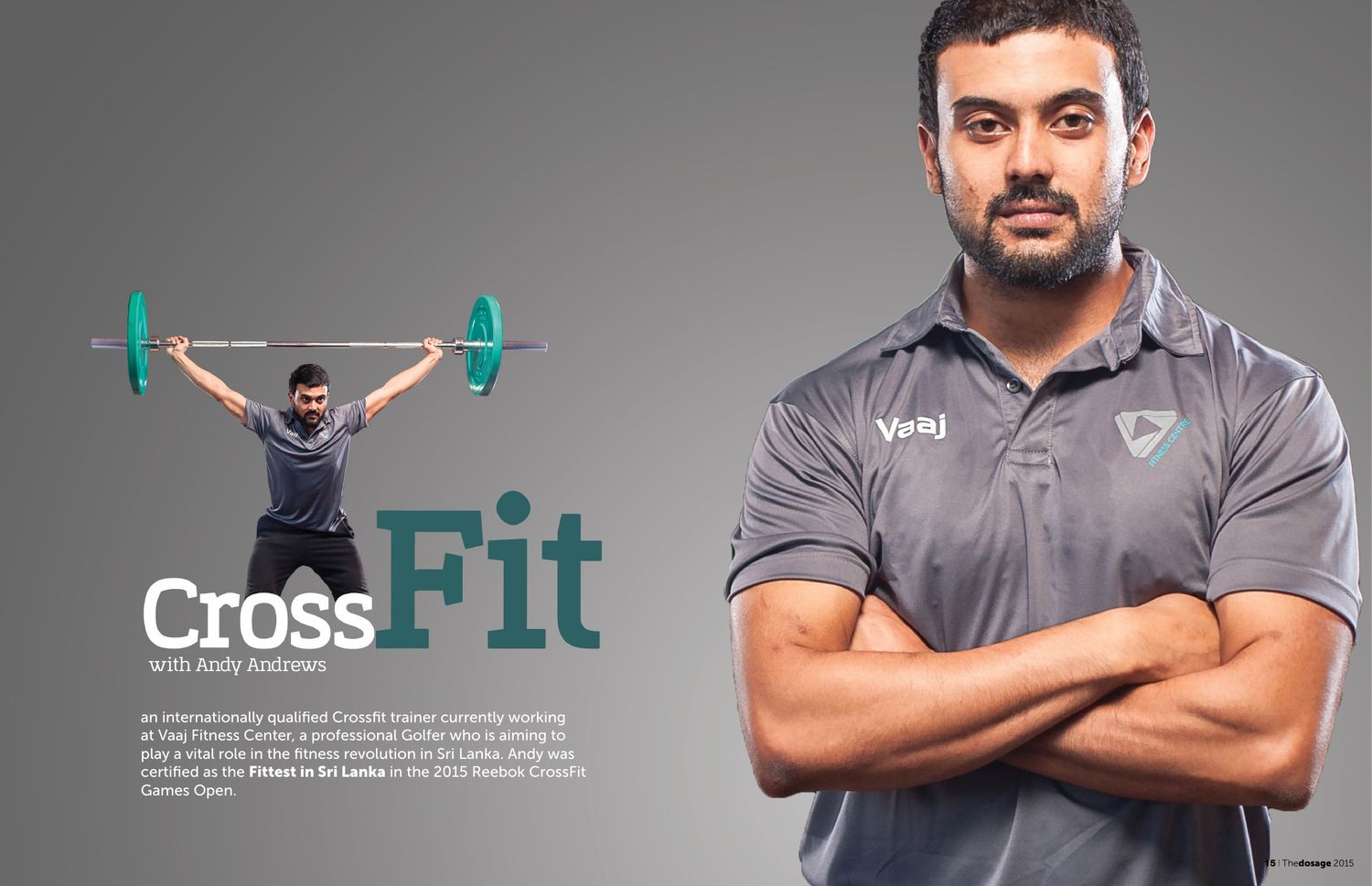
Andy Andrews is an internationally qualified CrossFit trainer currently working at Vaaj Fitness Centre, and a professional golfer who aims to play a vital role in the fitness revolution in Sri Lanka. Andy was certified as the fittest in Sri Lanka in the 2015 Reebok CrossFit Games Open.
What is the story behind CrossFit, and what motivated you to be part of it?
I have played golf all my life, and strength and conditioning is a very important factor in becoming a successful golfer. I came to Sri Lanka a few months ago looking for a good fitness centre to work out at. That’s when I came across Duminda, and he asked me to fill in for some classes. It grew from there, and I still haven’t left. Sri Lanka has a huge gap in developing healthy individuals into healthy athletes, and since our lifestyles and food patterns have changed, people pay less attention to physical fitness and are more prone to conditions like high cholesterol and high blood pressure.
CrossFit at Vaaj: what is special here?
It is the only one in Sri Lanka. A lot of people claim to do it, but we are the only licensed ones.
Are your clients genuinely conscious about their health, or do they want to be part of a trend?
Good question! A lot of people come and tell us they want to lose weight or get their stomachs smaller. CrossFit is a performance-based training programme: we look at what your body can do, not what it looks like. Both people who are genuinely health-conscious and people who want to be part of a trend come, but what matters most is that you remain fit and healthy.
CrossFit is the sport of fitness.
We were told CrossFit is a sport. What do you have to say about that?
Initially, CrossFit was just a training programme. Generally, people go to the gym and spend hours working out, which is totally unnecessary. The element of time was introduced to CrossFit, and that changed things: you had to complete the tasks as fast as possible, or do as many as you could in a given time. That made it competitive and created the hunger to perform better. The first CrossFit Games were held in 2007, and now it is a multi-million-dollar event held every July in California. What’s special is that the workouts are ones anybody with a foundation level of fitness could do.
A physiotherapist’s view
Asanga Jayalath, physiotherapist
What do you think of CrossFit and the exercises involved, from a physiotherapist’s perspective?
This programme strengthens muscle through activity; the important aspect is that the movements are not isolated. With the rise in non-communicable diseases, people need to bring exercise into their lives. CrossFit is one way of improving fitness and health, and it helps increase the mobility, strength and coordination of one’s body.
If CrossFit is a sport, and all sports involve injuries, what kinds of injuries do you see?
CrossFit is for all ages, so instructors should be especially responsible when training kids. Children in the 13–14 age group are still developing their muscles, so heavy weights can cause ligament and tendon tears. Instructors should know the limits.
Middle-aged women often join these programmes to keep fit and lose belly fat. What’s your advice to them?
Women, especially after menopause, should know that oestrogen is a vital hormone in strengthening bones, and after menopause its secretion drops, which can lead to osteoporosis or osteoarthritis. These conditions can cause bone damage during strenuous exercise, so it’s important to get proper advice from medical professionals and your instructors, and to know your limits.
Injuries are inevitable, but ladies love to squat?
Squatting helps build well-toned back muscles, but women, especially those carrying belly fat or recovering from surgery or childbirth, should brief their instructors before signing up, because weightlifting puts pressure on ligaments and rotator cuffs and can cause injuries. Lifting can even put pressure on the bladder or uterus, which may prolapse and cause bleeding, which can be very dangerous.
“As a physiotherapist, what I suggest is that you get proper professional advice and educate your personal instructor about your body, so they know exactly what you need and can train you without injury.”
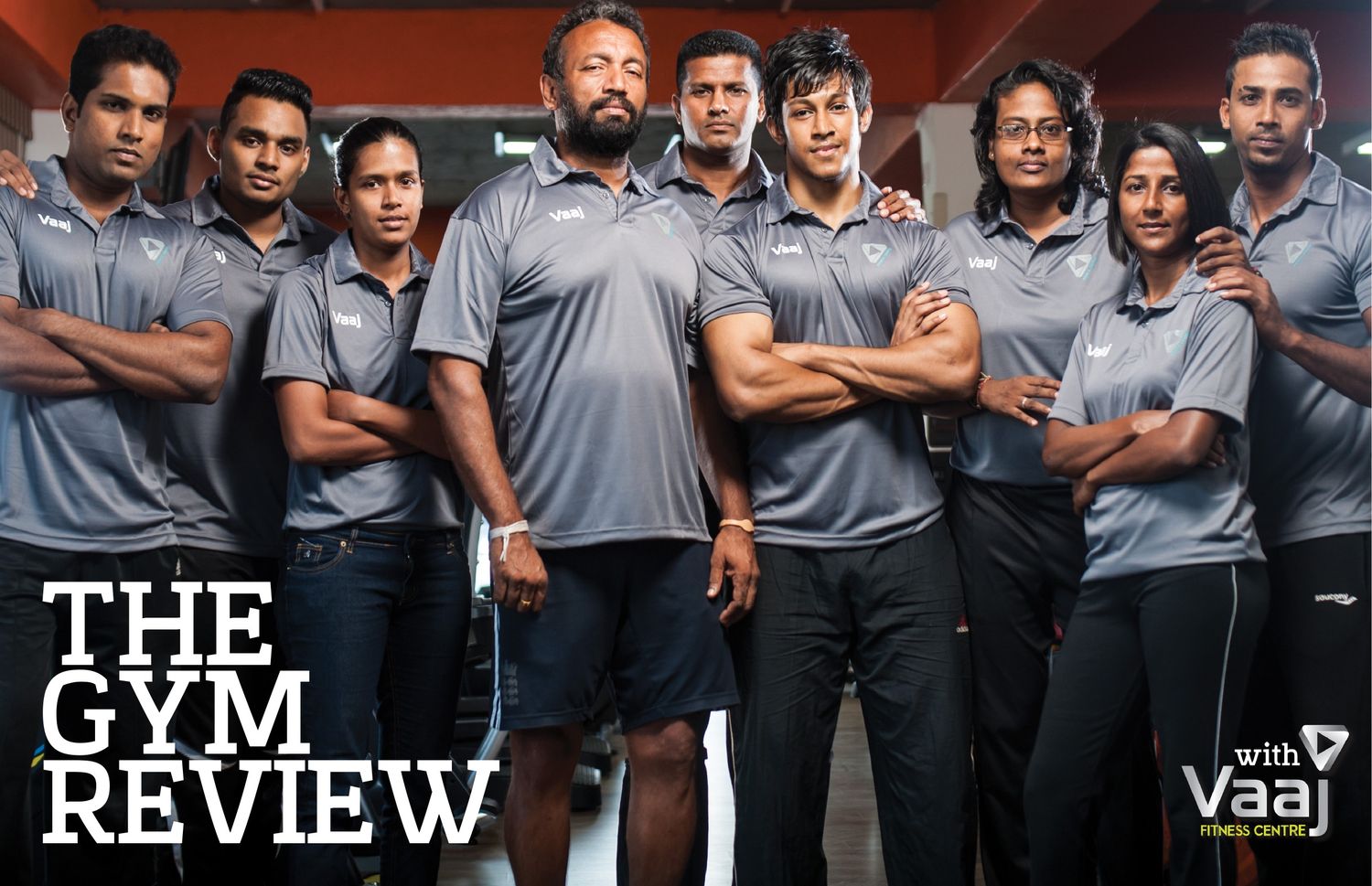
Inside the gym that wanted to be a full fitness centre: assessments, a sports doctor, a dietician, and a CEO with a system.
The DosageFirst published December 2015
▶ Watch
Mothilal Jayathilake
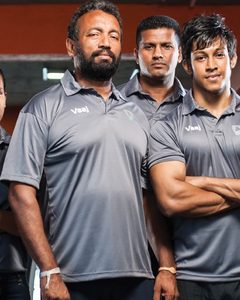
CEO, Vaaj Fitness Centre · Rugby coach and trainer
What’s your clientele like here?
We have close to 500 members.
As a strength and conditioning instructor, which groups do you train, and are there specific programmes for each?
We cater mostly to people doing strength and conditioning for sport. The problem in Sri Lanka is that people don’t know the difference between fitness training and sport training.
The problem here in Sri Lanka is that people don’t know the difference between fitness training and sport training.
Take rugby players. How does their training differ from a normal person’s?
Sports demand many physical qualities. In rugby you need to be bigger, stronger and faster, which means strength, power and endurance. In tennis you need agility and speed. So training differs from sport to sport. But you need basic training from childhood, like periodisation plans, so you can plan your training.
What is your opinion on supplements?
Internationally, in countries like the USA and UK, athletes spend a lot on supplements because high-intensity training requires the correct proteins, vitamins and carbohydrates in the right quantities. The food we find in Sri Lanka often doesn’t have sufficient nutrient content, so you need supplements.
For someone like me (Darshan), would you recommend supplements?
Yes. First training, then nutrition, then supplements.
What would you like to say about Vaaj from your experience so far?
Here we have everything under one roof, and a system I introduced. When you become a member, we start with a fitness consultation and a fitness assessment. Then we do a health screening and tell you where you stand. For the first six weeks we normally work on balance and posture, because in Sri Lanka we need a lot of balance and posture correction, which is a type of functional screening. After another six weeks we test again to identify your strengths and weaknesses, then work on maintaining the strengths and brushing away the weaknesses.
Duminda de Silva
Personal trainer and director
You changed the name from “Glory” to “Vaaj.” What’s the story?
When we first started Glory we had healthy demand, and we wanted to expand as much as we could. Along the way we met Mr. Vaaj, who became one of our main investors, so we gave his brand name priority.
What motivated you to become a fitness instructor?
At school I was a sportsman who trained a lot to maintain fitness and stamina. After my professional sports career ended, I saw that many gyms in Sri Lanka didn’t have well-trained, qualified people to cater to their members. So I got qualified internationally and started my own gym.
What is the concept behind Vaaj?
Vaaj is a one-stop place for healthy living and fitness, unlike any other gym, because it is a fitness centre. From the day you join, we do a fitness assessment and give you a schedule. A doctor specialising in sports medicine does a health assessment, and a dietician recommends a diet programme. After a period of training, we look at where you have improved and where you should improve further.
Do people come because they are genuinely fitness-conscious, or to be part of a trend?
Both, to be honest.
So what is different at Vaaj?
Having trained people in many different countries, I can say this place gives you the total solution: periodic reviews, a doctor’s assessment and a dietician’s advice. In Sri Lanka, people usually start working out on their first day at the gym without any fitness assessment, which we conduct here.
Mr. Waruna
CrossFit client at Vaaj Fitness Centre
What do you think about CrossFit here?
I got into CrossFit a few months back. It’s different from weight training, which is monotonous. CrossFit combines gymnastics and powerlifting against the clock. I love the challenge and try to push my limits every day. Long term, I want to get into the CrossFit Games.
How has the process been since the beginning?
At the start I found it difficult because it is strenuous, but as you go on you see the improvement in stamina and strength. I think I have improved a lot, and I have seen the results.
How often do you train, and what do you do?
About three days a week, though I plan to increase that. Sessions run from half an hour to about 45 minutes, mostly bodyweight training and powerlifting. I try to eat healthy food, with more protein and fewer carbs. At the end of the week, my goal is simple: I want to get fitter.
The medical team
Nirosha Gallage, dietician · Dr. Thushantha Wijesinghe, sports medicine consultant
How does the medical side work at Vaaj?
At Mr. Duminda De Silva’s request, we screen clients when they join, checking for issues in the cardiovascular, locomotor and respiratory systems before any exercise, and we also look at injuries such as musculoskeletal ones. We assess fat percentage and body mass index (BMI).
When a client joins, what red flags do you look for?
We first look at their history for non-communicable diseases such as diabetes and hypertension, and at their social and family history to understand their lifestyle. Then we examine the cardiovascular, locomotor and respiratory systems and give the client a training plan that suits them best.
What happens if a client is injured during a routine?
Instructors are trained to manage the client at the time of injury. The doctor then reassesses the client and decides whether further tests, like an MRI or CT scan, are needed. If physiotherapy is required, the client is referred to the physiotherapist, who refers back to the doctor.
Is there a magic formula for weight loss?
There are no shortcuts. It takes a lot of time. You should not undergo a dramatic drop in weight because it affects your health badly. One way to maintain your weight is to eat on time and have a balanced diet.
What is your opinion on supplements, and are they dangerous?
Supplements are useful, but they are meant for bodybuilders and weightlifters, not ordinary gym-goers, and people should seek professional advice on what, how much and which brands. Everything has pros and cons; it depends how you use them. Overconsumption can damage the kidneys. For athletes, we recommend supplements and nutrition plans depending on their events, with hydration and carbohydrate intake the two main things we consider.
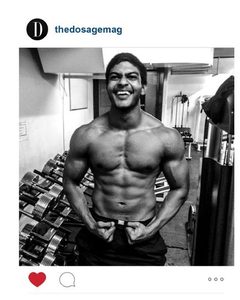
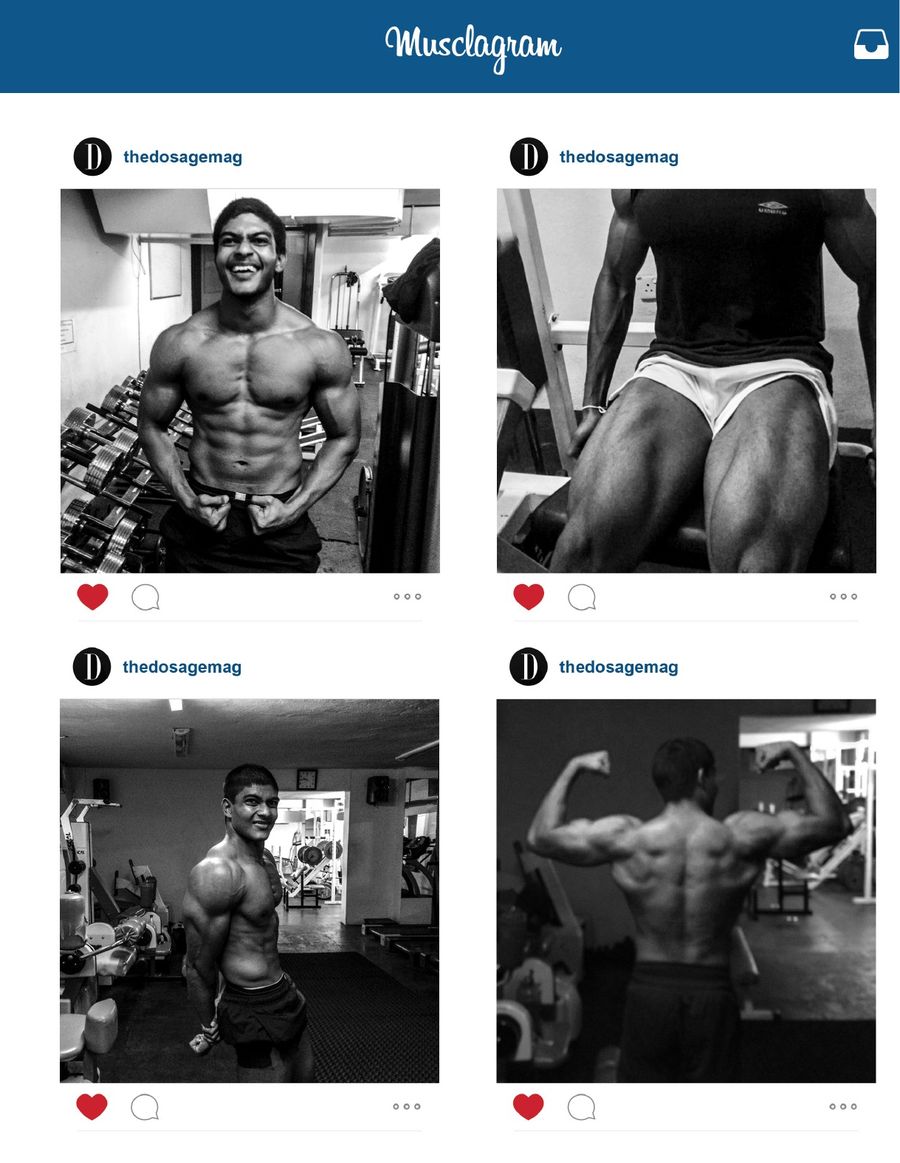
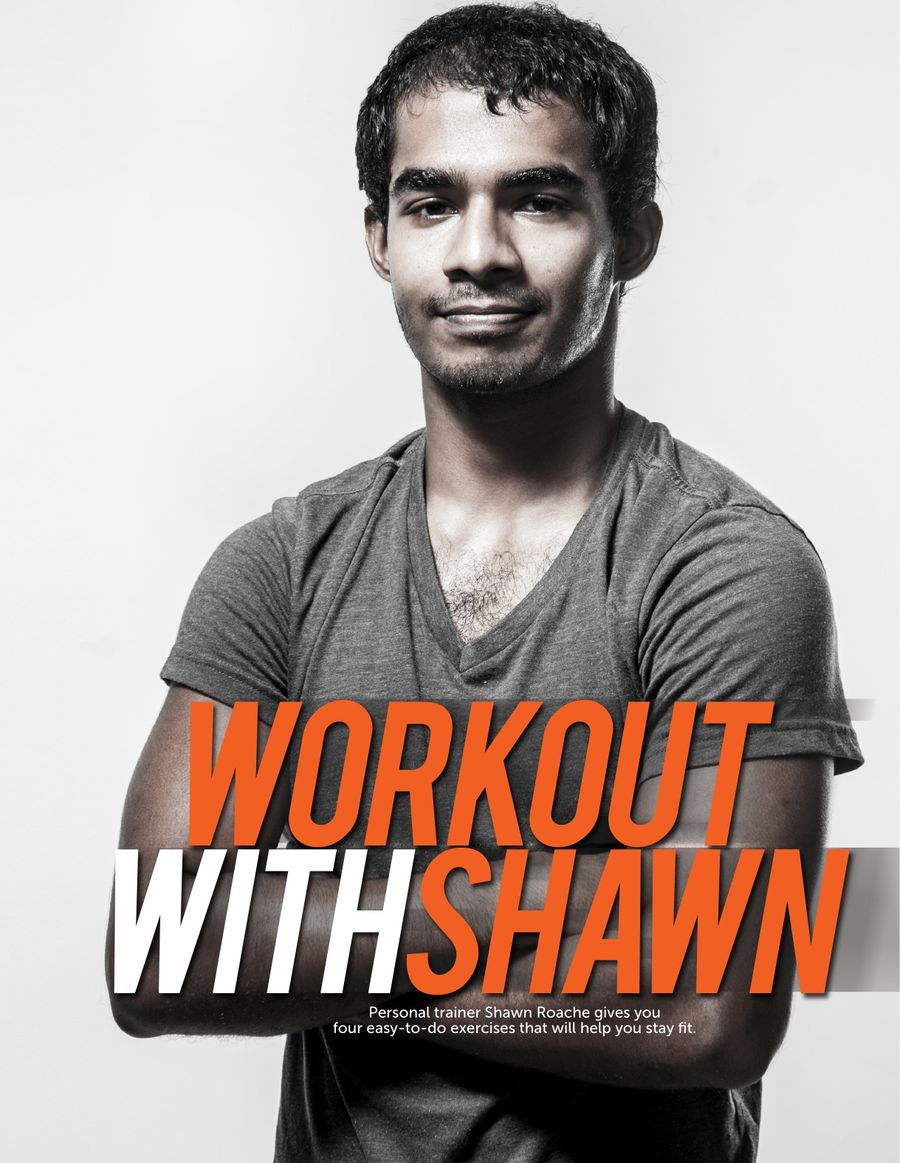
Bodybuilder Harintha Tillekeratne on gaining his first 15 kilos, supplements and consistency. Plus four towel exercises with trainer Shawn Roache.
The DosageFirst published December 2015
▶ Watch
When you started bodybuilding, did you set any targets?
I started going to the gym because I had to row for my college. I was 55 kilos at the time, which wasn’t a good weight class for rowing, and I had to gain 10 to 15 kilos. Within a couple of months I saw results.
Do competitive bodybuilders do it to look good, or are there other motivations?
For bodybuilders, bodybuilding is their life, just like it is for me. It makes you look good, but that is not the ultimate goal. The goal is to achieve something more than normal: to build mass and burn fat at the same time.
Do you use supplements?
When I started I took protein supplements. After my rowing career ended in 2012, I took whey protein and went on to creatine. Multivitamins and fish oils are also essential.
Is it hard to maintain what you have achieved?
Maintenance is the hardest part. You can gain muscle easily, but consistency is very challenging.
Maintenance is the hardest part. You can gain muscle easily, but consistency is very challenging.
How has bodybuilding affected your self-image and relationships?
A lot of people say there is a bit of intimidation around me. As for relationships, it depends on the person, and for me it is going all right.
At what age should a youngster start weightlifting and bodybuilding?
Lifting weights, ideally around 16. Bodybuilding takes you to a rougher side, with supplements, a controlled diet and heavier weights, so I would advise starting after 18.
What have you got to say to the youngsters out there?
Bodybuilding moulds you into a person who doesn’t care about others’ opinions. Training is vital. Try not to miss or cut any sessions, be honest with yourself, and you will see a change.
Workout with Shawn
Personal trainer Shawn Roache gives you easy-to-do exercises that help you stay fit
Overhead squat with towel. Stand with your feet slightly wider than shoulder-width apart, toes turned out slightly. Grab a rolled-up towel with an overhand grip, hands shoulder-width apart, and raise it overhead so your shoulders are roughly in line with your heels, elbows slightly bent. Squat as far as possible without letting your knees jut past your toes, then return to standing. Keep your shoulders stacked (draw your shoulder blades down). Works your quadriceps, hamstrings, calves, core and deltoids; the towel keeps your shoulders aligned.
Towel sit-up. Hold the towel between your hands about shoulder-width apart and keep as much tension on it as possible throughout. Lift your head and chest off the floor; the more you push your chest out, the more effective it is. Start with your arms fully extended, then pull the towel back towards your chest and out to full extension again. Keep your glutes firm. Focuses on your back and chest.
Hip hinge to trunk extension. Not to be confused with a squat. Start with your hips hinged backwards and abdominals engaged; your lower back should be adequately arched and your neck not overly extended. Arms extend slightly beyond the trunk, feet flat. In the final phase, explode upwards, raising your arms overhead with hips and knees extended, weight on the balls of your feet. Keep your abdominals tight so you don’t over-arch your lower back. Works your core, glutes, quadriceps, hamstrings and calves.
At the Ragama Rehabilitation Hospital, therapists use sport, art, music and drama to help patients rebuild their lives.
The DosageFirst published December 2015
▶ Watch
Occupational therapy is a branch of medicine in which therapists and their assistants help people through three phases of physical and mental learning: building, recovering and maintaining. Common interventions help children and adults do activities that would otherwise be beyond them, or regain motor and cognitive skills lost to physical or psychological damage. It doesn’t give anyone superhuman abilities; it helps them reach the potential that exists or, more commonly, has been lost.
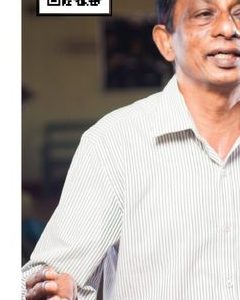
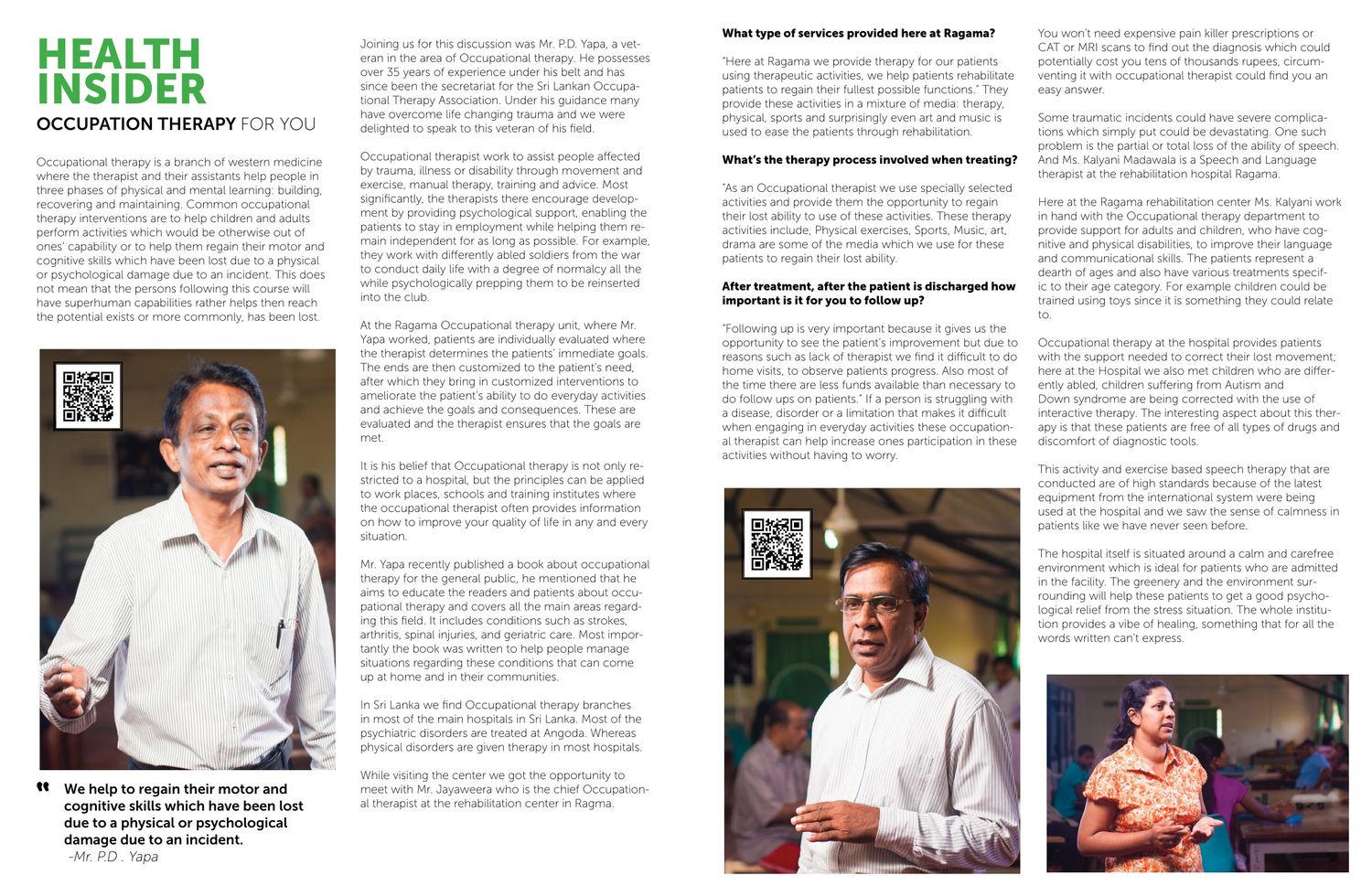
Joining us for this discussion was Mr. P.D. Yapa, a veteran of occupational therapy with over 35 years of experience, and secretary of the Sri Lanka Occupational Therapy Association. Under his guidance, many have overcome life-changing trauma.
We help them regain the motor and cognitive skills lost due to physical or psychological damage. Mr. P.D. Yapa
What does the therapy process involve?
At the Ragama occupational therapy unit, where Mr. Yapa worked, each patient is evaluated individually and the therapist sets immediate goals. Customised interventions then improve the patient’s ability to do everyday activities, and the therapist checks that the goals are met.
After a patient is discharged, how important is follow-up?
“Following up is very important because it lets us see the patient’s improvement. But because we lack therapists, home visits to observe progress are difficult, and most of the time there are fewer funds available than we need for follow-ups.”
Mr. Yapa recently published a book on occupational therapy for the general public. It covers conditions such as strokes, arthritis, spinal injuries and geriatric care, and was written to help people manage these situations at home and in their communities.
Occupational therapy units exist in most major hospitals in Sri Lanka. Most psychiatric disorders are treated at Angoda, while physical disorders are treated in most hospitals. Mr. Yapa believes occupational therapy isn’t restricted to hospitals: its principles apply to workplaces, schools and training institutes, wherever someone can be helped to improve their quality of life.
Inside Ragama
While visiting the centre we met Mr. Jayaweera, chief occupational therapist at the rehabilitation hospital in Ragama. “As occupational therapists, we use specially selected activities to give patients the opportunity to regain their lost abilities. These include physical exercise, sport, music, art and drama.”
Therapists here help people affected by trauma, illness or disability through movement and exercise, manual therapy, training and advice, and they offer psychological support so patients can stay in employment and remain independent for as long as possible. They work, for example, with soldiers disabled in the war, helping them live daily life with a degree of normality while preparing them psychologically to return to society.
Some traumatic incidents cause partial or total loss of speech. Ms. Kalyani Madawala, a speech and language therapist at the hospital, works hand in hand with the occupational therapy department to help adults and children with cognitive and physical disabilities improve their language and communication. Treatments are tailored by age: children, for example, might be trained using toys.
We also met children with autism and Down syndrome being helped through interactive therapy, free of drugs and the discomfort of diagnostic tools. The equipment is modern, and we saw a calmness in patients we had never seen before. The hospital sits in green, quiet surroundings, ideal for patients under stress. The whole institution gives off a vibe of healing that no amount of words can fully express.
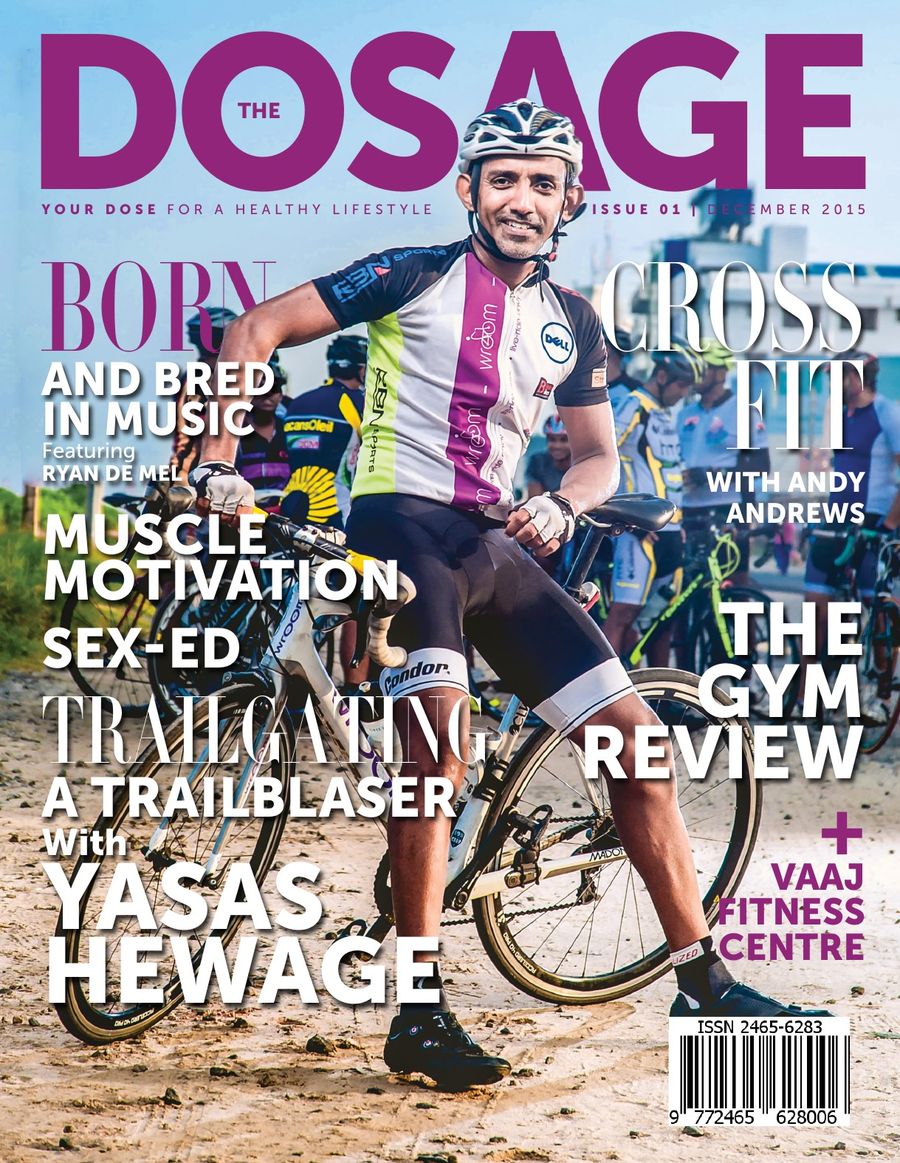
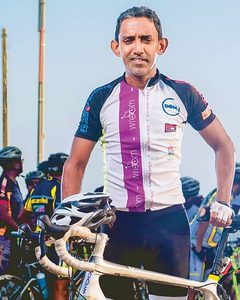
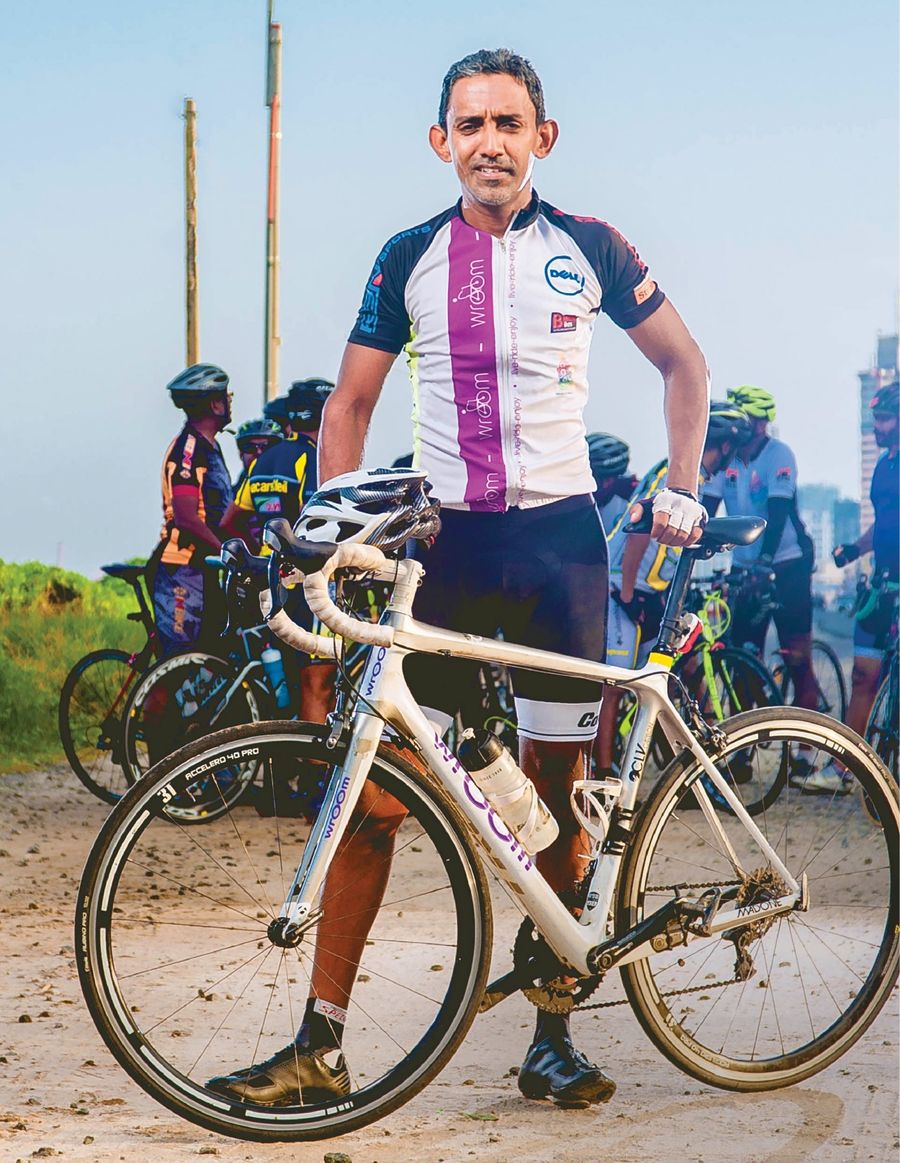
A day with Yasas Hewage, banker turned pro-cyclist and founder of the Wroom community, Spinner Café and Sri Lanka’s first bike-fit lab.
By Svetlana De Fonseka AbeysekaraFirst published December 2015
▶ Watch
It’s like the principle of life. Work hard towards your goal. Have the guts to climb the hill. Yasas Hewage
Allowing a dream to take tangible form is often a risky affair, especially when that dream is one no one has dreamt before you. In pro-entrepreneurial Sri Lanka we are on the slow upward climb. As with any enterprise, the climb has been a challenge, the bumps rough and the journey long, perhaps more so in this venture. Dosage spent a day in the shoes of entrepreneur-extraordinaire Yasas Hewage, a marketer and banker by profession but an ardent cyclist first.
He is the founder of Spinner Café and Bike Fit Lab, which caters to a cycling-oriented audience, a first in the country. Yasas also founded Wroom, a community of cycling enthusiasts who meet in their mutual love of this unusual pastime, sharing ideas and gathering at first light to ride the island’s serpentine roads.
“Cycling-oriented” is not as limiting as one might think. Quite the opposite: anyone who steps into Spinner finds the embrace of this unlikely place endearing. You would be surprised how easily it sells the idea to strangers who drop into the café for a bite.
The Bike Fit Lab
The Spinner Bike Fit Lab is a novelty. From measuring visible attributes like your height to the reaction of your pulse, it uses patented technology to customise your bike for you. “The simple principle is that you can’t just go out and buy a bike and expect it to give you that experience,” Yasas says, showing us the racing bike at the centre of the lab. “Everyone’s body is different. Your heights might be the same, but your upper-body length, your arm and leg length may differ. Some of us have leg-length differences in the same body! The lab uses Retül bike-fit technology, the best in the world, to tailor a bike to your body geometry. In simple words, it’s like tailoring a suit.”
The lab performs a rigorous analysis of each rider using 3D motion-analysis technology. “First you need to understand the bike geometry,” says Yasas, presenting his racing bike. Sensors and cameras collect rider and bike data into a computer system, and, much like an ECG, a cyclist may do a motion analysis that monitors key parts of the anatomy while riding. “All these changes are implemented through a scientifically based system analysing the data. You can’t just perform them either. You need to be certified,” he says, having received his certification from Retül in Singapore.
The 5.30 am ride
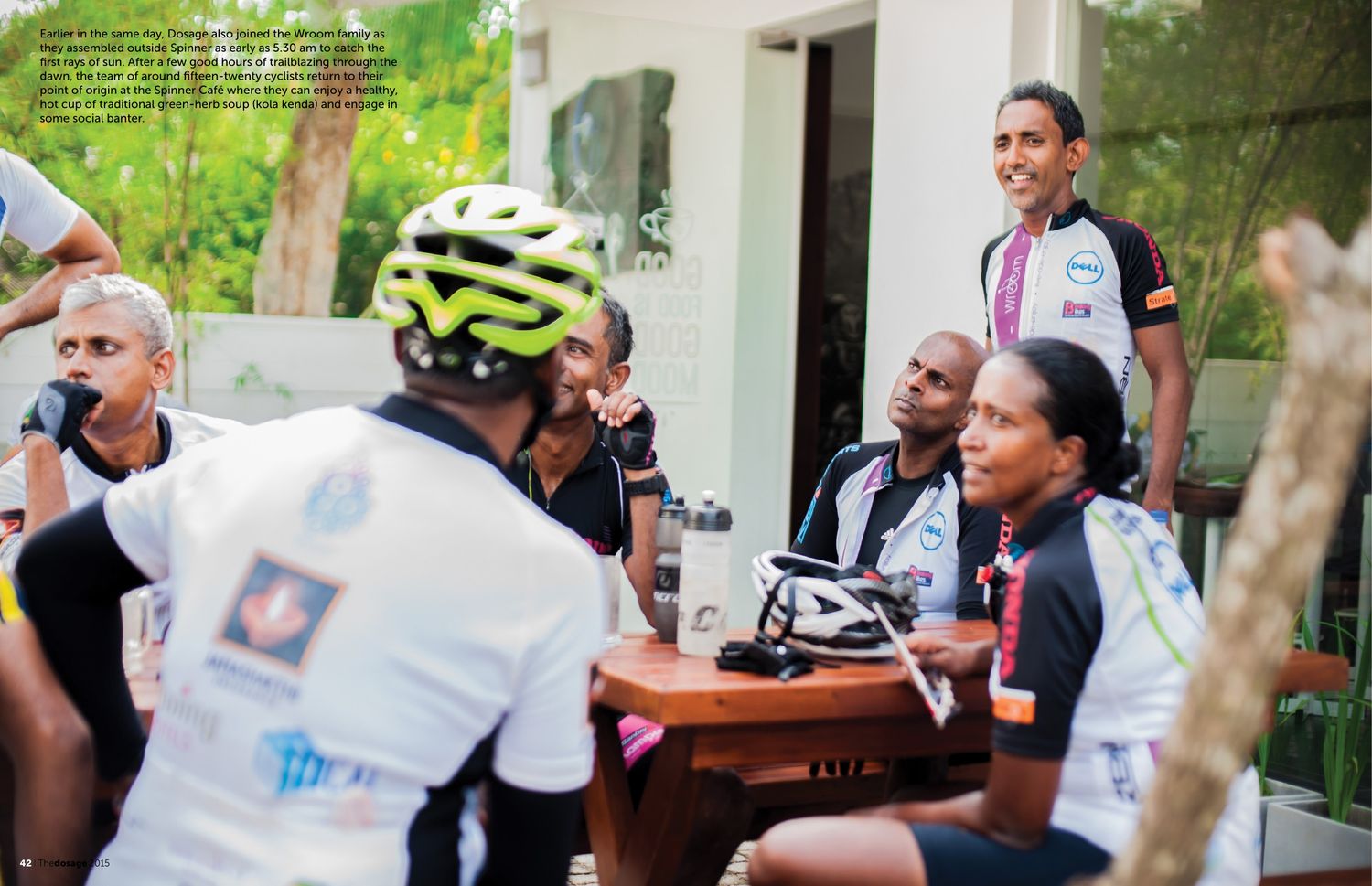
Earlier that day, Dosage joined the Wroom family as they gathered outside Spinner at 5.30 am to catch the first rays of sun. After a few good hours of trailblazing through the dawn, the fifteen to twenty riders returned to Spinner Café for a hot cup of traditional green-herb soup (kola kenda) and some social banter.
“I joined the Wroom community in 2013,” says Sonali. “As a female cyclist, cycling in Sri Lanka is really difficult when you’re riding alone. Riding with a group gives me security, and the camaraderie of riding with people who think like I do. We want to enjoy the freedom of the road and the physical experience of getting your heart rate high and having a good time! There are a few more female cyclists now, and I hope I speak for them when I say Wroom has really improved my riding.”
Nishan, a young cyclist in the community, says: “I am a student of Yasas, studying CIM, and I used to sit in class listening to all these cycling stories and think, this guy is crazy! But then he inspired all of us. The twelve-hour, 280-kilometre ride to Trincomalee changed my life, because we realised the impossible could be done.”
The interview
Entrepreneur and pro-cyclist: you seem to have found your middle ground. Why cycling?
Four years ago I bought an affordable bike and decided to cycle cross-country, for fun. It grew into a bigger passion, and I wanted to bring more of an outdoor lifestyle into other people’s lives because I enjoyed it so much. We started the Wroom community in 2012, which was all about “wrooming” around on a bicycle, and it has grown into a fairly large community. On a personal level, I began performance cycling. Then, nine months ago, I left my day job (I worked for two banks over fifteen years) and put together the things I love, cycling and the café, and that gave birth to Spinner.
Do you prefer to be defined as a cyclist?
For the last eight years I have also run a marketing school, Strategy, with a friend. So I am a marketer by profession who worked in banking. But at some point you realise you can define who you are by your passion rather than what you do, and my passion is cycling, so I am undoubtedly a cyclist.
What exactly is the Wroom community?
Wroom was an idea. I started to enjoy cycling and thought it would be great to share. The philosophy that emerged is that Sri Lanka is growing on one side, but about ten percent of the country suffers from diabetes because of our lifestyle. We eat, we sleep, we get in our cars and watch a lot of television. We live in a country with beautiful weather 365 days a year, so why not energise Sri Lanka to enjoy the outdoors? Now people get in touch every day saying they want to take up cycling. We have members from sixteen to fifty. Cycling has become a fairly big industry, and it’s growing.
So Wroom is all about health and fitness?
We don’t promote the paranoid “I want to be healthy, I don’t want to eat” mentality. We all want our biscuit pudding. Our concept is simple: “Eat it and burn it.” We rode forty miles this morning; you get hungry, you have to eat. We have seen people come down from 150 kilos to 90, because it’s also fun. Wroom is for anyone. This morning there were people on their first ride, and others who have ridden 1,400 miles around the country. At the heart of Wroom is also road safety: our Blinking Lights project gives reflectors and lights to everyday commuters across the country.
Was Wroom born of Spinner, or Spinner of Wroom?
Wroom was the inspiration. “Spinning” is fundamental to cycling: it’s how you spin a pedal. (Usually the Sri Lankan spinner is a cricketer, he adds, laughing.) As long as you keep spinning, you can balance. Cycling early in the morning, there was no place to have a cup of coffee, so I started a café. And as cyclists we get obsessed with speed and improvement, so the bike fit came from that. Next we want to start a service centre, what we call a winkalé, which is a dying trade because no son wants to join the father’s business. But bike maintenance is highly technical, professional work, and we want to uplift it so more tech graduates come into it.
Do you have a daily cycling routine?
I race professionally, so I train seven days a week. That doesn’t mean riding hard every day: there are strength days and power days. The time I save not going to the bank, I spend on the bike.
What are the most gruelling challenges you’ve faced?
Climbing Kadugannawa for the first time was a big one; also Nuwara Eliya, Radella and Rabboda. My hobby is climbing. The ride to Nuwara Eliya was 152 kilometres non-stop, in 8 hours 52 minutes. On one off-road ride from Mullaitivu to Point Pedro, I fell and badly injured my hand, and had to ride one-handed for fourteen hours. I could have given up, but I didn’t. This bike has been around the country twice, and from Colombo to Arugam Bay in one day, in eleven hours. We’re running out of climbs in Sri Lanka, so in August we’re doing the Himalayas.
It’s a gruelling effort, but you find your glory at the top. Given the choice, I’d hit the hills.
Is the Yellow Jersey a goal?
For someone else, for sure. The Yellow Jersey at the Tour de France is the edge of pro-cycling, a decade of work. I would love to be part of someone else’s journey someday. To see a Sri Lankan get there would be amazing.
You are also a qualified cycling coach. What does that involve?
As a marketer I am a teacher, and I love teaching. When I wanted to improve my own cycling, there was no professional coach in the country, so I qualified through the British Cycling coaching programme. I hope to help more young competitive cyclists, and someday see a Sri Lankan on a Tour de France team. Endurance is something Sri Lankans have no excuse against: we are built for it. Our goal is to see that Olympic gold some day. Through one of our initiatives, the community also raised over twelve million rupees for a thousand wheelchairs for children with cerebral palsy. The community is pretty powerful.
Dr. Kithsiri Edirisinghe on why building a hospital is harder than sending a rocket to Mars.
The DosageFirst published December 2015
▶ Watch
In Sri Lanka, population growth is well below the replacement rate, which means a fast-ageing population alongside a high-risk young population. Older people tend to get more non-communicable diseases, while the young are at risk from drugs, alcohol and unprotected sex. Either way, there is great pressure on the healthcare system.
Dr. Kithsiri Edirisinghe is a medical administrator, an expert in hospital project management, and deputy chairman of the International Institute of Health Sciences (IIHS) in Welisara. According to Dr. Kithsiri, “Building a hospital is more difficult than sending a rocket to Mars.”
He told us there is only one hospital in Sri Lanka with no gate or boundary at its entrance. “A hospital needs to be open for anyone to come in. A hospital should be open 24/7, so gates are irrelevant.” The hospital is a place of healing and should be open to all.
The question is: why is it so difficult?
For a rocket, the slightest miscalculation can destroy the entire ship, but the maximum fatality would be ten or twelve. In a hospital where work is done on viruses, if a room isn’t properly sealed or ventilation is directed to the wrong place and a pathogen gets into the air, it would be a national disaster.
Building a hospital is more difficult than sending a rocket to Mars. Dr. Kithsiri Edirisinghe
The smallest detail matters. Administrators must take precautions against hospital-acquired infections, which can be averted by using materials that maintain a germ-free environment. Hospitals are meant to be a safe haven, so being germ-free should always be a top priority.
“There are many architectural monuments in this country. Even some hospitals are considered architectural monuments,” says Dr. Kithsiri. But regardless of interior or exterior design, the most important questions are: is the hospital universally accessible? Is it designed for people with disabilities? Is the environment calming? Is the building convenient and comfortable?
How important is a well-trained staff?
“When you’re building a hospital, the healthcare workers should be educated. If you’re designing a hospital, you have to professionally train nurses and medical administrators to run it smoothly and efficiently.” At IIHS, he says, they have already designed programmes with large industries that need healthcare workers. “We always try to match international standards. Because of the demand for nurses, it’s essential to train our students to be professional and excellent in their fields.”
At IIHS in Welisara, a UK-trained nurse on why nursing is a global passport, and why not everyone can do it.
The DosageFirst published December 2015
▶ Watch
Nursing in the international arena is a whole new ball game: just like doctors, nurses play a vital role. Some say nursing is a skill that comes with practice, but training nurses is not an easy process. Sri Lanka’s healthcare system has its ups and downs in professionalism and pay, but internationally there is huge potential for people who work as nurses.
A high-functioning hospital cannot run for a moment without nurses. Patients need 24-hour monitoring, and doctors are rarely available to give the constant care required.
We visited IIHS in Welisara and met Mrs. Dilum Weliwita, an internationally qualified nurse. We asked what qualities they look for in someone who comes to study nursing. She explained that nursing is an art, because when you deal with a human life you need the passion to meet the demands of the job. Not everyone can become a nurse: if you can’t treat patients as your own, you can’t be in this profession.
Nursing is like a global passport. Mrs. Dilum Weliwita
On where nursing stands internationally: “There are plenty of opportunities, because nursing is like a global passport. You can go anywhere in the world and work and be your own boss, because the qualification opens many doors.”
Comparing our health sector with others, she drew on twelve years in the UK: “We can’t compare the international level to Sri Lanka, because in the UK or Australia the system values nurses much more and pays them good salaries, and the system is more responsible. I think the change has to come from our culture itself. I’m sure in ten years we can expect a gradual change here in Sri Lanka.”
“I joined IIHS just after my O-levels and have been here for three years. I’ve had lots of good experience, especially the clinical placement at Asiri Central Hospital, which helped me gain a lot of life experience.” Ms. Puneesha Pasqual, past pupil, Faculty of Nursing, IIHS
Sexuality education from a psychological perspective, with Sarah Soysa, Dakshitha Wickremaratne and Nivendra Uduman.
The DosageFirst published December 2015
▶ Watch
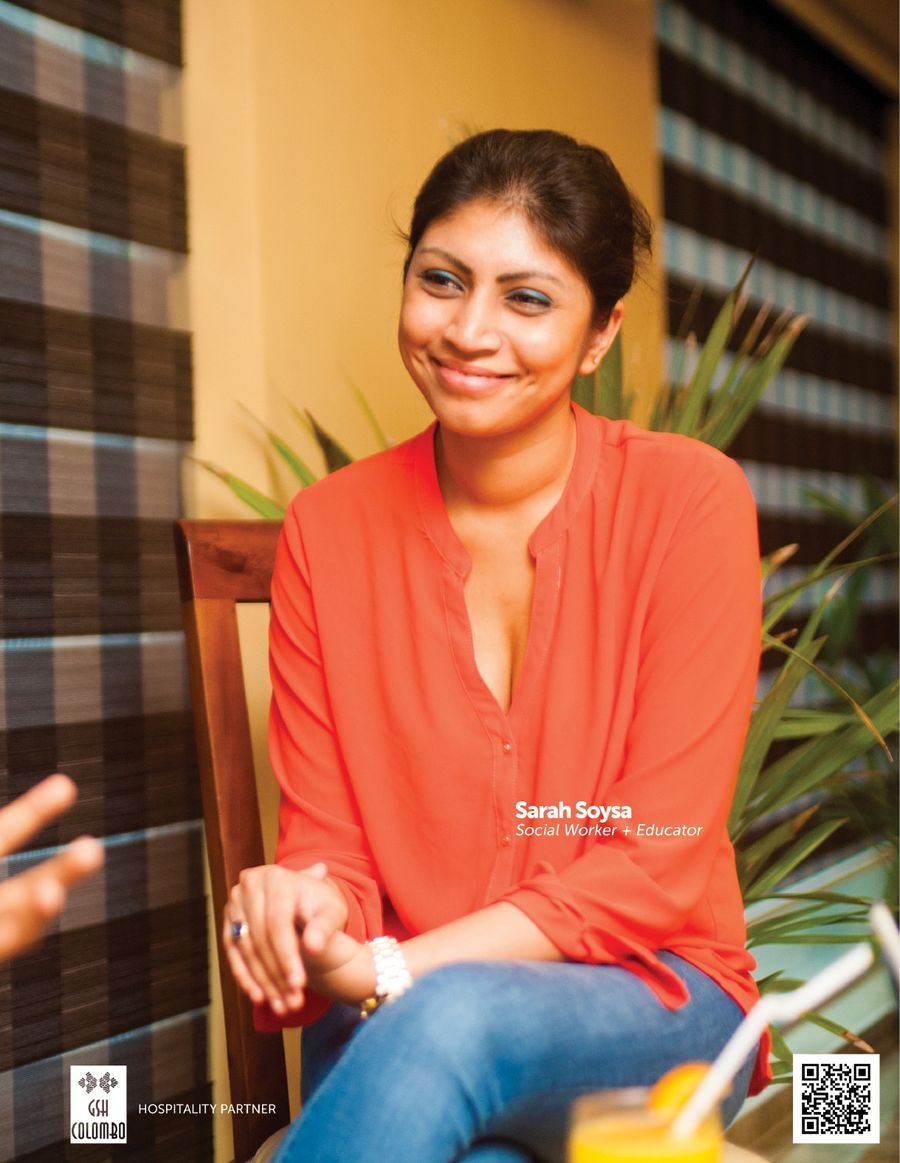
Sarah Soysa
Social worker and educator
Speaking with Sarah Soysa was one of the easiest interviews we’ve done. On a taboo topic, her outgoing, cheerful personality helped. The topic? Sex education. Although it is said to be well covered in schools, there is still a large lack of openness in Sri Lanka, to the point that many are uneasy about sharing their problems “down there.”
A former member of the YWCA and a consultant at the FRIDA Young Feminist Fund, which supports feminist causes around the world, Sarah has vast experience in this field.
The first thing that came to light was that there is no formal curriculum for sex education. Most schools aim to cover it at some point, but there is no standard approach, which often makes the lesson ineffective, since the teacher has only their own idea of what you need to learn. On how it helps prevent abuse and violence, Sarah’s idea was systematic: it should start early. Even in year one, a child can learn the difference between “good touch, bad touch,” and information should grow with the child’s maturity, not with a set age.
On the internet, Sarah says there is more information available to this generation than ever, which leads to inaccurate information. Among peers who share the same sources, when enough people believe a lie, the lie becomes the truth.
When a large number of people believe the lie, the lie becomes the truth.
So how do you give the “birds and the bees” talk? It shouldn’t be tied to an age but to a level of maturity. Being able to talk to your child, or your parent, is the most important thing to establish. That kind of openness goes a long way, not only in overcoming issues but in bonding as a family. Sarah’s parting wisdom: have an open conversation, whether you are the parent or the child. Don’t judge, and be available to explore every avenue together. There is no rule about who has to start the conversation. Just ease into it.
Dakshitha Wickremaratne
Counselling psychologist
The biggest hurdle in sexuality education, says Dakshitha, is the generation gap. Teenagers getting “the talk” often feel embarrassed and awkward, and parents feel uneasy too, because that unease was ingrained in them at a young age. That almost always leads to an ineffective transfer of information.
Schools approach the subject in many ways, with varying success. Some leave it untouched and foster ignorance, and he often notices those are the schools where students are least open to discussing their problems and questions.
Another hindrance is the belief, among parents, teachers and policymakers, that if children learn about sex they will engage in it. The drawback is that children then find out by other means, which can lead to unsafe sex. In Dakshitha’s view, comprehensive sexual-health education ensures young people understand what is happening in their bodies and can make educated choices, because parents can’t be there in every situation. He recommends UNESCO’s guidance on sexuality education, which parents can use, especially if they are uncomfortable having the conversation themselves. Dakshitha travels the country delivering sexual-health workshops, and his passion and depth of knowledge are striking.
Nivendra Uduman
Counselling psychologist
How does a relationship work? What do you feel, think and, most importantly, do when faced with rejection? How do you manage the feelings and urges that come with sexual maturity? These should carry equal weight in sexuality education, says Nivendra Uduman, a counselling psychologist attached to the King’s College London resource centre for mental health in Colombo, who also practises privately. Teaching the mechanics of sex is no longer enough, he says; attitudes have changed drastically, and many no longer recognise the painful emotions that can follow in the wrong situation.
He takes a bold but educated stance on the taboo. In earlier centuries, he notes, people were more open about the human body: some of the greatest art, from Michelangelo’s David to Raphael’s Three Graces, depicts the nude. Over time, he argues, we have misread our own culture and heritage and turned mild amusement into shame. That is the taboo that exists today.
The notion this gives is that sex is a “dirty” thing to talk about, and it is often an avoided topic.
We have also mystified information about sex. Learning it only as “reproduction” in biology makes it seem wrong or undesirable to talk about, and psychologically gives the notion that it is “dirty.” The internet adds to the mystification, with misinformation that young people raised in our culture may take as normal.
So yes, there should be comprehensive sexuality education in schools, but the effort should start at home. Be open, and never show disgust, scorn or even discomfort, because those small signals go a long way in a child’s mind. If you are uncomfortable, books and factual programmes can help. The most important thing is to start, and to start as soon as possible.
Before cycling was a movement in Sri Lanka, there was one small group riding the island together. The Dosage was there first, in print and on film, with a video behind every story.
That idea, a magazine you can step inside, is back. Now the technology finally matches it.
An independent newsroom connecting Colombo to Melbourne. News, explained simply, every day, and one story told in full in every printed edition.
Since 2015
Reality, unfiltered.
The Dosage began in Colombo in December 2015 as Sri Lanka’s first digital video magazine on health, fitness and lifestyle. Every story in its first issue came with a film, shot by our own video team. You can still read it, and watch it, in The Original.
Today The Dosage is an independent newsroom based in Victoria, linking two cities and the people who move between them.
What we cover
We report every day on the stories that matter between Colombo and Melbourne, and explain them simply:
Melbourne and Victoria: local news, transport, councils and community life.
Sri Lanka: what’s happening at home, from politics to the weather.
Australia and the world: politics and policy that affect our readers.
Business and the economy: prices, rates, jobs and the cost of living.
Health, science and tech: what the evidence says, without the jargon.
Entertainment, culture and sport: film, music, food, festivals and cricket.
The editions
Each printed edition follows one story all the way through, instead of fifty short pieces. It’s slim and made to keep. Point your phone at a page and the story opens up: the film, the voices, and the numbers explained.
Edition 01 is coming soon. Follow us to be first to know.
Our newsroom
Eashaan Dassanayaka, Managing Editor. Eashaan has been Managing Editor since our first issue in 2015 and is responsible for everything we publish.
Our stories are written and checked by our editor and a small group of contributors. Every story carries a byline, so you always know who wrote it. Join us →
Independence
The Dosage is independently owned and a registered Australian business (ABN 22 864 977 367). No political party, government, advertiser or sponsor has any say over what we publish.
How we report, check and correct our stories, across news, politics, business, health, tech, entertainment and sport. If we fall short of these, tell us.
Updated 17 October 2026
Who we are
The Dosage is an independent publication and a registered Australian business (ABN 22 864 977 367). Our Managing Editor is Eashaan Dassanayaka, who is responsible for everything we publish.
Accuracy
We check every fact, figure and date against its original source before we publish. When a number comes from a report, we name the report. When we can’t confirm something, we leave it out.
Sources and credit
We write our stories in our own words. When we rely on another outlet’s reporting, we say so in the story and link to it in the sources at the end. We never copy another publication’s work or present it as our own. Quotes are short, exactly as said or reported, and always credited.
We prefer primary sources: official statistics, government and central bank releases, court and parliamentary records, and people speaking for themselves.
Labels
News: what happened, and why it matters to you.
Explained: background that helps you understand a big topic.
Opinion: one person’s view, clearly marked and never presented as fact.
From the archive: stories and films first published earlier, shown with their original date.
Sponsored: work paid for or supported by a partner, always named.
Fairness
In news stories we don’t take sides. When a story involves a dispute, we give each side’s position in its own words. If a story makes a claim about a person or organisation, we give them a fair chance to respond.
Politics and elections
We don’t support or endorse any party or candidate. We report what politicians say and do, check their claims, and give each side a fair hearing. Paid political content is clearly labelled and carries the authorisation the law requires.
Crime and courts
We report charges as allegations, not facts, and we don’t name people accused of crimes until police or a court has made it public. We follow suppression orders and the rules on reporting cases before the courts. We take particular care with victims, children and families.
Anonymous sources
We name our sources whenever we can. We grant anonymity only when there’s no other way to get important information, when the editor knows who the source is, and when we can explain to you why they can’t be named.
Health and money
Our health stories draw on official health bodies and qualified experts. Our money stories explain what is happening and what it could mean for you. Both are general information, not personal medical or financial advice.
Sensitive topics
We report suicide, self-harm, mental illness and family violence with care, following the Mindframe guidelines. We avoid detail that could cause harm, and we include support services, such as Lifeline on 13 11 14, with these stories.
People and pictures
Private individuals we feature have agreed to be in the story. Public figures and organisations are reported on when it’s in the public interest, and are given a chance to respond. We take extra care with children and with anyone in a vulnerable situation. We use our own photos and film, or pictures we have permission to use, and we credit the photographer.
Reviews, tech and entertainment
When a product, ticket, meal or trip was given to us for free, we say so in the story. Whoever provided it has no say over what we write and doesn’t see the story before it’s published.
Contributors and conflicts of interest
Everyone who writes, photographs or films for us follows these standards. Contributors must tell us about any personal, financial or political interest in a story, and they don’t cover organisations they work for.
Translations
When we publish a story in Sinhala or Tamil, a fluent speaker checks it against the original, and we say it’s a translation.
Use of AI
Our stories are reported, written and checked by people. We sometimes use AI tools for research and for design elements such as illustrations. Anything an AI tool gives us is checked against the original source, illustrations made with AI tools say so in their caption, and we never use AI to alter real photos, video or audio. When AI plays a significant part in a story, such as an illustration or data analysis, we say so in a note at the end of the story.
Independence and advertising
Advertisers and sponsors have no say over what we report. Ads on this site are clearly separate from our stories, and any sponsored work is labelled with the sponsor’s name.
Corrections
If we get something wrong, we fix it as soon as we know and add a note at the end of the story saying what changed and when. We don’t quietly edit mistakes away.
Complaints and contact
To report an error, make a complaint or ask about a story, email info@thedosagemag.com. Tell us which story and what you think is wrong. We read every message and reply as quickly as we can.
The Dosage is a member of the Local & Independent News Association (LINA) and is bound by the Standards of Practice of the Australian Press Council. If you’re not happy with our response, you can make a complaint to the Council in writing at www.presscouncil.org.au or on 1800 025 712.
We’re building a team of contributors in Melbourne and across Australia. Expressions of interest are open now.
Posted 17 October 2026Open until filled
The Dosage is an independent newsroom connecting Colombo to Melbourne, covering news, politics, business, health, tech, entertainment and sport. We’re looking for freelancers who know their communities, wherever they are, and want to tell those stories well. Melbourne is our base, but you can work with us from anywhere in Australia.
Who we’re looking for
News reporters and writers for Melbourne, Sri Lanka, politics, business, health, tech, entertainment and sport.
Photographers for portraits, events and food.
Video makers for short films and vertical video for Instagram, TikTok and YouTube.
Sinhala and Tamil writers or translators to help us reach more readers in their own language.
You don’t need years of experience. You do need to be curious, careful with facts and reliable with deadlines. Students and early-career creatives are welcome to apply.
What we offer
We’ll agree pay and terms with you before any work starts.
A credit on every piece, and a portfolio you can show.
Editing and feedback from our editor on every story.
Work that’s published under the Australian Press Council’s Standards of Practice.
What we ask
You live in Australia and have the right to work here. Most work can be done remotely; some shoots are in Melbourne.
You follow our editorial standards: check every fact, credit every source, and never copy other people’s work.
You tell us about any conflicts of interest, such as PR work for a company or group you might cover.
How to apply
Email info@thedosagemag.com with the subject line “Freelance EOI: [your role]”. Please include:
Your name and where you’re based (suburb or city).
The role or roles you’re interested in.
Two or three links to your work (articles, photos, videos or social posts).
The languages you speak or write.
One story idea for our readers, in two or three sentences.
We read every application and will contact people whose work fits what we need. There are no staff jobs open right now; when there are, we’ll list them here.
Your details
We use what you send only to consider you for work with The Dosage. We don’t share it, and we’ll delete it on request. See our privacy page.
What we collect, why, and how to get it removed. Plain English.
Updated 15 October 2026
If you subscribe
We keep your email address so we can send you new stories and news about The Dosage, usually once or twice a week. That’s all we use it for. We never sell or share it with advertisers. Every email has an unsubscribe link, and you can also email info@thedosagemag.com to be removed and have your address deleted.
Sign-ups are stored by our website host, Netlify. If we move to a dedicated email service to send the newsletter, your address will be stored there too, and we’ll update this page.
If you email us
We keep your message and contact details so we can reply, follow up a story or fix a correction. We don’t add you to the mailing list unless you ask.
When you visit the site
The site shows ads from Google AdSense, which help pay for our journalism. Google and its partners may use cookies to show ads, including ads based on your visits to this and other websites. You can turn off personalised ads in Google’s ad settings, and visitors in Europe and the UK are asked for consent first. Read how Google uses data for ads.
Our host keeps standard server logs, such as IP addresses, to run and protect the site. Fonts load from Google Fonts. Videos come from YouTube and only load when you press play; YouTube may then set its own cookies.
Counting visits
We count visits with Google Analytics. It uses cookies to tell us things like how many people read a story, how they found it, which country they’re in and what kind of device they use. We look at totals, not at individual readers. Google processes this data on its own servers, which may be outside Australia. You can stop it with Google’s Analytics opt-out add-on or by blocking cookies in your browser. Read how Google uses data from sites that use its services.
Who we are
The Dosage (ABN 22 864 977 367) works between Colombo and Melbourne. Questions about your data: info@thedosagemag.com.
Editor’s Travels · Dassa Vlogs
While we were away
The Dosage went quiet after its first issue, but our editor, Eashaan Dassanayaka, kept filming. These are the stories he made on his own channel, Dassa Vlogs, in the spirit of The Dosage, with whoever was around to hold a camera.
Editor’s Travels · Dassa Vlogs Ep 11
The Sri Lankan Bartender behind Colombo's forbidden Love story
A chance meeting with an old school friend at a door in Colombo 7, almost six years after they last saw each other.
The Sri Lankan Bartender behind Colombo's forbidden Love story
Editor’s TravelsDassa Vlogs · Episode 11Eashaan Dassanayaka9 June 2020
From the archiveThis story is based on a film first published on Dassa Vlogs on 9 June 2020, while The Dosage was on hold. Names, places and details are as they were at the time of filming.
In March 2020, Eashaan Dassanayaka landed back in Sri Lanka. Weeks later, he walked up to the front door of a bar in Colombo 7 and found Vimuth Joseph standing there. The two had been at school together. The last time they’d seen each other was almost six years earlier.
The reunion
What started as a hello at the door turned into an evening of catching up, with a camera rolling.
▶ Watch the film
The Sri Lankan Bartender behind Colombo's forbidden Love story
Almost six years apart, and then a hello at the door.
Eashaan on the night of filming. Photo: Sebastian Olegard
Behind the camera
Unlike his other vlogs, Eashaan invested real time in this one. He brought in a small crew so viewers could see the place and the people the way they deserved. A one-minute teaser went out on 4 June 2020, and the full 13-minute episode followed on 9 June.
It was a non-profit video, made for the love of the story.
Music: YouTube Audio Library; teaser music by Quincas Moreira
A non-profit video, first published on Dassa Vlogs on 9 June 2020 (teaser 4 June 2020).
Editor’s Travels · Dassa Vlogs Ep 13
Breaking the status quo with Jeana De Zoysa
On the banks of Bolgoda, Jeana De Zoysa, activist, wildlife guide and old friend, explains why changing the world starts with changing what we treat as normal.
Editor’s TravelsDassa Vlogs · Episode 13Eashaan Dassanayaka5 August 2020
From the archiveThis story is based on a film first published on Dassa Vlogs on 5 August 2020, while The Dosage was on hold. Jeana’s roles, projects and views are as they were at the time of filming.
The last time Eashaan Dassanayaka and Jeana De Zoysa properly caught up, she was leaving for Malaysia and he for Australia. Five or six years on, in the middle of 2020, they sat down beside Bolgoda lake in Panadura to fill in the gaps.
Five or six years later
A lot had happened. Jeana had finished a bachelor’s degree in arts and social sciences, majoring in global studies. She’d travelled, thrown herself into environmental activism, and helped organise campaigns and protests. By the time of filming she was working as a freelance field guide in Yala, running social media for the wild-cat conservation group SCAR, and helping launch Earthly, an app where environmental groups post their projects and find volunteers.
The lockdown, she said, had been hard on everyone. “I’m constantly having to remind myself that I’ve been in a really lucky and privileged position.”
Jeana De Zoysa and Eashaan at Bolgoda, Panadura. Photos: Extract and Design
Eco-feminist, anarcho-primitivist
Her Instagram bio describes her as both, so Eashaan asked what that means. Eco-feminism, she explained, links the way women are held down under patriarchy with the way nature is exploited under the same systems. Anarcho-primitivism is harder to sell. Anarchy, she says, isn’t chaos and looting: “Anarchy very simply is the antithesis of hierarchy,” a world of self-governance without class systems. The primitivism part is the belief that humankind needs to return to simpler ways of living. “That’s a pretty unpopular belief,” she admits.
Rebellion, Sri Lankan style
Extinction Rebellion began in the UK in 2018 and spread fast. Jeana had wanted to start a Sri Lankan branch, went travelling, and came back four months later to find one already running. She joined, became its spokesperson and later a national coordinator. The group ran reforestation drives, beach clean-ups, education work and protests.
Eashaan pushed her on a common complaint: plenty of people call themselves activists on Instagram without doing much. She agreed that people should “walk the walk”, but said it starts with talking. “It’s about trying your best and acknowledging the choices that we have, and making the most conscious and compassionate choice.” She’s honest about it, too: “I’m still a hypocrite in a lot of ways.”
We have to really unlearn and re-evaluate how we live our lives.
Going vegan
Jeana went vegetarian four years before the film and spent the following year phasing out dairy and eggs. For her it’s a whole lifestyle: food, products, clothes. Her reason was simple. “My whole life I absolutely loved animals. I deemed myself a conservationist,” she said. “There was just a moment when I woke up and realised I can’t call myself these things while I still contribute to these industries.”
“What’s the difference between a dog and a pig and a chicken or a cow or a leopard?” she asks. “They’re all sentient. They all value their lives.” She also points to the environmental case, arguing that animal farming is a major driver of emissions, water use and deforestation, and makes a health case too.
Eashaan shares his own story: he first heard the word “vegan” working in a restaurant in Australia, when a customer asked for a vegan platter. Curious, he ended up at a gathering of environmental activists around a fire, listening to punk rock and asking how they managed it all.
This film was sponsored by The Vegan Kade, which brought in vegan products that are hard to find in Sri Lanka and sold them through its Instagram and Facebook pages.
▶ Watch the film · 30 min
Breaking the status quo with Jeana De Zoysa
Zero waste and the dress from Grandma
Beyond diet, Jeana talks about zero waste (“you can’t do it overnight”), minimalism and buying local. Instead of a plastic bottle of Coca-Cola, she suggests, drink straight from a coconut. She hadn’t bought new clothes in about three years: her dress was a hand-me-down, altered by her grandmother. Eashaan points out his own shirt is his dad’s, 20 years old. “See, you can look cool and not be spending your money and destroying the environment.”
The animals with no protection
The conversation turns to animal welfare. Jeana had protested a Colombo plan to round up stray dogs into shelters, which she says leaves weaker dogs to be attacked and spreads disease. Bigger than that, she says, Sri Lanka’s animal-protection law dates back more than a century, and animal cruelty can be punished with a fine of just 100 rupees. An Animal Welfare Bill was drafted in 2006 and, as of the film, still hadn’t passed.
Update, 2026Cabinet approved a new Animal Welfare Bill in June 2026 and it was gazetted in July, with fines of up to Rs 250,000 and jail terms for cruelty. It still has to pass Parliament. Explainer · The bill
Three small cats
At SCAR, Small Cat Advocacy & Research, Jeana ran the social media. The group works to raise the profile of Sri Lanka’s three small wild cats, the fishing cat, the jungle cat and the rusty-spotted cat, which get far less attention than the leopard. On safari, she says, people chase the big five and miss everything else: “the flowers and the small dung beetles and the insect life, the bird life.”
She’s careful not to blame villagers for the snares that kill leopards. Many are farmers protecting their crops or catching bushmeat to feed their families, and, she says, part of the demand comes from “privileged people from Colombo” ordering wild meat on safari.
Changing the status quo
Asked about the future, Jeana wanted to keep guiding, to “spark that inner conservationist” in visitors, and to go back to study, this time science, to help fill the gaps in research on Sri Lanka’s wildlife.
In the end, she says, our power is in how we choose to live. “That inspires the people around us, and the domino effect.” Her closing line is an old one, but she means it: be the change you want to see in the world.
The Senate has pulled the private health bill off its agenda. The government says it will bring it straight back.
Politics · Colombo · MelbourneThe Dosage14 October 2026
The federal government’s plan to cut the private health insurance rebate for Australians aged 65 and over has stalled in the Senate. On Wednesday the Greens, the Coalition and independent senator Jacqui Lambie backed a motion to strike the bill from Parliament’s agenda, ABC News reported. Labor voted against the motion and was left on its own.
That means the bill cannot pass in its current form. It does not mean the idea is dead.
65+the age group whose rebate would have been cut
$3bnthe government expected to save over four years, for aged care
44,000people the government says would drop their cover
78,000the health department’s own forecast by the end of the decade
What the bill would have done
The change would have reduced the rebate for older Australians from April next year. About $1.6 billion of the savings was expected to come from pensioners. The government’s estimate is that 44,000 people would give up private cover. A health department analysis, released under Freedom of Information, forecast 78,000 by the end of the decade. Health Minister Mark Butler says the department treats 44,000 as the most reliable figure.
Where each side stands
The government says the savings are needed for aged care. Mr Butler called the Senate vote “an absolute travesty” and said he will reintroduce the same bill on Thursday.
The Coalition opposes the cut outright. Shadow Health Minister Anne Ruston told the government to “drop it for good”.
The Greens say they support reducing private health rebates in principle, and would back the bill if pensioners were exempt.
What it means for your family
Nothing changes today, and nothing would have changed before April. If your parents or grandparents in Australia hold private cover, it is still worth knowing what they pay and what the rebate is worth to them. We will update this story when the bill returns.
Sources: ABC News, Stephanie Dalzell, 14 October 2026; ABC News, 12 October 2026. This is general information, not financial advice.
Rates up again: what 4.6% means for Melbourne households
The Reserve Bank has lifted rates for the fourth time this year. Here is what it costs, and why it happened.
Economy · MelbourneThe Dosage14 October 2026
On 29 September the Reserve Bank of Australia raised the cash rate by a quarter of a percentage point, to 4.6%. It was the fourth rise of 2026 and the board’s decision was unanimous, The New Daily and AAP reported.
4.6%the cash rate after the 29 September decision
4rate rises in 2026 so far
$91extra a month on a typical $600,000 loan, from this rise alone
$364extra a month on the same loan since January, says Canstar
Why the RBA did it
The board pointed to inflation that is still too high, fresh disruption to global oil supply, and higher fuel prices feeding into the cost of other goods and services. In its statement it said “some of the upside risks to inflation are materialising”.
What it costs
If banks pass the rise on in full, the average variable rate for owner-occupiers goes to about 6.49%. On a $600,000 mortgage that is roughly $91 more a month. Canstar’s Sally Tindall said the bigger story is the total: “The true pain is in the cumulative impact.” By Canstar’s count, the same borrower pays about $364 a month more than at the start of the year.
If you have a loan
Check what your lender has done with your rate and when the new repayment starts. If money is tight, call your lender early; they have hardship options, and asking does not cost anything. The free National Debt Helpline (1800 007 007) can help you work through it.
Why it matters back home
Many Sri Lankan families in Melbourne also send money to Colombo every month. When repayments rise, that money is often the first thing squeezed, and families back home feel it too.
Sources: The New Daily / AAP, 29 September 2026, including figures from Canstar. This is general information, not financial advice.
Prices are rising 8% a year. Why the Central Bank is holding still
Inflation is at its highest in three years, driven by energy. The Central Bank has decided to wait.
Economy · Sri LankaThe Dosage14 October 2026
Prices in Colombo rose 8.0% in the year to September, the same as in August, according to figures from the Department of Census and Statistics released on 30 September. That is the Colombo Consumer Price Index, the measure most people mean when they talk about inflation.
8.0%headline inflation, September 2026
8.7%food inflation, up from 8.5% in August
8.75%the Central Bank’s policy rate, unchanged
5%the inflation target the Bank is aiming back towards
How we got here
Inflation has climbed through the year. It was 6.8% in June and 7.3% in July, which at the time was the highest reading since June 2023. The Central Bank says the main cause is an energy price shock, which then spreads into transport, food and almost everything else.
Why rates didn’t move
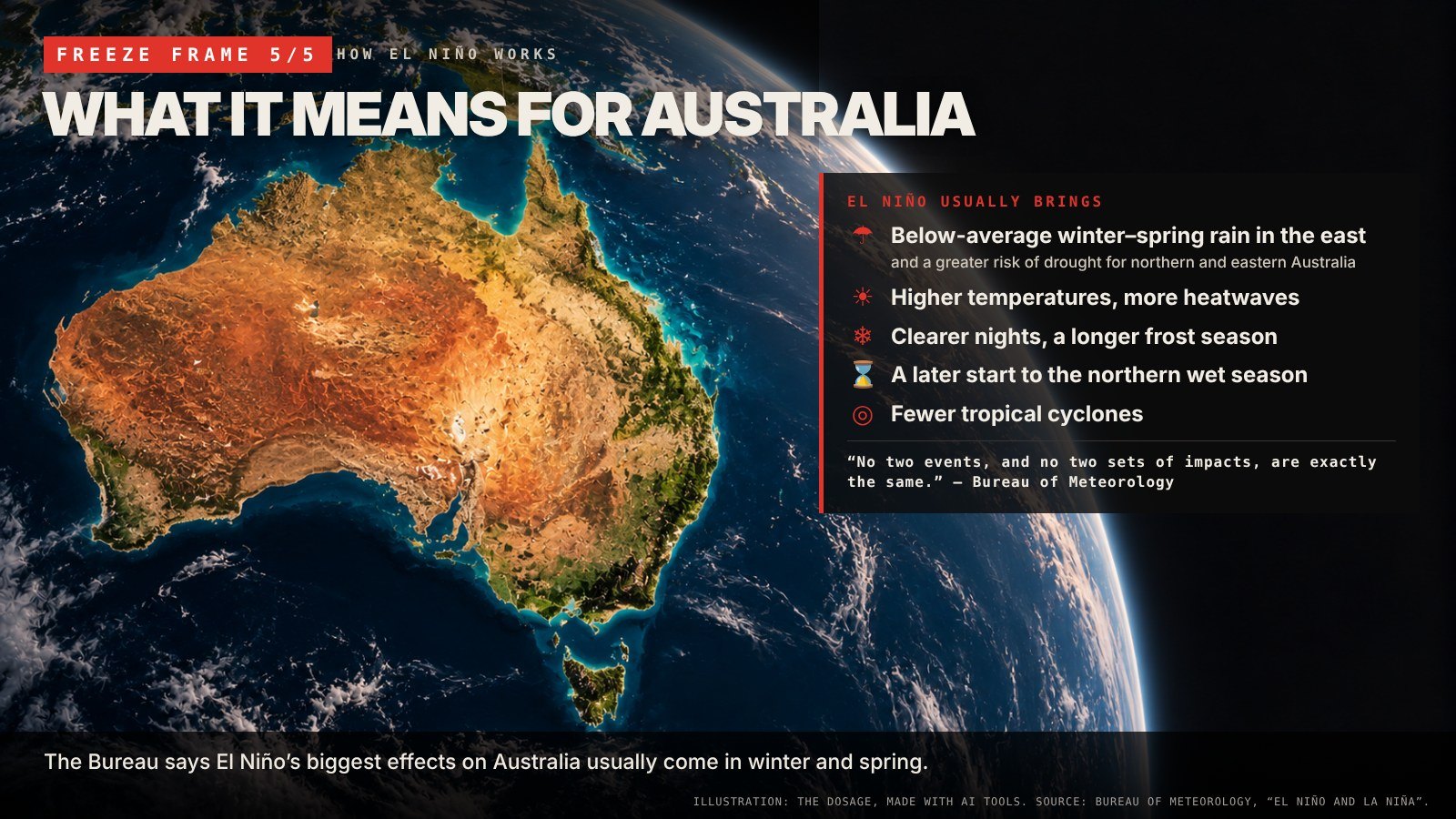
On the same day, 30 September, the Central Bank of Sri Lanka kept its Overnight Policy Rate at 8.75%. It raised rates by a full percentage point in May and says it wants to see how much of that has worked through before acting again. It also named tension in the Middle East and the risk of El Niño weather as reasons for caution.
The Bank expects inflation to stay in the high single digits until early 2027 and then ease back towards its 5% target. It says it will take a “forward-looking and data-dependent approach” and act if price pressures get worse.
What it means for you
If you live in Colombo, the weekly shop and the electricity bill are where you feel this most. If you send money home from Melbourne, the same rupees buy less than they did a year ago, so your family may need a little more to cover the same costs.
Sources: Department of Census and Statistics, CCPI, September 2026, as reported by Newswire, 30 September 2026; Central Bank of Sri Lanka policy decision, as reported by Newswire, 30 September 2026; Daily Mirror, 3 August 2026.
The President presents the budget on 12 November. Here is how it moves through Parliament, and what economists are asking for.
Politics · Sri LankaThe Dosage14 October 2026
Sri Lanka’s 2027 budget has started its journey through Parliament. Deputy Minister of Finance Anil Jayantha tabled the Appropriation Bill on 7 October, Newswire reported. The bill sets out how much the government can spend next year; the budget speech explains what it will spend it on.
12 Novbudget speech by President Anura Kumara Dissanayake, as Minister of Finance
20 Novsecond reading vote, 6pm
14 Decthird reading and final vote, 6pm
26days of debate in total
How it works
12 November: the President, who is also Minister of Finance, delivers the budget speech. This is when the tax and spending plans are announced.
13 to 20 November: seven days of debate on the budget as a whole, ending with the second reading vote. The government gets 60% of the speaking time and the opposition 40%.
21 November to 14 December: nineteen days of committee stage, where each ministry’s spending is debated. The split reverses, with the opposition getting 60%.
14 December: the final vote. Parliament will also sit on Saturdays during the debate, but not on Sundays or public holidays.
What economists are asking for
In September the Institute of Policy Studies (IPS) urged the government to avoid both new tax rate rises and early tax cuts in this budget, and instead to widen the tax net and improve compliance, the Daily Mirror reported. Its argument is that Sri Lanka is at a delicate point in repairing its public finances.
We will explain the main announcements on the day of the speech.
Monash co-hosts conference on pathways to ending the death penalty in Asia
Experts, policymakers and advocates will meet in Malaysia on Monday 26 October to discuss legal and policy reform on capital punishment.
News · WorldThe Dosage24 October 2026
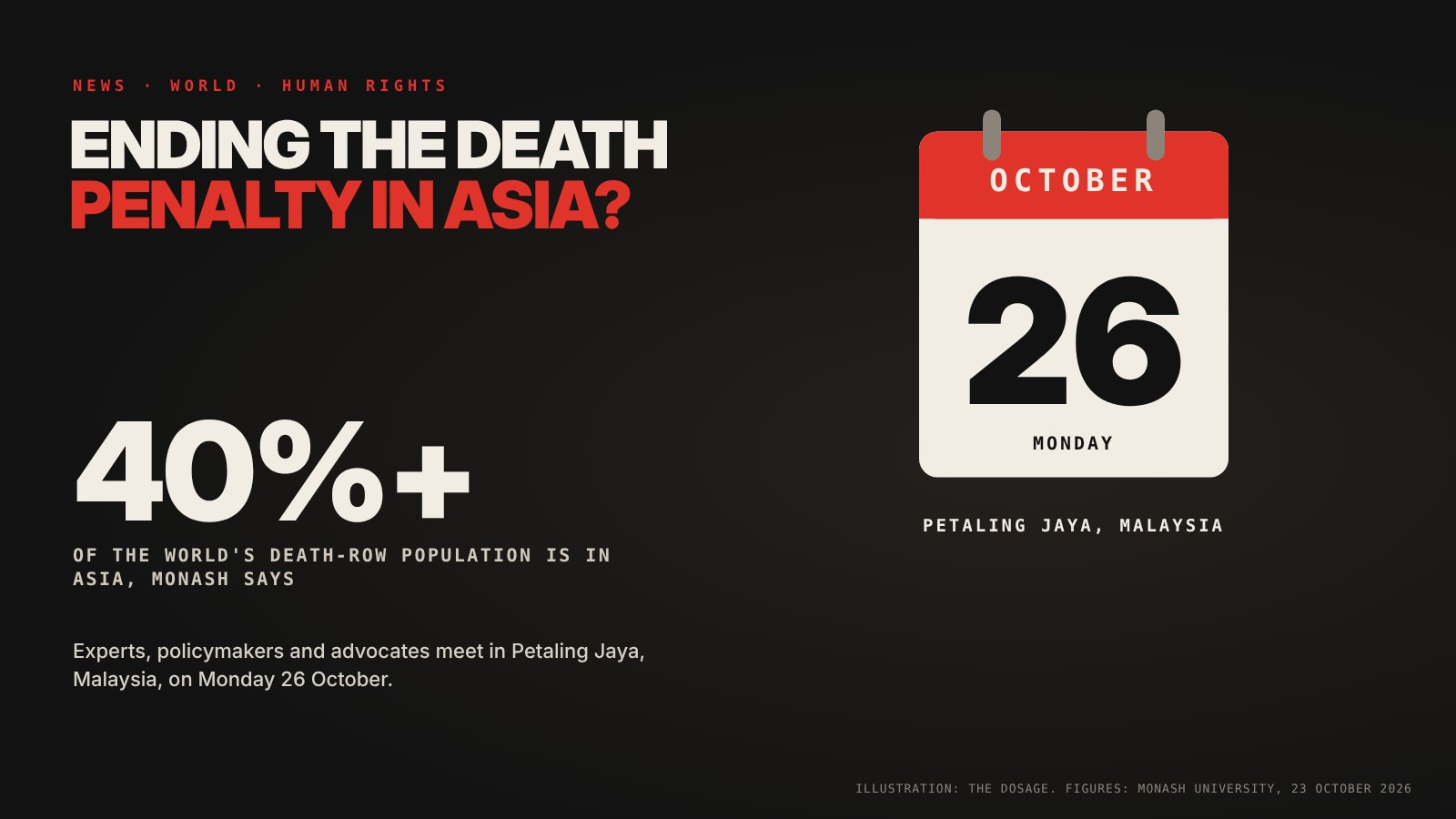
Illustration: The Dosage. Figures: Monash University, 23 October 2026.
Legal experts, policymakers and civil society representatives will meet in Petaling Jaya, Malaysia, on Monday 26 October for a conference on ending the death penalty in Asia, co-organised by Monash University.
According to Monash, Asia accounts for more than 40 per cent of the global death-row population, and the Asia-Pacific region is home to the highest number of countries that retain the death penalty, including some of the world's most actively executing states.
The conference is organised by Monash University Malaysia, Eleos Justice at Monash Law, the United Nations Office of the High Commissioner for Human Rights, and Rashid Zulkifli Advocates and Solicitors, in partnership with the Anti-Death Penalty Asia Network (ADPAN).
Speakers will include:
Gloria Macapagal Arroyo, former president of the Philippines
Aqeel Malik, Pakistan's Minister of State for Law and Justice
Ramkarpal Singh, Member of Parliament in Malaysia
Morris Tidball-Binz, Special Rapporteur on extrajudicial, summary or arbitrary executions.
What will be discussed
Four panels are planned:
legal, political and institutional pathways towards abolition in Malaysia, the Philippines, Indonesia and South Korea
mitigation, including the suffering experienced by people on death row, the disproportionate impact of capital punishment on marginalised and vulnerable communities, and emerging jurisprudence
drug-related offences, examining the use of capital punishment in drug policy and considering public health and other policy alternatives
the obstacles that continue to impede abolition, with comparative perspectives on retention and reform in jurisdictions including Singapore, Japan and Taiwan.
What the organisers say
Ms Sara Kowal, Co-Director of Eleos Justice at Monash Law, said that as executions continue across Asia, particularly for drug-related offences, countries in the region have lessons to share on reform.
“Reform in one country shows us what is possible in the next. Malaysia’s abolition of the mandatory death penalty and its resentencing exercise offer the region a working model that values rehabilitation,” Ms Kowal said.
“Indonesia has now gone ten years without an execution, and Vietnam has reduced the number of crimes punishable by death.”
She said the conference would add an academic forum to years of cross-border work by ADPAN and other civil society groups, “bringing together scholars, lawmakers, lawyers and advocates to share what has worked, be honest about what hasn’t, and turn those lessons into progress towards abolition.”
Dr Thaatchaayini Kananatu, Deputy Head of School (Research) at the School of Arts and Social Sciences, Monash University Malaysia, and Co-Director of Eleos Justice, said the death penalty for drug offences across Asia “is often justified through a ‘war on drugs’ national narrative that presents it as a deterrent or a form of retribution, an ‘eye for an eye’.”
“This political framing overlooks the disproportionate impact of capital punishment on marginalised communities, particularly people from low-income backgrounds and those with less educational and psychosocial support,” she said.
“This regional conference asks a difficult but necessary question: how can Asia move beyond the death penalty?”
Sources: Monash University media release, “Conference to explore pathways to ending the death penalty in Asia”, issued to media by email on 23 October 2026; Monash University, conference page. Source: Monash University media release, 23 October 2026 (conference page: https://www.monash.edu/news/events/ending-the-death-penalty-in-asia-reform-pathways,-comparative-perspectives,-and-path-forward). Illustrations: The Dosage.
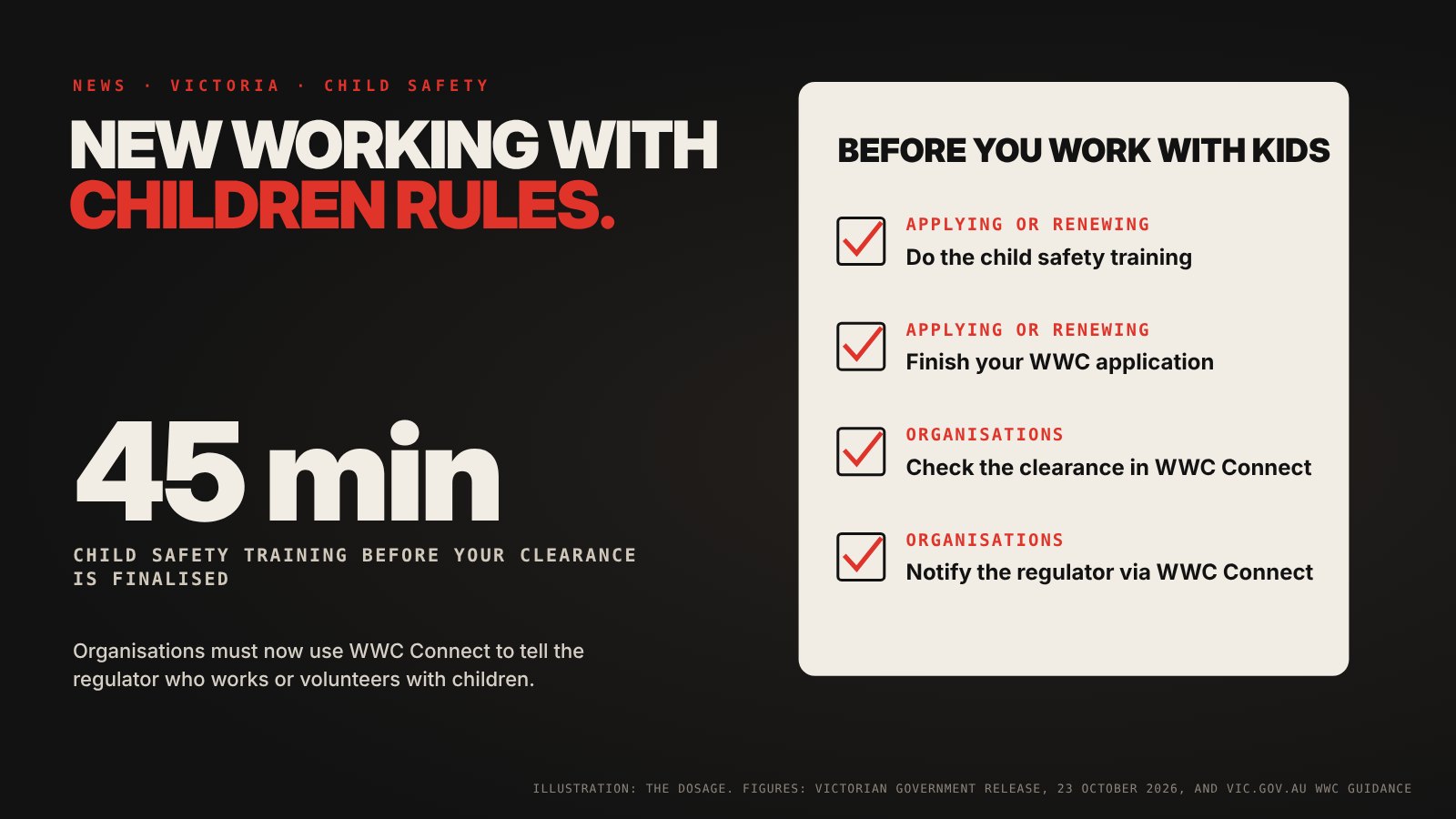
New Working with Children Check rules: what volunteers and organisations need to know
Since 19 October, people applying for or renewing a Victorian Working with Children Clearance must do child safety training, and organisations must log the people they engage in WWC Connect.
News · VictoriaThe Dosage24 October 2026
Illustration: The Dosage. Figures: Victorian Government release, 23 October 2026, and vic.gov.au WWC guidance.
Anyone applying for or renewing a Working with Children (WWC) Clearance in Victoria must now complete mandatory child safety training before their application can be finalised. Organisations that engage people in child-related work, from employers to sole traders, also have to tell the state's Social Services Regulator (SSR) who those people are.
The Victorian Government announced on Friday 23 October that the changes are now in effect, and describes the training requirement as an Australian first. The regulator's guidance pages say the training and the new WWC Connect system both started on Monday 19 October 2026.
What it means for applicants and cardholders
Who must do the training: new applicants, people renewing a clearance, and volunteers changing to an employee clearance, according to the regulator.
Already hold a card? You don't need to do the training straight away. The regulator says current holders only need to complete it when they renew a clearance that expires after 19 October 2026, or if they are a volunteer applying for an employee clearance. It also says the training will be made available online, outside the application process, in coming weeks.
The course: online and self-paced, taking about 45 minutes. A paper-based version is also available. There is no extra cost, and volunteer checks remain free.
What it covers: topics include respectful behaviour with children, recognising concerning behaviour and grooming risk factors, and how to respond if you are worried about a child's safety.
Language help: the training is currently in English. The regulator says translations into several languages, including Chinese, Vietnamese and Punjabi, are expected from early 2027, and until then you can ask someone, such as a translator or interpreter, to help you.
What organisations must do
Organisations, including sole traders, must use WWC Connect, through Service Victoria, to notify the SSR about workers and volunteers in child-related work. The regulator sets out four steps:
Check a person's clearance, or confirm an exemption applies, before they start child-related work.
Connect them to your organisation in WWC Connect: within 7 days for workers and 21 days for volunteers.
Record the checks and connections, and keep that evidence for at least seven years after the person stops working with you.
Maintain your records when people start or stop, or their contact details change (again 7 days for workers, 21 for volunteers).
Organisations are strongly encouraged to connect people they already engaged before 19 October. Changes to those people's details, or their leaving child-related work, must still be entered in WWC Connect.
Once someone is connected, the organisation gets an email if that person's Victorian clearance is suspended, revoked, excluded or expires. The release notes that engaging a person with a suspended clearance in child-related work is an offence.
Why the change
According to the release, the changes are part of Victoria's response to recommendations from the Rapid Child Safety Review, and will give the regulator a clearer picture of the state's child-related workforce.
Social Services Regulator Jonathan Kaplan said: “These new requirements strengthen the information available to organisations and reinforce their responsibility to ensure the people they engage are eligible to work with children.”
Australian Childhood Foundation CEO Janise Mitchell said: “The mandatory child safety training is a direct response to feedback from survivors of child sexual abuse - it’s been shaped by their insights and built with their leadership.”
NASA satellites show this year's El Niño looks like the giant of 1997
NASA sea-height maps suggest the 2026 El Niño rivals the strongest in the satellite record. How El Niño works, frame by frame, and what it usually means for Australia.
Explained · ClimateThe Dosage24 October 2026
Map: NASA Earth Observatory/Lauren Dauphin, using altimetry data provided by NASA/JPL-Caltech. Sea surface height, 12 October 2026 (Sentinel-6 Michael Freilich).
This year's El Niño is shaping up as one of the strongest in the satellite record, and NASA scientists say its pattern in the Pacific looks a lot like the huge event of 1997-98.
In a new article, NASA Earth Observatory compares satellite maps of sea height across the Pacific Ocean from October 1997, October 2015 and October 2026. The current El Niño, it says, "rivals these past heavyweights".
How it works, frame by frame
Frame 1: a normal year. In the Neutral phase, trade winds blow from east to west along the equator, pushing warm surface water towards the western Pacific, north of Australia. In the east, cooler water rises from below, a process called upwelling, which keeps the surface cool off South America. The Bureau says the western tropical Pacific is normally 8–10 °C warmer than the east. The warmest water builds up north of Australia, bringing cloudiness and rainfall, the Bureau says. Air rises to Australia's north and sinks near South America, a huge connected loop the Bureau calls the Walker Circulation.
Illustration: The Dosage, made with AI tools. Source: Bureau of Meteorology.
Frame 2: the winds ease. NASA explains every El Niño as a feedback loop between the ocean and the atmosphere. Trade winds normally keep warm water piled up in the western Pacific, where it stands higher than in the east. When those winds weaken, the warm water begins to pulse eastward.
Illustration: The Dosage, made with AI tools. Sources: NASA Earth Observatory; Bureau of Meteorology.
Frame 3: El Niño. The eastward shift further weakens, and sometimes reverses, the winds, letting even more warm water move east. Warm water builds up in the central and eastern Pacific, and the cloud and rain shift with it, away from Australia and towards South America. The Bureau says that once an El Niño starts, the weaker winds and warmer east tend to reinforce each other, so it tends to persist.
Illustration: The Dosage, made with AI tools. Sources: NASA Earth Observatory; Bureau of Meteorology.
Frame 4: what satellites see. Water expands as it warms, so satellites that measure the height of the sea surface can see the heat building. Higher-than-normal sea levels in the central and eastern equatorial Pacific are a sign of El Niño.
Illustration: The Dosage, made with AI tools. Source: NASA Earth Observatory.
What El Niño usually means for Australia
Frame 5: what it means here. According to the Bureau of Meteorology, El Niño typically brings:
below-average winter–spring rainfall for eastern parts of the country, and a greater risk of drought for northern and eastern Australia
a later start to the northern wet season
higher temperatures and more heatwaves
clearer nights and a longer frost season
fewer tropical cyclones.
The Bureau says the greatest impact is usually in winter and spring. But it also stresses that "no two events, and no two sets of impacts, are exactly the same", and that ENSO "is only one factor in a complex system that influences Australia's climate".
Illustration: The Dosage, made with AI tools. Source: Bureau of Meteorology.
Around the world
The last two very strong events, in 1997-98 and 2015-16, upended weather around the world, NASA says, from fires in Indonesia and the Amazon to drought and crop failures in southern Africa and heavy rain and coastal flooding in Southern California.
This year looks like 1997
NASA's maps compare 13 October 1997 (from the TOPEX/Poseidon satellite) with 12 October 2026 (from Sentinel-6 Michael Freilich). Red shows sea levels above average, white is normal and blue is lower.
Maps: NASA Earth Observatory/Lauren Dauphin, using altimetry data provided by NASA/JPL-Caltech.
"What's unique about altimetry is that we have a 35-year record from nearly identical satellites flying almost the same ground track, with each mission overlapping the next," said Josh Willis, project scientist for sea level missions at NASA's Jet Propulsion Laboratory (JPL). "That lets us look back in time and compare this El Niño to what happened in 1997. And right now, this one is on track to be even bigger."
NASA says the 2026 El Niño came on much more suddenly than 1997-98. But as of October the two look similar in character: sea level low in the west and high in the east, and high, warm water reaching all the way to South America. Willis thinks the impacts could be similar too.
The 2015-16 event was also very strong but different. Less of the warm, high water reached the coast of South America, and in the northern winter that followed, rainfall was concentrated more over Central America and the south-eastern United States, with significant flooding in Mexico.
The El Niño outlook from the US National Oceanic and Atmospheric Administration (NOAA) on 8 October gave an 83 per cent chance of a strong-to-very strong El Niño through the first three months of 2027. Willis notes that El Niño's influence travels through a chaotic atmosphere, and the signal can get muddled as it extends beyond the tropics.
"There's always a bit of a dice roll here," he said. "Just because this El Niño looks like 1997 doesn't mean it will be exactly the same—it's just our best guess at the moment."
What the Bureau says now
NASA's article looks at the Pacific and the Americas and does not discuss Australia. The Bureau of Meteorology's Climate Driver Update, issued on 13 October, says "El Niño is at near-record levels", with the warmth in the tropical Pacific forecast to peak around November or December and last into autumn 2027.
The Bureau also notes that a strong El Niño signal "does not necessarily mean strong impacts on Australian rainfall and temperature", because El Niño is only one of many factors in Australia's weather. It points to its long-range forecast as the best guide.
Sources: “El Niño Then and Now”, NASA Earth Observatory, 23 October 2026; Bureau of Meteorology Climate Driver Update, 13 October 2026; Bureau of Meteorology, “El Niño and La Niña” (updated 24 September 2025). Adapted from “El Niño Then and Now”, NASA Earth Observatory, 23 October 2026. NASA content is in the public domain; no endorsement by NASA is implied. Story by Kathryn Hansen; maps by NASA Earth Observatory/Lauren Dauphin, using altimetry data provided by NASA/JPL-Caltech. Freeze-frame illustrations: The Dosage, made with AI tools.
All 20 free Women's Health Clinics now open, with Heidelberg the last
The Heidelberg clinic, run by Austin Health and Mercy Hospital for Women, completes Victoria's statewide network of free Women's Health Clinics.
Health · VictoriaThe Dosage24 October 2026
Illustration: The Dosage. Figures: Victorian Government, 23 October 2026.
All 20 of Victoria's free Women's Health Clinics are now open, with the Heidelberg clinic in Melbourne's north-east the last in the statewide network, the Victorian Government says.
Minister for Health Ingrid Stitt officially opened the Heidelberg Women's Health Clinic on Friday 23 October.
According to the release, more than 17,500 women have already accessed free specialist care across the network since the clinics began rolling out.
The Heidelberg clinic
The Heidelberg clinic brings together Austin Health and Mercy Hospital for Women to provide coordinated specialist care for women across Melbourne's north-east.
Austin Health will provide contraception and abortion care.
Mercy Hospital for Women will support women living with persistent pelvic pain and endometriosis.
Care is delivered by a team of gynaecologists, specialist nurses and allied health professionals.
What the clinics help with
Women can get help for a range of concerns and conditions under the one roof, including:
endometriosis
pelvic pain
heavy and painful periods
menopause
incontinence
contraception and abortion care.
The government says the clinics aim to help women who have put up with pain, struggled to find answers or put off seeing a specialist because of the cost.
Where the clinics are
The final clinics to open include locations in Ararat, Bacchus Marsh and Sandringham, as well as Heidelberg.
The 20 clinics are part of the government's $153 million women's health package, which it says delivers on recommendations from Victoria's Inquiry into Women's Pain. The inquiry heard from 13,000 women who said they frequently felt unheard or had their pain dismissed.
Severe storms likely in eastern Victoria on Sunday, Bureau says
The Bureau of Meteorology says a major thunderstorm outbreak is expected across eastern Australia on Sunday afternoon, with large hail and damaging winds possible in the north-east.
News · VictoriaThe Dosage24 October 2026
Illustration: The Dosage. Figures: Bureau of Meteorology, 24 October 2026 (midday update).
Severe thunderstorms are likely across a large part of eastern Australia on Sunday afternoon and evening, including eastern and north-east Victoria, according to the Bureau of Meteorology.
In its latest video update, current at midday on Saturday 24 October, the Bureau described "a major severe thunderstorm outbreak on Sunday afternoon, extending from eastern Victoria through western New South Wales and right up through western Queensland".
This story is based on that update. Forecasts and warnings change quickly – check the Bureau's latest warnings before you head out.
What the Bureau says for Victoria
Saturday night into Sunday morning: a cold front and trough are expected to bring rain to South Australia, Victoria and Tasmania, particularly late Saturday and into early Sunday – "plenty of rain during the night for Victoria and Tasmania", the Bureau said.
Saturday afternoon: the Bureau said severe thunderstorms were possible in parts of Victoria, with Melbourne's outer eastern suburbs the most likely part of the city to be affected.
Sunday afternoon and evening: the main outbreak. The Bureau said the Riverina, the area around Albury-Wodonga and north-east Victoria face the risk of "heavy rain, large hail and damaging winds", and that "destructive wind gusts are possible in perhaps one or two stronger supercell severe storms" in that area.
Across eastern Australia
The Bureau said many areas could get 20 to 50 mm of rain over about three days, mainly with thunderstorms, and well over 100 mm in some spots, particularly in central Queensland.
That follows a very wet week in Queensland, with flash flooding in the south-east. On Monday, the Bureau expects the storms to focus on north-east New South Wales and south-east Queensland, including Brisbane, Ipswich and the Gold Coast, in what it called the last day of this outbreak.
The Bureau said severe storms could bring down trees and power lines, and cause heavy rain, flash flooding and large hail. It said people had already been rescued after driving into flooded roads and creeks in Queensland.
For warnings and incidents in Victoria, use VicEmergency.
VICSES says blocked drains, cars parked under trees and falling branches are some of the major causes of preventable storm damage.
For help with flood and storm emergencies, call VICSES on 132 500. In a life-threatening emergency, call Triple Zero (000).
Sources: Bureau of Meteorology, “Severe weather update: Major weekend severe storm outbreak”, video current 12 pm AEDT Saturday 24 October 2026; Bureau of Meteorology video news release, 23 October 2026; VICSES storm advice. Source: Bureau of Meteorology video updates, 23 and 24 October 2026; VICSES. Illustrations: The Dosage.
Arden to get more than 5,400 homes and the City of Melbourne's first new public secondary school since 1910
Developers have been appointed for Arden Central next to the new Arden Station, and land has been secured for a new public secondary school.
News · VictoriaThe Dosage24 October 2026
Illustration: The Dosage. Figures: Victorian Government, 22 October 2026.
More than 5,400 homes will be built at Arden Central, next to the new Arden Station on the Metro Tunnel line.
The Victorian Government announced on 22 October that developers Hamton and Hostplus will deliver the precinct. The government says the number of homes is more than 50 per cent above the original target of 3,500, and more than 10,000 people will live there.
A new public secondary school
Land has been secured on two lots next to Arden Station, on Arden Street, for a new public secondary school.
It will be the first government secondary school built in the City of Melbourne since University High School was founded in 1910. The vertical school is meant to help meet growing inner-city enrolments. Land has also been identified for a future public primary school.
Deputy Premier and Minister for Education Gabrielle Williams said: "We are laying the groundwork for new schools where they are needed, including in Arden."
What's planned
Arden Central covers 12 hectares, 1.5 kilometres from the CBD. According to the release, it will include:
housing for first home buyers, families, key workers and students, with at least 10 per cent affordable housing
more than 4,000 homes designated for first home buyers, with Arden an anchor site for the government's First Home Buyers scheme
a 5,000-capacity live music venue run by Live Nation
a new Melbourne Victory campus, including a Women's Academy and youth female pathway program
shops, food and drink, and 5.5 hectares of open space.
When
Works are expected to begin in 2027, with around 1,700 homes completed by 2033.
The government says the project will support around 3,800 construction jobs and create more than 1,100 jobs across the precinct.
More than $36.8 million for flood levees, coastal defences and bushfire preparedness in Victoria
Eleven Victorian projects, including coastal protection at Elwood, will share more than $36.8 million in Round Four of the Disaster Ready Fund.
News · VictoriaThe Dosage24 October 2026
Illustration: The Dosage. Figures: Victorian Government, 22 October 2026.
Eleven projects across Victoria will share more than $36.8 million to help communities prepare for floods, storms, rising seas and bushfires.
Federal Minister for Emergency Management Kristy McBain and Victorian Minister for Emergency Services Paul Edbrooke announced the funding on 22 October under Round Four of the federal government's $1 billion Disaster Ready Fund.
The Commonwealth is contributing more than $17.7 million, with a further $19.1 million from the Victorian Government and other project partners.
Elwood among the projects
A $7.2 million Coastal Risk Reduction and Resilience Program will deliver new and upgraded coastal protection at Elwood and Port Franklin. According to the release, it will reduce coastal flooding risks and improve resilience to storms and sea level rise.
Other projects named in the release include:
$12.3 million for levees along Racecourse Creek in Epsom, reducing flood risk to more than 500 homes and 60 businesses
$4.4 million for levee works at Castlemaine Caravan Park, Elizabeth Street and Campbells Creek Township
$3.7 million for a flood protection levee at the Rochester and Elmore District Health Service hospital, which was evacuated in the 2022 flood
nearly $3.9 million for community resilience and infrastructure projects in Mansfield Shire and Ruffy, to support residents before, during and after emergencies such as bushfires.
Victoria is also leading a $1 million project to share emergency information and deliver joint training between north-east Victoria and southern New South Wales.
The release says communities in Ruffy and Mansfield recently experienced fires, and communities in Bendigo and Rochester recently experienced flooding.
Mr Edbrooke said: "We know how quickly bushfires, floods and storms can turn lives upside down."
The full list of Victorian projects is on the National Emergency Management Agency's Disaster Ready Fund page.
Fibre broadband coming to more than 19,000 Victorian homes and businesses
A $133 million nbn co and Connecting Victoria program will bring fibre to the premises in 70 towns and suburbs.
News · VictoriaThe Dosage24 October 2026
Illustration: The Dosage. Figures: Victorian Government, 22 October 2026.
More than 19,000 homes and businesses in 70 Victorian towns and suburbs will be upgraded to fibre broadband, according to the Victorian Government.
Minister for Government Services Enver Erdogan announced the $133 million program on 22 October. It is a partnership between nbn co and Connecting Victoria.
What it means
The program will deliver fibre-to-the-premises technology, which runs high-speed fibre optic cable directly into each home or business. According to the release, this means download speeds of up to one gigabit per second.
The first upgrades are expected to finish in 2027, with the rest rolling out through to 2030.
More than 2,000 homes and businesses in Ararat, Donald, Castlemaine, Horsham, Mortlake, Sebastopol and Wendouree will be able to swap fixed wireless for fibre.
How it is funded
The upgrades are enabled by the expansion of nbn co's national fibre upgrade program, backed by a $3.8 billion Commonwealth funding package announced in January 2025, including $800 million from nbn co.
The government says Connecting Victoria has already improved internet for more than 100,000 homes and businesses in more than 180 towns and suburbs.
Check your address
To find out if you are eligible for current or future upgrades, use the 'check your address' tool on the nbn website, or register for updates at nbn.com.au/register.
New planning rules to protect Melbourne's green wedges and farmland
Statewide changes taking effect in November aim to limit the loss of rural land and reduce conflicts between new homes and established farms.
News · VictoriaThe Dosage24 October 2026
Illustration: The Dosage. Figures: Victorian Government, 22 October 2026.
New statewide planning rules aimed at protecting Melbourne's green wedges and Victoria's farmland from inappropriate development will come into effect in November, according to the Victorian Government.
Minister for Planning Sonya Kilkenny announced the changes on Thursday 22 October.
What the reforms do
According to the Victorian Government release, the reforms will:
strengthen green wedge and agricultural state planning policy
reduce the loss or fragmentation of rural land
support appropriate farm produce sales
minimise land use conflicts between sensitive developments, such as homes, and established farms
protect Victoria's food supply in planning decisions.
The release says statewide planning controls will also protect the urban growth boundary and support long-term planning for Victoria's growing population.
Why the change
The government says the changes respond to recommendations from the Green Wedge and Agricultural Land Action Plan 2024 and the Inquiry into Securing the Victorian Food Supply.
According to the release, that work found land use conflicts were making it harder and more expensive to grow food close to cities. The government says the new rules will give a consistent approach to protecting green wedges and farms from inappropriate development.
Minister for Agriculture Michaela Settle said the government was "protecting farms that are critical to the future of Victoria's agriculture sector".
$139.5 million for Victoria's integrity agencies as new anti-corruption laws begin
IBAC can now investigate a wider range of conduct and follow public money to private subcontractors on government projects.
News · VictoriaThe Dosage24 October 2026
Illustration: The Dosage. Figures: Victorian Government, 22 October 2026.
Victoria's anti-corruption commission and two other integrity agencies will share $139.5 million in extra funding to start work under new laws passed by the Victorian Parliament in September.
The Victorian Government announced the funding on Thursday 22 October. It will support:
the Independent Broad-based Anti-Corruption Commission (IBAC)
the Victorian Ombudsman
Integrity Oversight Victoria.
The government says the money means the agencies can begin their work under the new laws immediately.
What the new laws change
According to the Victorian Government release:
The threshold of conduct IBAC can investigate has been lowered.
The definition of corrupt conduct now extends to serious disciplinary matters, including serious misconduct and conduct worthy of termination. There is a specific provision for elected officials: ministers, MPs and local councillors.
IBAC has new "follow-the-money" powers to trace public funds, so it can investigate private and third-party subcontractors on government projects.
The threshold for holding public hearings has been lowered by removing the "exceptional circumstances" provision.
There will be a legislated process for recruiting IBAC commissioners.
IBAC's budget requests and the Ministerial Code of Conduct will be published online.
In short
The changes widen what IBAC can look into, including the conduct of private and third-party subcontractors on government projects, and make it easier for the commission to hold public hearings.
Special Minister of State Ingrid Stitt said Victorians "rightly expect public money to be spent properly".
Planning starts on two new jobs precincts in Melbourne's west
Developers will fund planning and infrastructure for two new employment precincts in Melbourne's west, including one at Ravenhall, with public consultation to come.
News · VictoriaThe Dosage24 October 2026
Illustration: The Dosage. Figures: Victorian Government, 22 October 2026.
Planning has begun for two new employment precincts in Melbourne's west. The Victorian Government release names them as the Ravenhall and Warrawee precincts, while its opening line places them in Ravenhall and Truganina.
Minister for Planning Sonya Kilkenny announced the start of planning works on Thursday 22 October. The government says the precincts will bring more jobs closer to where thousands of homes are being built.
A new approach
According to the release, the two precincts will pilot an industry-led approach, with developers working with the government on parts of the planning process.
The proponents, Boral, Dexus and Pelligra, will fund the planning and infrastructure improvements needed to unlock the land in the long term. The release says this includes major upgrades to arterial roads in the area.
Have your say
There will be public consultation so the community can have a say on the new developments. The release does not give dates.
Nearby growth
The release says more than 72 hectares of land in the same precinct was recently rezoned for industrial use through the Development Facilitation Program, creating more than 1,000 jobs.
It also points to Melton East, a new suburb the government says will deliver 12,000 homes, seven schools and more than five MCGs' worth of parks and reserves. Once complete, Melton East is expected to be home to more than 36,000 residents and support around 1,600 jobs.
Contract awarded to remove Anderson Street and Hudsons Road level crossings
Construction starts in 2027, with a new Spotswood Station due in 2028 and the project finished in 2029, the government says.
News · VictoriaThe Dosage24 October 2026
Illustration: The Dosage. Figures: Victorian Government, 22 October 2026.
A contract has been awarded to remove the level crossings at Anderson Street and Hudsons Road in Melbourne's west.
The Victorian Government announced on Thursday 22 October that an alliance of Acciona, WSP, Metro Trains Melbourne and VIDA Rail will deliver the project.
Why these crossings
The release describes Anderson Street as one of the most dangerous level crossings left on Melbourne's metropolitan rail network. It says there has been one fatality and four serious injuries there since 2006, and 26 near misses since 2016.
More than 6,000 pedestrians use the crossing each day, and the boom gates are down for half of the two-hour morning peak, according to the release.
At Hudsons Road, more than 6,600 vehicles use the crossing each day, with many waiting for long periods during the morning peak.
What's planned
Two new accessible underpasses will keep pedestrians and cyclists connected:
Anderson Street: stairs and two lifts on each side of the rail line, for cyclists and people with prams, mobility aids and wheelchairs
Murray and Goulburn streets: stairs and ramps.
The project will also create new open space on Anderson Street for outdoor dining, seating and public artwork. After community feedback, it will include more car parking to improve access to the Yarraville Village precinct, the release says.
Four rounds of community engagement have been held, and early designs for Anderson Street were released in May.
Timeline
According to the release:
Final designs: still to be released
Construction: starts in 2027
New Spotswood Station: opens in 2028
Project complete: 2029
Minister for Public Transport Vicki Ward said removing the crossings "will improve safety and cut congestion".
SEC Apprenticeship Academy pilot to take its first 40 electrical apprentices
Expressions of interest open in the coming weeks, with the first apprentices due to start early in 2027.
News · VictoriaThe Dosage24 October 2026
Illustration: The Dosage. Figures: Victorian Government, 22 October 2026.
The SEC Apprenticeship Academy is preparing to take its first electrical apprentices, with a 40-place pilot opening for expressions of interest in the coming weeks.
Minister for Energy and Resources Jaclyn Symes announced on Thursday 22 October that the SEC will partner with NECA Education & Careers and the Electrical Trades Union to launch the pilot.
According to the Victorian Government release, the first apprentices will start early in 2027. The release says the Academy will be Victoria's largest electrical apprenticeship training program, supporting 2,000 apprentices over four years.
Where the jobs are
The release says Victoria's energy workforce is expected to grow from around 45,000 workers today to 68,000 by 2040, with strong demand for electricians, plumbers and other skilled workers for network upgrades, home electrification and electric vehicle infrastructure.
Other projections in the release, all to 2040:
electricians in Victoria's energy sector to grow by more than 90 per cent from 2026, to around 8,500
almost 35,000 energy-sector workers across metropolitan Melbourne
jobs supporting home battery installations to almost triple, to around 2,600
jobs supporting electric vehicle infrastructure to quadruple, to around 14,300.
The release also says around 37 per cent of Victoria's energy jobs will be in regional Victoria. It does not say who produced these projections.
NECA Education & Careers CEO Gideon Perrott said the Academy would "give more Victorians the skills to turn that opportunity into a career".
Volunteer Mark Edmonds named 2026 Victorian Senior of the Year
This year's awards also honoured work supporting people with dementia, older migrants, multicultural communities and female veterans.
News · VictoriaThe Dosage24 October 2026
Illustration: The Dosage. Figures: Victorian Government, 22 October 2026.
Volunteer Mark Edmonds has received the Premier's Award for Victorian Senior of the Year 2026, recognising his work helping build self-sustaining communities in Zimbabwe.
Recipients were celebrated at Government House with Minister for Seniors Nick Staikos, the Victorian Government announced on Thursday 22 October.
Other award recipients
Sandra Verdam received the Positive Ageing Award for founding Memory Care Cafés, which support people living with dementia and their carers.
Ronnie Figdor OAM received the Promotion of Multiculturalism Award for his lifelong work building connections between diverse communities and generations.
Mahendrakumar Patel received the Emerging Impact Award for his work empowering older migrants and the multicultural community.
Margaret Jager received the Veteran Community Award for more than 40 years of service to Victoria's female veteran community.
Council on the Ageing (COTA) Victoria Senior Achiever Awards were also presented to nine Victorians. Their contributions range from mentoring and supporting vulnerable people to providing leadership and training during emergencies and disasters.
About the awards
For more than 30 years, the Victorian Senior of the Year Awards have recognised seniors who give back through volunteering, advocacy and community leadership.
Mr Staikos said this year's recipients showed "the extraordinary impact older Victorians have in our communities". He also encouraged people to get involved in Seniors Festival events running across the state.
Nearly 2,000 more registered teachers joined Victorian schools in a year, snapshot shows
The 2025 Victorian Teacher Workforce Snapshot projects 15,700 more teachers in the system by 2031.
News · VictoriaThe Dosage24 October 2026
Illustration: The Dosage. Figures: Victorian Government, 22 October 2026 (2025 Victorian Teacher Workforce Snapshot).
Nearly 2,000 more registered school teachers joined Victorian schools between 2024 and 2025, according to the 2025 Victorian Teacher Workforce Snapshot.
Deputy Premier and Minister for Education Gabrielle Williams announced the figures on Thursday 22 October.
Key figures
According to the release:
More than 127,000 school and early childhood teachers are estimated to be ready to teach in Victoria's schools and kindergartens by 2031.
By 2031, Victoria is expected to have 15,700 more teachers in the system than in 2025.
Fully registered early childhood teachers rose 12 per cent in a year.
Victorian schools on average have fewer students per teacher than schools in all the other mainland states.
Victoria accounted for more than 84 per cent of the national increase in government school enrolments between 2018 and 2025.
Support for new teachers
The release says the Career Start program has supported more than 6,100 early career teachers since it began in 2021, and will support a further 2,500 in 2027.
More than 6,000 early childhood teaching scholarships have been awarded since 2019. The first fully funded Secondary Teaching Scholarships recipients will graduate and enter the workforce at the end of 2027, the release says.
According to the release, paid placements, employment-based degrees and targeted incentives are being used to get more teachers into regional and hard-to-staff schools and subjects. The government also says class sizes will be protected in the new enterprise bargaining agreement.
Preferred bidder named for Sunshine Station rebuild as Melbourne Airport Rail moves ahead
A CPB Contractors and SMEC alliance has been named preferred bidder to turn Sunshine Station into a six-platform hub, with a new Keilor East station linked to the Metro Tunnel due in 2031.
News · VictoriaThe Dosage24 October 2026
Illustration: The Dosage. Figures: Victorian Government, 21 October 2026.
A preferred bidder has been chosen to rebuild Sunshine Station in Melbourne's west as a major transport hub, as part of the Melbourne Airport Rail project.
The Victorian Government announced on Wednesday 21 October that the Network Integration Program Alliance, a partnership of CPB Contractors and SMEC, is the preferred bidder for the Sunshine Station works. The announcement was made by Victorian Premier Ben Carroll.
The Stage 1 works at Sunshine include two new platforms for regional trains, an extended station concourse, new forecourts on both sides of the station and an upgraded bus interchange. According to the release, the upgrades will turn Sunshine into a six-platform hub.
The project will also untangle six kilometres of track between West Footscray and Albion.
"Untangling the tracks will create capacity for 1,000 trains a day, including future airport services," Victorian Minister for Public Transport Vicki Ward said.
Stage 1 is due to be finished in 2030. The government says it will allow more frequent services on the Geelong, Ballarat and Bendigo lines and pave the way for future electrification of the Melton and Wyndham Vale lines.
Stage 1 is split into five works packages, and the release says three have already been awarded. Between them they cover moving underground utilities, reconfiguring tracks, building new rail bridges and building a new Tottenham Station. The fifth and final package, for a new Albion Station, is due to be awarded in 2027.
Stage 2 works are set to begin in the coming weeks and are due to be completed in 2031, when passenger trains will run to a new station at Keilor East. The release says the line will connect directly to the Metro Tunnel and have high-capacity signalling to allow frequent services.
The release does not give a cost for the works, a jobs figure or a date for when trains will first run to Melbourne Airport.
New MACHA app for Victoria's Maternal and Child Health nurses
A new digital platform will help MCH nurses share information and make referrals, with a statewide rollout from March 2027.
News · VictoriaThe Dosage24 October 2026
Illustration: The Dosage. Figures: Victorian Government, 23 October 2026.
Victoria's Maternal and Child Health (MCH) nurses will get a new digital platform to share information and make referrals, with nurses getting access from December and a statewide rollout from March 2027, the Victorian Government says.
The Maternal and Child Health Application, or MACHA, was announced on Friday 23 October by Minister for Children Lizzie Blandthorn.
For Victorian families who see an MCH nurse in the early years of a child's life, the change is mostly behind the scenes – but the government says it should make care easier to coordinate.
What MACHA will do
According to the release, MACHA will:
help MCH nurses share information and make referrals with hospitals, councils and other support services
make it possible to access MCH and other support services in another part of Victoria for families who have temporarily moved
connect with the Parent Portal, which the government describes as a one-stop shop for trusted information, services and support for parents and carers.
“This platform will help nurses connect families with the services they need. Care will be more coordinated and more convenient,” Ms Blandthorn said.
Built with nurses
The government says MACHA was designed with MCH nurses, and that their decades of frontline experience sit at the heart of the platform.
When it starts
From December 2026: nurses get access through a dedicated training and transition environment, giving them time to learn the system and build confidence.
From March 2027: the statewide rollout begins.
MACHA is part of the government's children's digital reform program.
What it means for you
The release does not list any steps parents need to take. If you have questions about your child's MCH visits, your local MCH nurse or council MCH service is the place to ask.
Food relief grants: refrigerated van to stock The Big Umbrella's EAT.ATMs
The Victorian Government has announced $9.5 million in food relief grants for 177 organisations, including a refrigerated vehicle for a network of seven 24/7 meal machines.
News · VictoriaThe Dosage24 October 2026
Illustration: The Dosage. Figures: Victorian Government, 23 October 2026.
A Victorian charity that runs meal vending machines for people in need will buy a refrigerated vehicle with a Victorian Government food relief grant, as 177 organisations share in $9.5 million in funding.
The Victorian Government announced the 2026–27 Community Food Security Program grants on Friday 23 October. The announcement was made by Minister for Carers and Volunteers Luba Grigorovitch.
Meals on the move for The Big Umbrella
According to the release, The Big Umbrella will use its grant to buy a refrigerated vehicle to safely transport meals to its network of seven EAT.ATMs. The government says the machines provide discreet, convenient, 24/7 access to food for individuals and families in need, and are designed to reduce the barriers and stigma of asking for help.
The Big Umbrella said: “The EAT.ATM model is designed to remove barriers to food relief and make support available when and where people need it. This funding will help us expand our impact and ensure more individuals and families can access nutritious food with dignity and respect.”
Where the money goes
The release says the $9.5 million is split across two streams:
Local Grants: 168 organisations will share $7 million.
Coordination Fund: nine more organisations will share $2.5 million to strengthen food relief services across Victoria. They include The Community Grocer, SecondBite | FareShare, Alex Makes Meals and Foodbank Victoria.
Other funded projects named in the release include:
Common Ground Project on the Surf Coast, running food education and cooking programs for migrant and refugee women.
Asylum Seeker Resource Centre and Family Access Network, providing food relief to asylum seekers, young people and families facing hardship.
Enjoy Community Inc and Mullum Mullum Indigenous Gathering Place, expanding access to nutritious and culturally appropriate food.
The government says the funding will support food rescue, social supermarkets, meal production, affordable fresh food and better coordination between services, to help meet growing demand.
Find out more
The release does not list all 168 Local Grants recipients or the locations of the EAT.ATMs. You can read the full government media release.
Children’s Week starts this weekend with free events for families across Victoria
From cooking demonstrations in Dandenong to drumming in Geelong, 164 not-for-profit groups are running free activities from 24 October to 1 November.
Lifestyle · VictoriaThe Dosage24 October 2026
Illustration: The Dosage. Event details: Victorian Government, 23 October 2026.
Children’s Week runs from Saturday 24 October to Sunday 1 November, with free activities for children and families across Victoria.
Minister for Children Lizzie Blandthorn announced grants totalling $152,600, shared by 164 not-for-profit organisations to run Children’s Week events.
What’s on
Activities range from sport, cooking demonstrations and interactive drumming sessions to dance performances and traditional craft-making. The events are free and are hosted by not-for-profit groups, libraries and community groups.
This year’s grant recipients include:
Nourish Nation Foundation: cultural cooking demonstrations and activities in Dandenong
Bluebird Foundation: interactive drumming, songs and movement, led by One Spirit Africa, in Geelong
Malaysia-Singapore Sikh Association: Sikh and Punjabi festivities through dance, music, storytelling and cultural activities in Werribee
Thai Education Centre of Victoria: Thai culture through craft, traditional games, language, food, music and dance in Ballarat
This year’s theme
The theme is “Children have the right to use their own language, celebrate their culture and practise their religion”, based on Article 30 of the United Nations Convention on the Rights of the Child.
Last year, 29,500 children and families took part in 240 Children’s Week events supported by the Victorian Government.
Victorian dairy farms bounce back after tough season
A new report from the 20-year-old Dairy Farm Monitor Project shows 86 of 90 participating dairy farms made positive returns in 2025–26.
News · VictoriaThe Dosage24 October 2026
Illustration: The Dosage. Figures: Victorian Government, 13 October 2026.
Victoria's dairy farmers have had a better year after a tough 2024–25 season, according to a new report.
The 2025–26 Victorian Dairy Farm Monitor Project Annual Report was released on 13 October by Agriculture Minister Michaela Settle. This year marks 20 years of the project.
What the report found
The project, run by Agriculture Victoria and Dairy Australia, tracks 90 dairy farms across northern Victoria, south west Victoria and Gippsland.
The report shows 86 of the 90 participating farms recorded positive returns. More than 80 per cent of participating farmers expect their returns to improve or stay stable in 2026–27.
According to the release, better conditions have helped farmers recover from drought, rebuild feed reserves and increase milk production. South west Victoria recorded the state's biggest improvement in dairy farm profitability.
Drought support
The government says that between September 2024 and September 2026:
more than 1,200 dairy farmers accessed drought grants of up to $5,000 statewide, or $10,000 in the south west
more than 480 dairy farmers received free expert advice to plan for and manage drought and reduce costs
it helped supply 48,000 tonnes of fodder and provided duty, fee and rates relief.
Twenty years of data
Dairy Australia chief executive Matt Shaffer said participation is growing, from 80 farms last year to 90 this year and an expected 110 next year.
Upper Murray farmer Evan Nicholas, who milks around 600 cows, has been part of the project for all 20 years. "Having 20 years of data gives us a really clear picture of how our farm has changed and where we've improved," he said.
Free legal help for Victorians building a home is expanding
The Domestic Building Legal Service will help homeowners at every stage of a build, not only after formal dispute resolution has failed.
News · VictoriaThe Dosage24 October 2026
Illustration: The Dosage. Stages and payment caps: Consumer Affairs Victoria.
Free legal help for Victorians building a home is being expanded to cover every stage of the build, through the Domestic Building Legal Service.
The Victorian Government announced on 22 October it would invest more than $14.5 million over five years in the service. Until now, it only stepped in after formal dispute resolution had failed.
What changes
According to the release, funding will rise from $730,000 to almost $3 million this year. The government expects:
up to 16,000 Victorians a year to use the service’s free online legal resources
around 1,100 homeowners to get tailored advice, online or in person
400 homeowners a year to get intensive legal help, including advocacy and representation in complex disputes with their builder, up from 150 last year.
The service will be delivered by Justice Connect and the Consumer Action Law Centre.
The expansion was announced by the Minister for Consumer Affairs, Tim Richardson.
The background
The release says the collapse of builder Porter Davis in 2023 left 1,500 Victorian homes unfinished.
Since then, a new regulator, the Building and Plumbing Commission, has been set up. First-resort Home Warranty Insurance, covering lost deposits, unfinished work and defects, has applied since 1 July 2026, according to Consumer Affairs Victoria.
Explore: how a house gets built
Interactive: take a new home apart in 3D. Open it full screen. Illustration: The Dosage. Payment caps: Consumer Affairs Victoria, October 2026.
Building a home in Victoria happens in stages: base, frame, lock-up, fixing and completion, with mandatory inspections by the building surveyor and progress payments along the way. Take a new home apart in 3D, stage by stage, and see what you can be asked to pay and what to check before you pay: How a house gets built, piece by piece.
The payment limits in the explainer are the current ones, according to Consumer Affairs Victoria: a deposit of up to 5% on contracts of $20,000 or more. Victoria’s new domestic building contract laws are set to start on 1 December 2026, according to Consumer Affairs Victoria, and the government has proposed new deposit and progress payment limits for homes, which it consulted on until 16 September. Anyone signing a contract from 1 December should check the rules that apply to them.
Heat hits mums and babies hard, and the WHO wants countries to start counting the harm
The first-ever global indicators for tracking how extreme heat affects pregnancy, newborns and children have been launched, after babies under one faced 389% more heatwave days in 2024 than in 1986–2005.
Health · WorldThe Dosage24 October 2026
Illustration: The Dosage. Figures: World Health Organization, 21 October 2026.
Pregnant women, newborns and children are among the people most vulnerable to extreme heat, and the World Health Organization says health systems need to start measuring how it affects them.
On 21 October, the WHO, the World Meteorological Organization, UNICEF and the United Nations Population Fund launched the first-ever set of priority indicators to help countries track the health impacts of heat on pregnant women, newborns and children.
What the evidence shows
According to the WHO, exposure to extreme heat is linked to a 26% increase in the odds of preterm birth. Babies under one year old experienced 389% more heatwave days in 2024 than in the 1986 to 2005 baseline period, and an estimated 1.5 billion children worldwide are exposed to heatwaves that are becoming more frequent, longer or more severe.
Illustration: The Dosage. Figures: World Health Organization, 21 October 2026.
“Heat is already affecting our most vulnerable populations, including pregnant women, newborns and children. But what health systems do not count, they cannot respond to,” said Dr Pascale Allotey, Director of the WHO’s Department of Sexual, Reproductive, Maternal, Child and Adolescent Health and Ageing.
What countries are being asked to track
The indicators ask countries to monitor preterm births, stillbirths, low birthweight, pregnancy hypertension, child deaths and health-facility visits during extreme heat. The WHO says monitoring school attendance can also help reveal how heat is disrupting children’s lives.
Illustration: The Dosage. Figures: World Health Organization, 21 October 2026.
What the WHO wants
The WHO is urging all countries to develop and implement context-specific heat-health action plans that integrate the needs of pregnant women, newborns and children, strengthen early warning systems and trigger timely action when heat risks emerge.
More than 100,000 trees will be planted in suburbs with less shade, and 10 shopping strips and streets will get a green makeover.
News · MelbourneThe Dosage23 October 2026
Illustration: The Dosage, made with AI tools. Source: Victorian Government media release, 22 October 2026.
More than 100,000 trees will be planted across Melbourne’s suburbs, with the focus on areas that have less tree cover and greater exposure to heat.
The Victorian Government announced the $3 million package on 22 October. It covers 23 projects across two programs.
Where the trees are going
The first program puts $1.5 million into 13 tree-planting projects. Planting will stretch from Werribee, Altona and Braybrook in the west, to Craigieburn, Sunbury and Broadmeadows in the north, and Pakenham, Cranbourne and Keysborough in the south-east.
The biggest projects include:
16,000 trees across Hume
14,000 trees at Cranwell Park in Braybrook
15,000 trees along the Maribyrnong River and nearby reserves.
Illustration: The Dosage, made with AI tools. Source: Victorian Government media release, 22 October 2026.
According to the government, the trees will provide more shade, cool neighbourhoods and create more habitat for native wildlife.
Greener shopping strips
The second program puts another $1.5 million into 10 projects to green busy shopping strips and streets.
These include shopping streets in St Albans, Sunshine West, Brunswick, Clarinda and Chelsea Heights, as well as streets in Richmond, Southbank and the CBD. The government says the extra greenery will cool these areas and make them more comfortable places to spend time.
Environment Minister Jaclyn Symes said the aim was to make everyday places “greener, cooler and better places to spend time”.
What comes next
The 100,000 trees are the first stage of a plan for 500,000 more trees and plants. The remaining 400,000 will be allocated in future rounds.
The government says this builds on 500,000 trees already planted across Melbourne’s west.
Why your protein shake clumps, and how Melbourne science could one day fix it
RMIT researchers have shown that static charge can be turned up, flipped or switched off with an electric field. Food powders are the next test.
Lifestyle · ExplainedThe Dosage23 October 2026
Illustration: The Dosage, made with AI tools.
Most people who drink protein shakes have chipped a stubborn lump out of the bottom of a shaker, or chased a floating clump around a mug of chocolate milk. According to researchers at RMIT University, static electricity is one of the likely reasons, and they have found a way to control it.
Scientists from RMIT and Riga Technical University in Latvia have shown that the static charge left on a surface can be controlled. RMIT says the discovery could help manufacturers avoid unwanted static when making everyday household goods, and might one day stop powders such as protein, chocolate malt and coffee from clumping.
Graphic: The Dosage, made with AI tools. Source: RMIT University, 21 October 2026.
A costly little zap
Static electricity is usually treated as a hazard. Industry often reduces it by adding expensive conductive additives, a one-size-fits-all fix. According to RMIT, static discharge costs the electronics industry alone about US$5 billion.
The new findings point to a different approach: surfaces whose static charge could be programmed to suit the job.
What the researchers found
The study was co-led by Dr Peter Sherrell from RMIT’s School of Science, in collaboration with Riga Technical University. It showed that applying an electric field while two surfaces touch and pull apart controls how much static charge is left behind. The field can also decide whether that charge is positive or negative, or remove it altogether.
The first author and co-corresponding author is Dr Andris Šutka of Riga Technical University. Professor Amanda Ellis from the University of Melbourne is a co-author, and PhD student Dumindu Dassanayaka and Dr Qiang Sun from RMIT were also key contributors.
Dr Sherrell gave the example of a conveyor belt sorting seeds, where the static charge changes with the size or species of seed. Adjusting the electric field for each species would mean “no risk of a seed getting a static shock”, he said.
Other possible uses include anti-static surfaces for manufacturing and electronics, controlling where charged particles or plastics stick and how they assemble, smarter sensors, and smart air and gas filters.
A smoother shake?
As powders rub and tumble during manufacturing, packing and pouring, the grains can pick up static charge and cling to each other.
“In principle, we could apply a small electric field across powders as they move,” Dr Sherrell said. That would stop the grains charging up, so they don’t get electrostatically “stuck” to each other.
The team tested plastics, not food. RMIT says the results are a good indicator of how the approach could work for food powders, and the next step is to find out how strong the field needs to be, how long to apply it for each powder, and where in the process it works best.
The researchers also plan to test real powders and to study programmable surfaces at much smaller scales, so different parts of one surface could be programmed differently. A current grant application with industry partners focuses on removing anti-static additives from fuels by tuning the surfaces the fuels touch, which could make fuel more energy efficient.
Solving a long-standing puzzle
The research also adds evidence to a question scientists have debated for years: what makes electric charge separate when two materials touch and pull apart?
Computer simulations showed that the fields the team applied were similar in strength to those created naturally when rough plastic surfaces press together. According to RMIT, this supports the idea that tiny built-in electric fields help drive everyday static electricity.
How the research was done
The team pressed polystyrene films together and pulled them apart 500 times while applying external electric fields. Stronger fields left more charge, and reversing the field from positive to negative reversed the charge. The same thing happened in every plastic tested. The results were then compared with computer models to understand what was happening.
Graphic: The Dosage. Source: RMIT University; Nature Communications.
The limits
The experiments were done in a lab on plastic films, mostly polystyrene. Protein, malt drink and coffee powders were not tested. The charge was set by applying a field during contact and measured afterwards, so switching the charge live, as in the conveyor belt example, has not yet been shown. The simulations used a simplified model, and the approach has not been tried on industrial equipment.
“The science would enable this to happen based on the discovery,” Dr Sherrell said.
Why it matters to you
For now, your shaker still needs a good shake. But if the approach works on real powders, the lumps in protein, malt and coffee could one day be a thing of the past.
The study, “Electric fields control static charge during contact-friction-separation”, is published in Nature Communications. It was supported by the Latvian Central Finance and Contracting Agency (ERC project TriboCharge) and an RMIT Vice-Chancellor’s Research Fellowship.
Smart glasses to be banned in every Victorian school from 2027
From term 1, phones, smart glasses and other personal devices must be switched off and stored. Here’s what it means for students, parents and volunteers.
News · MelbourneThe Dosage21 October 2026
Illustration: The Dosage, made with AI tools.
Smart glasses will join phones on the list of devices banned during the school day at every Victorian school from the start of 2027, under new rules announced on Wednesday.
What changes for students
From term 1, 2027, students at government, Catholic and independent schools must keep phones, smart glasses and other personal electronic devices switched off and stored during school hours and school activities.
Graphic: The Dosage. Illustration made with AI tools.
What changes for adults
In government schools, teachers, parents and volunteers will not be allowed to wear smart glasses or other covert filming devices on school grounds, or on school-organised activities such as camps and excursions. This applies at all times, not just during school hours, and to government school students as well.
Graphic: The Dosage. Illustration made with AI tools.
The one exception
Smart glasses are allowed only as a reasonable adjustment for a person with disability, when no other suitable adjustment can be provided.
Graphic: The Dosage. Source: Victorian Government media release, 21 October 2026.
Why it matters to you
If your child has smart glasses, they will need to be switched off and stored during school hours and school activities from term 1, 2027.
If you are a parent or volunteer at a government school, you won’t be able to wear smart glasses on school grounds, camps or excursions at any time.
Going home to Sri Lanka? What to know about dengue and the new vaccine
Sri Lanka has passed 100,000 dengue cases this year. For the first time, people in Australia can be vaccinated before they fly. Here’s who it’s for, and how to plan around it.
Health · ExplainedThe Dosage21 October 2026
Graphic: The Dosage. Source: ATAGI statement on Qdenga, 24 September 2026.
Every trip home comes with a list: gifts for the cousins, the aunties to visit, the long drive from Katunayake. This year there is one more thing worth adding, and it needs to be done months before the suitcase comes out.
Sri Lanka has passed 100,000 dengue cases this year. And since this month, Australians have a dengue vaccine they can get from their own GP.
100,871dengue cases in Sri Lanka this year, as reported on 4 October
78deaths
52,906cases in Western Province, which includes Colombo and Gampaha
Gampaha alone has recorded 21,377 cases, the most of any district, according to figures from the National Dengue Control Unit.
The vaccine
The vaccine is called Qdenga. The Therapeutic Goods Administration registered it in April for people aged four and over, and its maker, Takeda, announced on 1 October that it is now available in Australia. It is on private prescription, through your GP or a travel clinic, and it is not on the National Immunisation Program, so you will pay for it. Ask what it costs when you book.
Graphic: The Dosage. Source: ATAGI statement on Qdenga, 24 September 2026.
Who should get it
Australia’s immunisation advisers, ATAGI, set out who it’s for in a statement published on 24 September.
Graphic: The Dosage. Source: ATAGI statement on Qdenga, 24 September 2026.
A “likely history” means something like a dengue-type illness during a trip or within two weeks of coming home. ATAGI says a blood test to check for past dengue isn’t routinely recommended. People living with HIV who are not immunocompromised can have it. Takeda adds that safety and effectiveness haven’t been established in people over 60. The trial that measured protection was done in children; there are no efficacy figures for adults, but ATAGI says adults’ immune response to the vaccine is similar.
Timing matters
Because the doses are at least 12 weeks apart, it is already too late to fit both in before Christmas. For the Sinhala and Tamil New Year in April, the first dose needs to be in by mid-January. If you can only fit in one dose before you fly, ATAGI says to have it anyway: in the trial, in children, one dose was 82% effective against lab-confirmed dengue in the three months before the second. That is not a guarantee for adults, and both doses are still needed for the fullest protection. Make a plan for the second dose, either when you’re back or with a vaccination provider in Sri Lanka, if one can give it, when it’s due.
The vaccine isn’t the whole answer
The mosquitoes that carry dengue, Aedes aegypti, bite mainly during the day, not just at dusk. The World Health Organization advises:
repellent with DEET, picaridin or IR3535
clothing that covers as much of your body as possible
screens or nets, including for daytime naps
emptying anything that holds water around the house you’re staying in, once a week
Smartraveller says the risk of mosquito-borne illness is higher in the wetter months: May to October in the south-west, including Colombo, and December to March in the north-east.
If you get sick
Symptoms usually start four to 10 days after the bite: a high fever, a bad headache, pain behind the eyes, aching muscles and joints, and sometimes a rash. The WHO advises paracetamol for fever and pain, not ibuprofen or aspirin, which can make bleeding more likely.
Get help straight away if the fever drops but you feel worse: severe stomach pain, vomiting that won’t stop, bleeding gums or nose, or fast breathing. Back in Australia, tell your doctor where you’ve been.
A bigger emergency department opens at the Royal Children’s in December
Twenty more treatment spaces and more than 85 extra staff should let the hospital see about 13,000 more children a year. Here’s what changes, and where else to go when it isn’t an emergency.
Health · MelbourneThe Dosage21 October 2026
Every parent in Melbourne knows the waiting room at the Royal Children’s Hospital in Parkville. It already sees more than 80,000 emergency patients a year. From December, it gets bigger.
The expanded emergency department opens this December, the Victorian Government announced on 16 October, with $66 million to staff the new spaces from the first day. The hospital says the bigger department will have about a third more treatment spaces and a second waiting room.
13,000more children a year expected to be treated
20extra treatment spaces
What’s new
20 extra treatment spaces, including new cubicles, short-stay beds and fast-track bays.
A second waiting room, according to the hospital.
A new procedure room, so minor procedures can be done in the emergency department without admitting a child to a ward.
More than 85 extra full-time positions, including up to 25 graduate nurses.
It is the second stage of the hospital’s expansion. The first stage, a new 30-bed ward, is already open and treating about 2,730 more children a year, the government says.
When it isn’t an emergency
A bigger emergency department helps, but for many fevers, sprains and earaches there are faster free options in Victoria:
NURSE-ON-CALL on 1300 60 60 24, 24 hours a day, for advice from a registered nurse.
Victorian Virtual Emergency Department at vved.org.au: a free video call with an emergency doctor or nurse, 24 hours a day.
Medicare Urgent Care Clinics: walk-in, bulk-billed care for urgent but not life-threatening problems, usually open from 8am to 10pm. Find one at Better Health Channel.
If your child has trouble breathing, is unconscious or you think their life is at risk, call Triple Zero (000).
Melbourne Fashion Week takes over City Square this Saturday, and it’s free to stand and watch
Two outdoor runways on Saturday 24 October, a ticketed closing show on Sunday, and more than 100 events across the city this week.
Lifestyle · MelbourneThe Dosage21 October 2026
For one week, the City of Melbourne wants the whole city to feel like a catwalk. Melbourne Fashion Week runs until Sunday 25 October, with runway shows, exhibitions, workshops and talks, and the City of Melbourne says there are more than 100 events in the program.
The easiest way in costs nothing. On Saturday, City Square, on the corner of Swanston and Collins streets, becomes an outdoor runway.
Sat 24two free outdoor runways in City Square
Sun 25closing runway, ticketed
Saturday 24 October, City Square
2pm to 2:30pm, Runway 1: Street Style. Looks inspired by Melbourne’s skaters, creatives, commuters and buskers, from labels including búl, Clothing The Gaps, ELK the Label, gammin threads, gorman, HoMie, Kuwaii and Salomon.
4pm to 4:30pm, Runway 2: After Hours. Featuring Anna Thomas, Foemina, Godwin Charli, Knickerbocker, Mr. Cuff, NGALI, Scotch & Soda and TOJHÀ, among others.
Seated tickets for both shows have sold out, but standing room is free and you don’t need to book. Come early for a good spot.
Sunday 25 October: the closing show
Wear The Moment, the closing runway, mixes fashion with live performance and music at 1 Hotel Melbourne in Docklands. There are two sessions, at 6pm and 8:30pm, with tickets from $79 to $299.
Why go
Much of the line-up is small local labels you won’t see in a shopping centre. A free Saturday afternoon in the city is an easy way to discover them, and to see what Melbourne will be wearing this summer.
Three steps that could save a life this Shocktober
Around 21 Victorians have a cardiac arrest every day and only one in 10 survives. Ambulance Victoria’s free guides show you what to do, including in Tamil.
Health · VictoriaThe Dosage21 October 2026
Illustration: The Dosage, made with AI tools
October is Shocktober, Ambulance Victoria’s month-long push to get more people to learn CPR and how to use a defibrillator (AED). The reason is simple: when someone’s heart stops, what bystanders do in the first few minutes decides whether they live.
21Victorians have a cardiac arrest every day
1 in 10survive
For every minute CPR is delayed, the chance of survival drops by 10 per cent, Ambulance Victoria says. If the person gets CPR and a shock from a defibrillator before paramedics arrive, their chance of survival more than doubles.
Call, Push, Shock
If someone collapses and isn’t breathing normally:
Call Triple Zero (000). The call taker will talk you through CPR and using a defibrillator.
Push on the centre of the chest, between the nipples. Push hard, to a steady rhythm.
Shock: if there’s a defibrillator nearby, turn it on and follow its instructions.
Graphic: The Dosage
You can find the nearest registered defibrillator on Ambulance Victoria’s AED map. If you know CPR, the free GoodSAM app can alert you when someone nearby has a cardiac arrest. Ambulance Victoria is running free CPR and AED sessions across the state this month; see its Shocktober events page.
Guides in your language
Ambulance Victoria publishes its Call Push Shock guide and videos in 16 languages besides English, including Tamil, Malay and Vietnamese.
For Tamil-speaking families, the Tamil leaflet and video are worth sharing with parents and grandparents.
Why it matters to you
A cardiac arrest can happen anywhere, including at home in front of family. Learning these three steps takes a few minutes. If you have older relatives living with you, make sure everyone in the house knows them.
Sources: Ambulance Victoria, Shocktober and Call Push Shock, accessed 15 October 2026; Multicultural and Multifaith Victoria e-news, 15 October 2026. General information, not medical advice. In an emergency, call 000.
Elina Gunawardena walks the Victoria’s Secret runway
Signed by a Sri Lankan agency at 14, she has walked in Paris and covered Vogue Netherlands. On Sunday in Los Angeles she walked the Victoria’s Secret Fashion Show, and Sri Lanka is calling her the first of its models to do it.
The Dosage21 October 2026
Elina Gunawardena in the Vintage Victoria segment, Los Angeles, 18 October 2026. Photo: Courtesy of Victoria’s Secret
Some careers announce themselves slowly. Elina Gunawardena’s began in a Colombo agency at fourteen, because her older sisters had signed there first. Five years later, on Sunday 18 October, she walked the Victoria’s Secret Fashion Show in Los Angeles, a show streamed free to the world on YouTube.
Sri Lankan media, including the Daily News and Newswire, are celebrating her as the first Sri Lankan model to walk the Victoria’s Secret runway. Victoria’s Secret’s own press gallery and run of show confirm her place in it. She walked twice.
Leg 1/3 · DepartureNow boarding
CMBColomboMELMelbourneLAXLos Angeles
Check-in: a start at home
Her path began with Panthera Management in Sri Lanka, she told India’s t2 in April. Her sisters had joined the agency first, and Elina followed. Ford Models Paris soon took notice, and her first major shoot was a cover for Vogue Netherlands.
Through it all, she said, her mother came to her shoots and travelled with her to Paris, and she credits her agents in Sri Lanka, Paris and London, her sisters and above all her mother for guiding her.
Passport stamps: her runway so far
HermèsParisFendiMilanGivenchyParisMcQueenParisVictoria’s SecretLos Angeles · 18 Oct 2026
She has walked for houses including Hermès, Fendi, Emporio Armani and Max Mara. Her models.com profile lists more than 50 runway shows, among them the spring/summer 2027 collections of Givenchy, Dolce & Gabbana, Alexander McQueen and Simone Rocha. She is represented by The Lions in New York, Ford Models in Paris and Storm in London.
She has said she is proud to represent Sri Lanka. On Sunday she did it on one of fashion’s most watched stages, and she earned her place there the way every model does: show by show, client by client.
Leg 2/3 · TransitIn transit
CMBColomboMELMelbourneLAXLos Angeles
Transit MEL: Ayen Agany
One of the faces beside her came from Melbourne. Ayen Agany, an Australian-South Sudanese model scouted in Melbourne at 16, made her Victoria’s Secret debut on the same night. The official run of show puts her in the same two segments as Elina, Vintage Victoria and Autumn Changes. Before Los Angeles she had walked for Chanel and Rhode.
Ayen AganyTransit MEL · Scouted in Melbourne
Photo: Courtesy of Victoria’s Secret
One career began in a Colombo agency, the other with a scout in Melbourne. On Sunday they met on the same runway, twice.
Leg 3/3 · ArrivalLanded
CMBColomboMELMelbourneLAXLos Angeles
Her night, segment by segment
Spring AwakeningPastel styles
Vintage VictoriaCollector’s pieces reissued from the VS archivesElina · custom vintage VS tank, skirt and cardigan
Summer FeverElectric looks
PINK Halftime ShowMain-character energy
Autumn ChangesRich pieces layered in romanticismElina · second walk
Winter MelodySoft-as-snow looks
Winter RepriseCrystal-encrusted finale
Segment order and descriptions from Victoria’s Secret’s official run of show and media kit.
This year’s show was built as a year in seven chapters, moving from spring pastels through summer, a PINK “halftime show” and autumn into two winter segments, ending in a crystal-covered finale. Elina’s first walk came in Vintage Victoria, where the brand reissued collector’s pieces from its own archive.
Each chapter had its own lead. Bella Hadid opened Spring Awakening, He Cong led Vintage Victoria, Gigi Hadid led Summer Fever, and footballer Trinity Rodman led the PINK halftime show. Vittoria Ceretti led Autumn Changes, Rosie Huntington-Whiteley led Winter Melody, and Kylie Jenner led out the Winter Reprise finale, which Adriana Lima closed.
Arrivals board: the same runway
CMBElina GunawardenaColombo
MELAyen AganyTransit · Melbourne
OPENBella HadidOpened the show
CLOSEAdriana LimaClosed the show
ALSOKylie Jenner · Gigi Hadid · Candice Swanepoel · Irina Shayk · Barbara Palvin · Liu Wen · Behati Prinsloo · Doutzen Kroes · Alessandra AmbrosioSame night
In the Vintage Victoria segment Elina walked alongside Irina Shayk, Barbara Palvin and Precious Lee, and in Autumn Changes alongside Liu Wen, Elsa Hosk and Alex Consani. The music came from KATSEYE, Megan Moroney, Megan Thee Stallion and Tate McRae, and the show was created by Bureau Betak, with makeup led by Pat McGrath and hair by Guido Palau.
The headliners
Bella HadidOpened · Spring AwakeningGigi HadidSummer FeverAdriana LimaClosed · Winter RepriseCandice SwanepoelSpring AwakeningIrina ShaykVintage VictoriaBarbara PalvinVintage Victoria
Photos: Courtesy of Victoria’s Secret
Fellow passengers: South Asian talent on the runway
Elina was not the only model of South Asian heritage in the line-up. Each of them earned the booking on her own record.
COKRavleen VargheseDebut · Kerala
LHRNeelam Gill3rd show · England
JFKLuna Yohannan2nd show · New York
Ravleen VargheseVintage Victoria · debutNeelam GillSummer Fever
Photos: Courtesy of Victoria’s Secret
Ravleen Varghese, from Kodumon in Kerala, made her debut and walked twice, once alongside Elina in Vintage Victoria. She moved to Delhi at 18 to study design at the National Institute of Fashion Technology, and has since worked with Dior and Loewe. She once turned agencies down, she has said, because she doubted she belonged; now, in her words, modelling is “less about fitting into something and more about discovering parts of myself”.
Neelam Gill, the British model whose parents are from Punjab, walked the show for the third year running, in the Summer Fever segment. At 18 she became the first Indian model in a Burberry campaign.
Luna Yohannan, a New York model with Indian and Dominican heritage, returned for a second year and, like Ayen, shared both of Elina’s segments.
In-flight entertainmentNow showing
The music
Four acts performed live on the runway as the models walked around them.
KATSEYE“Pinky Up” · PINK halftimeTate McRae“Housewife”Megan MoroneyCountry on the runwayMegan Thee Stallion“Her” and “Body” · finale
Photos: Courtesy of Victoria’s Secret
KATSEYE, the global girl group, brought “Pinky Up” to the PINK halftime show. Tate McRae sang her new single “Housewife” in red, with angel wings of her own. Megan Moroney made it a country night for a few minutes, arriving in oversized pink wings. And Megan Thee Stallion carried the Winter Reprise finale with “Her” and “Body”, in silver wings among the show’s most famous faces.
Australia is Sri Lanka’s fourth-biggest source of visitors so far this October
New official figures show 77,868 tourists arrived in the first half of the month. India is far ahead, and Australia sits in fourth place.
News · Travel & tourismThe Dosage18 October 2026
Source: Sri Lanka Tourism Development Authority. Chart: The Dosage
Sri Lanka welcomed 77,868 international tourists between 1 and 15 October 2026, according to the latest weekly arrivals report from the Sri Lanka Tourism Development Authority (SLTDA).
India was again by far the largest market, with 29,323 visitors, almost 38 per cent of the total. China (5,988) and the United Kingdom (5,291) came next. Australia was fourth with 4,187 arrivals, roughly one in every 19 visitors. Germany, Russia, France, Pakistan, the United States and the Maldives rounded out the top 10.
Since 1 January, 1,771,547 tourists have arrived in Sri Lanka. Australia is fifth for the year with 91,176 visitors, behind India, the UK, China and Germany.
77,868arrivals, 1–15 October
4,187from Australia, fourth after India, China and the UK
1,771,547arrivals in 2026, to 15 October
2,362,521arrivals in 2025, the record year
What the numbers tell us
These points are The Dosage’s own calculations from the SLTDA figures:
Sri Lanka averaged about 5,190 arrivals a day in the first half of October.
If that pace held for the whole month, October would finish at around 161,000 visitors. That is a little below the 165,193 recorded in October 2025. SLTDA has not published a same-period comparison, so treat this as a rough guide only.
The 2025 full-year total was 2,362,521. To match it, Sri Lanka needs about 591,000 more arrivals between 16 October and 31 December. That works out to about 7,675 a day, well above the current pace.
Why it matters to you
If you have family in tourism: Hotels, guesthouses, drivers, guides and restaurants rely on these numbers. A steady flow from Australia is good news for businesses that host Australian travellers.
If you are planning a trip home: The report counts arrivals only. It says nothing about fares or room rates, so compare prices early if you are travelling for the December and January holidays.
If you follow Sri Lanka’s economy: Visitor numbers are one of the quickest monthly signals of how the recovery is tracking. Watch for SLTDA’s full October figures.
1.7 million visitors so far, and Australians are near the top
Tourism is running slightly behind last year’s record. The busy winter season is about to start.
Lifestyle · Sri LankaThe Dosage14 October 2026
More than 1.7 million tourists had visited Sri Lanka this year by 4 October, according to Sri Lanka Tourism Development Authority figures reported by the Daily FT. That is 1,717,028 arrivals, about 2% behind the pace of 2025, which ended as a record year with 2.36 million.
1,717,028arrivals in 2026, to 4 October
~2%behind the same point in 2025
1,266Australians in the first four days of October, third after India and China
3mthe government’s original target for the year
Who is coming
India is by far the biggest market, with 447,476 visitors so far this year, followed by the UK and China. In the first four days of October, Australia was the third-largest source of visitors, with 1,266 arrivals, behind India and China.
Where it is heading
The government’s original target was 3 million visitors in 2026. The tourism authority’s revised forecasts now range from about 2.38 million to 2.60 million. At the lower end, that would only just beat last year’s record.
Heading home for the holidays?
The winter season, roughly December to March, is when hotels, flights and the south coast fill up. If you are planning a December trip from Melbourne, book early.
Source: Sri Lanka Tourism Development Authority data, as reported by the Daily FT, 6 October 2026.
A war in the Gulf, damaged refineries in Russia and a tax that came back. How fuel got this expensive in Melbourne and Colombo, and what you can do about it.
Explained · MoneyEashaan Dassanayaka17 October 2026
Illustration: The Dosage, made with AI tools
Every oil shock follows the same script. In 1973, during a war in the Middle East, Arab members of OPEC placed an oil embargo on several countries. The price of a barrel first doubled, then quadrupled, and cars waited in long lines for petrol. The embargo held until March 1974. The lesson stuck: when supply is threatened at a single point, the whole world pays.
In 2026, that point is the Strait of Hormuz. When war broke out in the Gulf region on 28 February, the world’s busiest oil route became a war zone.
1. The narrow door
In 2024, about 20 million barrels of oil a day passed through the strait, the narrow sea lane between Iran and the Arabian Peninsula. That was about a fifth of all the oil the world used. In September 2026, flows through the strait were 10.9 million barrels a day, the IEA says: just over half the 2024 level.
In 2024, about 20% of the oil the world used passed through the strait. Source: US Energy Information Administration. Illustration: The Dosage, made with AI tools
Freeze frame
Picture a stadium with five exits. Close one of them, and everyone still gets out eventually. But nobody walks calmly. They push.
Oil traders are the crowd. When one exit closes, they don’t wait to see how bad it gets. They pay more now, in case it’s worse tomorrow.
2. The fever chart
Brent crude, the benchmark for most of the world’s oil, closed at US$71.32 a barrel on 27 February. By 7 April it was US$138.21, almost double. Then it fell all the way back. On 2 July it closed at US$68.53, below its pre-war level.
It didn’t stay there. Military strikes resumed on 7 July, according to the US Energy Information Administration, and in September oil tankers and pumping stations on Saudi Arabia’s East-West pipeline came under attack. On 14 October Brent closed at US$126.55. The same day, the International Energy Agency (IEA) warned that “renewed attacks in the Gulf leave the recovery fragile.”
Brent crude, US dollars a barrel, every trading day of 2026
Daily Brent spot price, 2 January to 14 October 2026. Source: US Energy Information Administration, Europe Brent Spot Price FOB
3. Why diesel costs more
In Melbourne, diesel averaged 281.8 cents a litre in the week to 11 October, against 240.4 cents for unleaded. That’s a gap of about 41 cents.
The IEA points to two causes. Shipments of refined fuel from the Middle East were 1.9 million barrels a day in September, still below half their pre-war level of 4.7 million. And damage to Russian refineries during the war in Ukraine has cut their diesel output. Together, lost diesel exports from Russia and the Middle East came to 1.3 million barrels a day, only partly made up by other suppliers. Wholesale diesel reached record highs of around US$220 a barrel in Europe and the United States in September, and the IEA expects the market to stay tight well into 2027.
Source: IEA Oil Market Report, October 2026. Illustration: The Dosage, made with AI tools
Freeze frame
Think of the world’s fuel supply as a bathtub. Tankers and refineries fill it, and every car, truck and generator drains it. Since February, the taps have run slower than the drain.
By the end of September, global oil stocks were 509 million barrels lower than at the end of February, the IEA says, and stocks held on land were at their lowest since at least 2016. With so little in reserve, each new disruption moves the price further.
4. The tax that came back
Australia added a local twist. On 30 March, the federal government halved fuel excise, the tax built into every litre. With the states agreeing to hand back their extra GST from higher fuel prices, the total cut came to 32 cents a litre from 1 April to 30 June. From 1 July a smaller 16-cent cut applied. On 2 August it ended.
Excise is back at its full rate, now 53.7 cents a litre after its regular August increase. Add GST, and nearly a third of what you pay at the bowser is tax.
Where a $2.40 litre of unleaded goes
National average unleaded, week ending 11 October 2026. Tax: about 75.6c (31%). The 26.4c is estimated by subtraction. Sources: Australian Institute of Petroleum; Australian Taxation Office. Our calculations
5. Colombo and Melbourne, side by side
In Sri Lanka, the Ceylon Petroleum Corporation announced a price revision from midnight on 30 September, the Daily Mirror reported: Petrol 92 went up Rs 15 to Rs 414 a litre, Auto Diesel Rs 10 to Rs 392 and Super Diesel Rs 50 to Rs 528. Petrol 95 stayed at Rs 475 and kerosene at Rs 285. At about Rs 230 to the Australian dollar (People’s Bank, 16 October), here’s how a litre compares:
Rs 414Petrol 92 in Sri Lanka (about A$1.80)
A$2.40Unleaded 91 in Melbourne (about Rs 554)
Rs 392Auto diesel in Sri Lanka (about A$1.70)
A$2.82Diesel in Melbourne (about Rs 650)
At the pump, Colombo is cheaper. Against wages, it’s the other way round. Sri Lanka’s minimum wage is Rs 1,200 a day, which buys 2.9 litres of petrol. Australia’s is A$1,004.90 for a full-time week; a day’s share, A$200.98, buys about 84 litres in Melbourne. Even so, an 80-litre diesel tank in Melbourne costs about A$225.
6. What you can do
See every price before you drive. Servo Saver, in the free Service Victoria app, shows live prices at more than 1,200 service stations. Each station’s maximum price is set for 24 hours from 6am, and tomorrow’s is published by 4pm. If tomorrow is higher, fill up tonight. How Servo Saver works
Lock a price for a week. The My 7-Eleven app’s Fuel Price Lock holds the best nearby price for 7 days, for up to 150 litres. It saves you up to 25c a litre. Fuel Price Lock terms
Check your energy company’s app. EnergyAustralia electricity and gas customers get 6c a litre off at 7-Eleven, up to 100 litres a fill, by scanning a barcode in the EnergyAustralia app. It can’t be used together with a price lock. Other energy companies, banks and motoring clubs run similar deals, so check yours. Offer terms
Leave the car, take the train. All Victorian public transport, metropolitan and regional, is half price until 1 January 2027, including V/Line seat bookings. For a show in the city, that can cost a fraction of the fuel. Half-price travel
Elon Musk joked his new car could detach your retina. Could it?
Tesla says its flying Roadster will only get quicker, up to the limit of the human body. We checked what eye science says about that limit.
Explained · Health & ScienceEashaan Dassanayaka16 October 2026
Tesla’s second-generation Roadster lifts off on its compressed-air thrusters. Photo: Courtesy of Tesla, Inc.
Tesla has finally unveiled its second-generation Roadster, nine years after it was first promised. At a launch at SpaceX’s rocket test centre in McGregor, Texas, near Waco, on 15 October, the car hopped over a row of other vehicles on compressed-air thrusters and, in a live run, went from 0 to 96 km/h (60 mph) in 0.81 seconds.
Then Elon Musk said the production car would be even quicker. Citing Newton’s second law, he said more force and less mass would mean more acceleration. How much quicker? Tesla would, he said, “ride the limit of don’t detach the retina” of the person inside.
It was a joke. But it sets an unusual target: a car limited by the human body, not by its motor. So we looked at the science.
What 0.81 seconds does to you
Reaching 96 km/h in 0.81 seconds means an average push of about 3.4 g, more than three times your body weight pressing you back into the seat. Tesla says its top “Rocket” version will do it in under 0.59 seconds, a claim not yet shown in public. That works out to about 4.6 g on average, with brief peaks higher.
The person inside is the limit, Musk says. Photo: Courtesy of Tesla, Inc.
3.4 gAverage force in the 0.81-second live run (our calculation)
4.6 gAverage force if the “Rocket” version hits its claimed 0.59 seconds
Mach 0.5Musk’s top-speed goal, about 617 km/h
2028Tesla’s target for starting production
Which way the force pushes matters most
Pilots and astronauts have been tested for decades, and the main lesson is that direction matters. When g-force runs from head to toe, as in a fighter jet’s tight turn, blood drains away from the eyes. NASA research found untrained people start losing side vision at about 4.1 g and black out at about 4.7 g.
A car launch pushes you from chest to back instead, and the body copes far better. NASA research puts the seated limit for sustained chest-to-back g at about 8 g, and the limiting factors are breathing and chest pain, not eyesight. In very short pulses, people have taken around 40 g for a quarter of a second.
A car launch presses you back into the seat. A jet’s hard turn pulls blood from head to toe, which is much harder on the eyes. Illustration: The Dosage, made with AI tools
How the Roadster’s launch compares
Average g-force, chest-to-back unless noted, drawn to scale.
Tesla Roadster (our calculations)Human tests (NASA, US Air Force, published research)
Roadster “Performance” (claimed under 1.6 s)
1.7 g
Roadster live run (0.81 s)
3.4 g
Roadster “Rocket” (claimed under 0.59 s)
4.6 g
Head-to-toe blackout, untrained (for comparison)
4.7 g
Seated chest-to-back, sustained limit
8 g
Brief chest-to-back pulse (about 0.25 s)
40 g
John Paul Stapp’s rocket-sled stop, 1954
46.2 g
These figures act in different directions and for different lengths of time, so they give a sense of scale, not interchangeable human limits.
So can acceleration detach a retina?
The retina is the thin, light-sensing layer at the back of the eye. A detachment happens when it peels away from the tissue that supports it. It’s an emergency that can cause permanent vision loss.
Doctors have documented cases linked to acceleration, from roller coasters rather than cars. In 2024, eye specialists in Toronto reported two young women whose retinas detached after roller-coaster rides. Both already had risk factors: one had a family history of detachment, and the other was very short-sighted with weak areas of retina. Reviewing other reported cases, the authors concluded that a “structural predisposition is likely necessary.” In eyes without that weakness, similar forces caused bleeding, but not detachment. Two cases show a possible link, not proof, and they say nothing directly about a car.
Cases like these are rare. Answering a reader’s question for the American Academy of Ophthalmology, ophthalmologist Dr Richard Bensinger said roller coasters are “unlikely” to be a problem for short-sighted people.
The retina lines the back of the eye. In a detachment (inset), it peels away from the wall behind it. In a healthy eye, a car launch’s force is very unlikely to cause this. Illustration: The Dosage, made with AI tools
The most extreme human test on record is US Air Force doctor John Paul Stapp’s. In 1954 he rode a rocket sled to 632 mph (about 1,017 km/h), then stopped in 1.4 seconds, taking 46.2 g. Almost all the tiny blood vessels in his eyes burst, and he feared his retinas had detached. He was temporarily blinded and left hospital the next day, but his eyesight was never quite the same. His was a sudden stop, not a launch, so it isn’t a safe or unsafe limit for a car; it shows how far human tests have gone.
Our verdict
No one has set a g-force at which a retina detaches. Force direction, how long it lasts and the state of the eye all matter. There is currently not enough evidence to show that the Roadster’s reported acceleration would cause retinal detachment in an otherwise healthy eye. For an eye that’s already vulnerable, the reported cases are rare, but they suggest a hard launch could matter, whether it comes from a roller coaster or a hypercar. So Musk’s joke points at a real risk, but the evidence doesn’t show it for most people at these speeds.
“The production car will actually do better than that.” Elon Musk, at the launch
Why it matters to you
Know your risk. Retinal detachment is more likely if you’re very short-sighted, have a family history of it, have had eye surgery such as cataract removal or a serious eye injury, or are aged about 40 to 70.
Before extreme rides such as launch roller coasters, theme-park thrill rides or track experiences, ask your eye doctor if any of those apply to you.
Know the warning signs: a sudden shower of floaters, flashes of light, blurred vision, or a curtain-like shadow over your vision. These need care right away. It’s painless, so don’t wait. In Australia, see your GP or optometrist the same day, or go to an emergency department. In Sri Lanka, go to the nearest hospital eye unit.
The car itself: Tesla is aiming to start production in 2028. It is taking reservations of US$50,000 to US$250,000, TechCrunch reported, and Musk said the car may not be legal in all places, so the thruster versions may never be road-legal in Australia or Sri Lanka.
How we worked it out: average g = 26.8 m/s (60 mph) ÷ time ÷ 9.81 m/s². These are average accelerations worked out from Tesla’s claimed times, not measured forces on the driver and not injury thresholds; peak forces will be higher. The human tolerance figures come from controlled tests and vary from person to person.
Half-price trains, trams and buses: what you’ll pay, and how to tap with your bank card
Public transport across Victoria is half price for everyone until 1 January 2027. Here’s the new daily maximum, how tap and go works, and what concession holders need to do first.
Getting around · MelbourneThe Dosage15 October 2026
Public transport fares in Victoria have been half price since 1 June, and the discount runs until 1 January 2027, according to Transport Victoria. You don’t need to sign up for anything: the half-price fare is charged automatically when you touch on.
$5.70full fare daily maximum (was $11.40)
$2.85concession daily maximum (was $5.70)
What’s covered, and what isn’t
The discount applies to metropolitan trains, trams and buses, and to regional trains, coaches and buses, including town bus services. It does not apply to SkyBus, ferries or regional buses that aren’t subsidised by the government. Concession fares, for students and seniors for example, are halved again.
No myki? Use your bank card or phone
You can now pay with a Visa or Mastercard debit or credit card, or a phone or smartwatch, on trains, trams and myki-enabled buses. Transport Victoria says tap and go fares are the same as myki fares.
Tap on and off with the same card or device.
Take your card out of your wallet before tapping, so the reader doesn’t pick up the wrong one.
Charges can take up to three days to appear in your bank account. You may see a pending amount first.
If you have a concession card
Don’t just tap your bank card. Transport Victoria says concession holders must first link a contactless payment method to their concession entitlement. Until you’ve done that, keep using your concession myki so you’re charged the right fare.
Already free, still free
Early Bird: metro trains are free if you touch on and off before 7am.
Under 18s travel free with a Youth myki.
Seniors travel free on weekends.
Why it matters to you
If you’ve just arrived in Melbourne, or you’re a student, every trip now costs half the normal fare. Half-price fares end on 1 January, so it’s a good time to visit family across town or take a regional trip.
Colombo or the whole country? Two ways Sri Lanka measures rising prices
Sri Lanka publishes two inflation figures every month. Which one matters depends on where you live and what you buy.
Explained · Sri LankaThe Dosage15 October 2026
When you hear that prices in Sri Lanka are rising 8% a year, there are actually two numbers behind the headline. Both come from the Department of Census and Statistics, and they don’t always move together.
8.0%Colombo prices (CCPI), year to September 2026
8.1%national prices (NCPI), year to August 2026
The two indexes
Colombo Consumer Price Index (CCPI): tracks prices in the urban areas of the Colombo District. It comes out at the end of each month, so it is usually the first figure you hear. The Central Bank uses it as its main measure of inflation.
National Consumer Price Index (NCPI): tracks prices across all provinces, from district towns all over the country. It comes out about three weeks after the month ends.
Why food makes the difference
Each index is built from a “basket” of what households actually spend money on. Families outside Colombo spend a much bigger share of their money on food.
Food makes up about 26% of the Colombo basket.
Food makes up about 39% of the national basket.
So when rice, vegetables or coconut prices jump, the national figure tends to feel it more. When fuel, electricity, transport or rent rise, the Colombo figure can move faster. In August, national food prices were up 6.6% on a year earlier and non-food prices 9.3%, the Department reported, a sign that this year’s rise is being driven mainly by energy and other costs rather than food.
What it means for you
In Colombo or another city: watch the CCPI. It is closer to your costs for transport, utilities and rent.
In a district town or village: the NCPI is the better guide, because food is a bigger part of your spending.
Sending money home from Australia: the family you support may be feeling food prices more than the headline figure suggests.
The next national figure, for September, is due in the third week of October.
Vap Poya falls on Sunday 25 October and Deepavali on Sunday 8 November. What each one marks, and how families celebrate.
Culture · Sri LankaThe Dosage15 October 2026
Two public holidays are coming up in Sri Lanka, both on Sundays this year, according to the government’s 2026 holiday calendar.
25 OctVap Full Moon Poya Day
8 NovDeepavali Festival Day
Vap Poya: the end of the rains retreat
Vap Poya marks the end of Vas, the three-month rainy-season retreat when Buddhist monks stay in one place to meditate and study. After Vap Poya, temples hold Katina ceremonies, where families offer a specially prepared robe and other requisites to the monks who kept the retreat. For many families it is one of the most meaningful almsgivings of the year, often planned for months.
Like every Poya, it is a day for temple visits, observing the eight precepts, and quiet time with family. Shops selling alcohol and meat are usually closed.
Deepavali: the festival of lights
Deepavali, also called Diwali, is celebrated by Hindus in Sri Lanka, most of them Tamil, and marks the victory of light over darkness and good over evil. Homes are lit with rows of small oil lamps, and the day often begins with an early oil bath, new clothes and a visit to the kovil (temple). Families draw colourful kolam patterns at the doorway, share sweets with neighbours and visit relatives.
Celebrating far from home
If you are in Melbourne or elsewhere abroad, both days fall on a Sunday this year, which makes it easier to join a temple or kovil near you. Check with your local temple for times, especially for Katina ceremonies, which are often held on weekends after Vap Poya.
A new health hub opens on Flinders Street on Monday
GPs, counselling, drug treatment, meals and showers under one roof, opposite the station. Here’s what it offers, and why not everyone is happy.
Health · MelbourneThe Dosage15 October 2026
A new community health centre for some of Melbourne’s most vulnerable people opens on Monday 19 October on Flinders Street, opposite Flinders Street Station.
Flinders Street Health will be run by cohealth with $36.4 million from the Victorian Government, which announced the opening on 12 October. It is part of the state’s $95 million plan to reduce drug harm.
$36.4mfrom the Victorian Government
19 Octopening day, opposite Flinders Street Station
What’s inside
GPs and primary health care
Mental health and wellbeing support
Alcohol and other drug treatment, harm reduction and referrals
Counselling, and help with housing, jobs, family violence and legal problems
Meals, showers and other basic facilities
Harm reduction workers and nurses will also work from the hub across the CBD. cohealth and the Department of Health say they will work with Victoria Police and the City of Melbourne.
“Everyone deserves access to healthcare and support,” said Mental Health Minister Ingrid Stitt. Lord Mayor Nick Reece told the ABC it was “the biggest investment in community health in the central city in decades”.
Not everyone is convinced
Some traders and city councillors worry about anti-social behaviour in the area, the ABC reported. The Greens welcomed the hub but want more supervised injecting rooms, while the Coalition says it wants more detail on the hub’s scope and consultation. A trial of hydromorphone, an alternative to methadone, is due to start at the site in 2027.
Why it matters to you
Thousands of us pass through Flinders Street every day. If you know someone sleeping rough or struggling with drugs or alcohol, this is a new place in the city where they can see a doctor, get a meal and get help with housing, all in one visit.
Ten years on from Melbourne’s thunderstorm asthma disaster, this season could be a bad one
A warm, wet winter means more grass pollen. People from Sri Lankan and South Asian backgrounds were hit hard in 2016. Here’s how to stay safe.
Health · MelbourneThe Dosage15 October 2026
Victoria’s thunderstorm asthma forecasting season runs from 1 October to 31 December, and health authorities are warning this one could be busy. Victoria had its wettest winter since 2016 and its warmest on record, which means strong grass growth and more pollen when it flowers.
That matters because of thunderstorm asthma. When a storm hits on a high-pollen day, gusty winds can break pollen into tiny pieces that reach deep into the lungs. It can bring on sudden, severe asthma, even in people who have never had it.
10people died on 21 November 2016
3,300+extra emergency visits within 30 hours
On 21 November 2016, Melbourne had the world’s worst recorded thunderstorm asthma event. Ten people died, and more than 3,300 extra people turned up at emergency departments within 30 hours, according to Asthma Australia. Six of the ten who died were from Indian, Sri Lankan and South-East Asian backgrounds, the organisation said.
Research since then, summarised by University of Melbourne researchers, found people of Asian or Indian ancestry have a much higher risk of severe pollen-triggered asthma. Nearly two-thirds of people caught up in these events did not know they had asthma.
“Thunderstorm asthma can be life-threatening,” Victoria’s Chief Health Officer, Dr Caroline McElnay, said.
Why it matters to you
Hay fever counts. People with spring hay fever are at higher risk. If you sneeze every spring, see your GP before November.
Check the forecast. The VicEmergency app shows a three-day thunderstorm asthma risk (low, moderate or high) for each district. Set a watch zone for your area.
On high-risk days, get inside before the storm. The strong gusts before a storm are the danger. Close windows and doors, and turn off air conditioners that pull in outside air.
Keep your reliever handy and follow your asthma action plan. If you rely only on a reliever, ask your GP about a preventer.
Call 000 if someone is struggling to breathe or speak, is drowsy, or has blue lips.
Please share this with older relatives and anyone new to Melbourne. Many people who arrive from Sri Lanka have never experienced a Melbourne spring.
The Met Department warned six provinces this week. Five simple rules from Sri Lanka Police.
Health & safety · Sri LankaThe Dosage14 October 2026
On Monday 13 October the Department of Meteorology issued an advisory for strong lightning in six provinces: Western, Sabaragamuwa, Central, Uva, North Western and Southern. It warned of thundery showers, mostly in the evening and at night, with strong winds at times.
Five rules for a lightning storm
Sri Lanka Police publishes this advice for severe lightning:
Get inside. Don’t stay outdoors or under trees. Shelter in a solid building or a closed vehicle.
Leave open ground. Keep away from paddy fields, tea estates, playgrounds and reservoirs.
Unplug. Don’t use corded phones or appliances that are plugged into the mains.
Skip the open ride. Avoid open vehicles such as bicycles, tractors and boats until it passes.
Watch for falling trees and wires. Strong winds can bring down trees and power lines.
Before you head out
Check the Department of Meteorology’s latest advisory, especially if you are travelling, working outdoors or have children walking home from school. In an emergency, contact your local disaster management office or the police.
Sources: Department of Meteorology advisory, 13 October 2026, as reported by TTV News; Sri Lanka Police lightning advisory. This is general safety information.
Sri Lanka is having a heavy dengue year. Most of what keeps it away is done at home, once a week.
HealthThe Dosage13 October 2026, updated 15 October 2026
Sri Lanka has recorded 102,769 dengue cases so far this year, according to the National Dengue Control Unit, and 35 Medical Officer of Health (MOH) areas are under intensified surveillance as high-risk.
102,769dengue cases notified in 2026, National Dengue Control Unit
78deaths reported by 4 October
21,377cases in Gampaha, the worst-hit district, by 4 October
35high-risk MOH areas under intensified surveillance
Where it’s worst
The Western Province accounts for about half of all cases, with 52,906 by 4 October, The Morning reported, citing the National Dengue Control Unit. Gampaha has more cases than any other district.
The mosquito breeds in clean, still water. Usually yours.
What actually works
The dengue mosquito lays its eggs in small pools of clean water around homes, and it bites in the daytime. So the most useful habits are simple:
Once a week, empty and scrub anything that holds water: buckets, flower pots, plant trays, old tyres.
Clear roof gutters and any standing water in the garden.
Fit mesh screens on windows and vents.
Use insect repellent during the day, not just at night.
When to see a doctor
If you or your child has a fever for more than two days, see a doctor and ask about a dengue test. Use paracetamol for fever, and avoid painkillers like ibuprofen or aspirin unless a doctor says otherwise, as they can make bleeding worse with dengue. Get help straight away for severe stomach pain, repeated vomiting, bleeding gums or unusual drowsiness.
Correction, 15 October 2026: we originally reported 82,838 cases to 7 October, 63 deaths, 17,600 cases in Gampaha, 175 high-risk areas and cases in 28 districts, from a newspaper’s dengue tracker. Those figures were out of date or wrong. We have replaced them with figures from the National Dengue Control Unit, removed the district count and weekly trend we could not confirm, and updated the headline.
Sources: National Dengue Control Unit, accessed 15 October 2026; The Morning, 4 October 2026, citing the National Dengue Control Unit. This is general information, not medical advice.
The rebate cut that could push 78,000 older Australians out of private cover
If your parents are over 65 and have private health insurance, this proposal is worth knowing about. It isn’t law yet.
Colombo · MelbourneThe Dosage13 October 2026
The federal government wants to wind back the private health insurance rebate for Australians aged 65 and over. It says the change would make rebates “fairer” and save about $3 billion to spend on aged care.
3.2mAustralians aged 65+ affected
44,000expected to drop cover in 2028–29
78,000expected to have dropped cover by the year after
$1.6bnof the savings expected to come from pensioners
Who it hits
More than 3.2 million older Australians would be affected, and about 2 million of them live on less than $37,000 a year. The health department’s own analysis, released under Freedom of Information, expects 44,000 people to drop their cover in 2028–29, rising to about 78,000 the following year. The department says those estimates are uncertain.
Will it happen?
Not yet. The Coalition says it will block the bill in the Senate, so the government needs the Greens. The Greens won’t support it as written and are looking at changes, such as exempting pensioners.
What to do now
Nothing changes today. If your parents rely on private cover, it’s worth knowing what they pay and what the rebate is worth to them, so the family isn’t caught out if the bill passes.
Update, 14 October: the Senate has pulled this bill off its agenda. The government says it will bring it back. Read the latest →
Source: ABC News, Stephanie Dalzell, 12 October 2026. This is general information, not financial advice.
Little Lanka: Sri Lankans in Melbourne, by the numbers
Half of all Sri Lanka-born Australians live in one city. One in five of them arrived in the last five years of the count.
Colombo · MelbourneThe Dosage12 October 2026
Walk through Dandenong, Clayton or Glen Waverley on a Saturday and you can buy hoppers, find a Buddhist temple, and hear Sinhala and Tamil in the same queue. The census explains why: Melbourne is the centre of Sri Lankan Australia.
65,152people in Greater Melbourne born in Sri Lanka
49%of all 131,904 Sri Lanka-born Australians
20%arrived between 2016 and 2021
42median age, against 37 for Melbourne overall
Who they are
Nearly half (48.6%) of Melbourne’s Sri Lanka-born residents are Buddhist. The most common type of work is professional, at 28% of those employed. Most speak another language at home as well as English, and arrivals have come in waves: the largest group, 29%, came between 2001 and 2010.
Two cities, one community. Most of it lives an hour from the CBD.
Why it matters for Colombo
This community doesn’t just live in Melbourne. It sends money home, flies back for weddings and funerals, and watches Sri Lanka’s economy from a distance. Many of the families who held on through the 2022 crisis did so with help from a relative abroad. We’ll be telling those stories from both ends.
Source: ABS 2021 Census, Greater Melbourne and Australia, people born in Sri Lanka. The share is our calculation from those figures. The 2026 Census results are due in 2027.
Sri Lankans working abroad sent home a record US$8.07 billion in 2025. Here’s why that money matters more than almost any other.
Colombo · MelbourneThe Dosage12 October 2026
If you’re a Sri Lankan in Melbourne, you probably know the routine: a transfer home at the end of the month, for parents, a sibling’s school fees, a roof repair. Multiply that by hundreds of thousands of people around the world, and you get one of the biggest sources of dollars Sri Lanka has.
$8.07bnworkers’ remittances in 2025, a record
+22.8%up from US$6.57 billion in 2024
$7.24bnthe old record, set in 2016
$879mDecember 2025, the biggest single month ever
Why it matters
Remember the dollar jar from our explainer on the 2022 default? Sri Lanka needs dollars to buy fuel, medicine and food from abroad. Money sent home by workers overseas goes straight into that jar. When remittances slowed during the crisis, the jar emptied faster. Now they’re at a record, and they’re one reason the recovery has held.
Every transfer home is a small loan to the whole country’s dollar jar.
What the number doesn’t show
These figures count money sent through banks and formal channels. They don’t say how much comes from Australia in particular, and they don’t show what it costs the people sending it. If you send money home from Melbourne, we’d like to hear your story: info@thedosagemag.com.
Source: Central Bank of Sri Lanka figures, as reported by Ada Derana Biz (January 2026). All figures in US dollars.
What Sri Lanka’s IMF programme is, what it asked for, and what happens when it ends in March 2027.
ExplainedThe Dosage12 October 2026
After the 2022 default, Sri Lanka needed two things: dollars, and a plan that would make lenders trust it again. The International Monetary Fund offered both, with conditions attached.
~$3bnthe programme’s total size, over 48 months
20 Mar 2023the date the IMF approved it
~$2.4bnpaid out so far, after the latest reviews in May 2026
Mar 2027when it ends, with two reviews still to go
How it works
The money doesn’t arrive in one go. It comes in slices. Every few months, IMF staff check Sri Lanka’s progress, and if the country has kept its promises, the next slice is released. In May 2026, after the fifth and sixth reviews, the latest slice was about US$695 million.
What Sri Lanka promised
In plain terms: collect more tax, spend within limits, fix the electricity sector so it stops losing money, and keep prices stable. From 2027, the government must run a primary surplus of 2.3% of GDP, meaning it takes in more than it spends before paying interest on its debts. That’s why taxes and electricity bills went up, and why many families felt the recovery as a squeeze.
The IMF doesn’t just lend money. It lends credibility, and charges for it in reforms.
What comes next
As of June, no talks had started on a new programme. The IMF said Sri Lanka’s engagement after this one is “yet to be discussed,” while some economists say the country will likely need another. The IMF itself still calls the risks to Sri Lanka’s debt “high.”
Sources: Daily Mirror (May 2026); Daily Mirror (June 2026). The total is SDR 2.286 billion; dollar figures are approximate.
Sri Lanka’s first pickleball league serves on Friday
Eight franchises, a player auction and a cricketer in the owners’ box. The Ceylon Pickle League runs 16 to 18 October at the Colombo Pickle Club.
SportThe Dosage12 October 2026
Less than three years after the first courts opened in Moratuwa, pickleball in Sri Lanka is getting a professional league. The Ceylon Pickle League, the country’s first franchise competition in the sport, plays its opening season this Friday to Sunday at the Colombo Pickle Club on Torrington Avenue.
8franchise teams, all sold before the league launched
5categories, from men’s singles to masters doubles
3days of play, 16 to 18 October
2024the year Sri Lanka’s first courts opened
How it works
The league borrows the model cricket fans know from the IPL and LPL. Owners buy a franchise, players go through selection and an auction, and teams carry a city’s name. The eight are the Colombo Aces, Kandy Knights, Galle Kings, Trinco Titans, Yarl Dinkers, Ella Archers, Bentota Nyners and Weligama Sharks. They compete across men’s doubles, women’s doubles, mixed doubles, men’s singles and masters doubles, and players from India are expected in the first edition.
It is run by Eventistry Sports with the Colombo Pickle Club. Sampath Bank is the title partner, and matches will be shown on PEO TV, produced by KSN Live.
“CPL is about far more than pickleball.” Karin Wijeratne, founder, Eventistry Sports
A fast bowler buys in
The best-known owner is Matheesha Pathirana, the Sri Lanka fast bowler, whose first franchise investment is the Yarl Dinkers. “This is more than just a team. It is an idea I truly believe in,” he said when the deal was announced in August.
Why now
Pickleball arrived here in early 2024. By this year, a guide to the island’s courts listed 20 places to play, from Nugegoda to Negombo. “Pickleball has been growing incredibly fast around the world,” said Subraja Subramaniam, co-founder of the Colombo Pickle Club, at the league’s launch in May. The organisers are betting Sri Lanka is ready to follow: a sport that is quick to learn, works for every age, and now has teams to support.
Sri Lanka chase down 430 to stun England in Rawalpindi
A record-breaking night in Pakistan, new umpires in Colombo and a WBBL season starting without Chamari.
Sport · CricketThe Dosage Sport Desk23 October 2026
Match card: The Dosage. Scores: ESPNcricinfo and CREX scorecard.
Sri Lanka Cricket: The Week · 17–23 October 2026
Sri Lanka’s men produced one of the great one-day run chases on Thursday, hunting down England’s 429 for 4 in Rawalpindi with a ball to spare. It was the second-highest successful chase in men’s ODI history and came only four days after a 37-run loss to Pakistan in the tri-series opener. With two group games left in Lahore, the side is right in the race for the 31 October final.
430Sri Lanka’s winning target against England
97Dasun Shanaka, from 50 balls
130Pavan Rathnayake’s century
51new Level 5 umpires certified by SLC
Sri Lanka men’s internationals
Record chase sinks England. England batted first and posted 429 for 4, the highest total Sri Lanka have ever conceded in an ODI. Harry Brook made 202, England’s first ODI double century (ESPNcricinfo; Prothom Alo). Sri Lanka slipped to 24 for 2 in the fifth over, then Pavan Rathnayake (130 from 106 balls) and Avishka Fernando (97 from 83) added 166 for the third wicket. Dasun Shanaka, promoted up the order, smashed 97 from 50 balls with eight sixes, and Janith Liyanage (61 not out from 27) finished it with a six off the second-last ball. Sri Lanka reached 430 for 8 in 49.5 overs to win by two wickets (scorecard, CREX; Rajasthan Royals match report). Reports say only South Africa’s 2006 chase against Australia in Johannesburg has been bigger.
Opening loss to Pakistan. In the first tri-series match on 18 October, Sri Lanka won the toss and bowled, dismissing Pakistan for 305 in 49.5 overs. Eshan Malinga took four wickets and Asitha Fernando three. Captain Salman Ali Agha’s century (107) proved the difference, as Sri Lanka were bowled out for 268 and lost by 37 runs (Radio Pakistan; Ada Derana).
The road to the final. Pakistan top the table with two wins from two, Sri Lanka have one win and England none (ESPNcricinfo). Beating England in Lahore on 29 October would guarantee Sri Lanka a place in the 31 October final, barring washouts.
Nissanka watch. Opener Pathum Nissanka misses the tri-series with a hamstring injury, and Lahiru Udara has come into the ODI squad (Express Tribune). Nissanka is named in the 15-man Test squad under new Test captain Kusal Mendis, but will travel only if he is declared medically fit (SLC media release, Test squad). The first Test starts in Rawalpindi on 9 November.
Women’s cricket
Quiet week. Sri Lanka women had no matches or squad news this week. Looking ahead, Australia’s women arrive on 10 December for three ODIs at Dambulla on 15, 18 and 20 December, part of the ICC Women’s Championship (SLC media release, Australia women’s tour).
Domestic and LPL
51 new umpires certified. Sri Lanka Cricket presented certificates to 51 umpires (47 men and four women) who passed the Level 5 exam, the entry point for umpiring in Sri Lanka. They can now stand in SLC’s District and Provincial tournaments and begin a pathway through Levels 4, 3 and 2 towards First Class status. Former ICC umpires Asoka De Silva and Lyndon Hannibal, now SLC’s Senior Manager, Umpire Development, attended the ceremony at SLC headquarters (SLC media release, Level 5 umpires).
Major Club four-day fixtures out. SLC has published the 2026/27 fixtures for the Major Club 4 Day League, the country’s top domestic first-class competition (SLC media release, fixtures). The full draw is on the SLC site.
LPL. No new Lanka Premier League announcements this week.
Sri Lankan players in Australia
Chamari not back at the Thunder. Sydney Thunder have chosen not to take up the third-year option on Sri Lanka captain Chamari Athapaththu’s contract, using the list spot to keep Tahlia Wilson. Athapaththu does not appear on any club’s list for the new season (cricket.com.au; Sportstralia). The league has dropped its overseas draft and gone back to direct signings, so a late deal with another club is still possible.
WBBL starts in Melbourne. WBBL|12 opens on Thursday 29 October with a double-header at Junction Oval: Renegades v Thunder in the afternoon, then Stars v Hurricanes at 7.10pm under the ground’s new lights (cricket.com.au). A good chance for local fans to get to a game. Read our WBBL preview →
Coming up
Tue 27 Oct: Pakistan v Sri Lanka, tri-series, Gaddafi Stadium, Lahore. 1.30pm PKT / 7.30pm AEDT
Thu 29 Oct: England v Sri Lanka, tri-series, Lahore. 7.30pm AEDT
Thu 29 Oct: WBBL|12 opens, Junction Oval, St Kilda. Stars v Hurricanes 7.10pm AEDT
Fri 30 Oct – Sun 1 Nov: Hong Kong Sixes, Kowloon. Sri Lanka (captain Sangeeth Cooray) are in Group B with Bangladesh and Scotland. Times to be confirmed (SLC media release, squad)
Sat 31 Oct: Tri-series final, Lahore (top two teams). 7.30pm AEDT
Further ahead: three-day tour match in Islamabad, 4–6 November; first Test v Pakistan, Rawalpindi, from 9 November
Sources: ESPNcricinfo, CREX scorecard, Sri Lanka Cricket media releases (srilankacricket.lk), Prothom Alo, Rajasthan Royals, Radio Pakistan, Ada Derana, Express Tribune, WION, The Papare, Wisden, cricket.com.au, Sportstralia. All times Melbourne (AEDT).
The WBBL comes home: season 12 opens at Junction Oval next Thursday
Renegades v Thunder, then Stars v the reigning champions Hurricanes, in a double-header under lights on 29 October.
Sport · CricketThe Dosage23 October 2026
Players from the eight clubs at the WBBL|12 launch in Sydney. Photo: Jason McCawley / Getty Images via Cricket Australia.
The Weber WBBL|12 season starts in Melbourne next Thursday, 29 October, with a double-header under lights at Junction Oval, Cricket Australia announced on Friday.
The Melbourne Renegades host the Sydney Thunder in the first match. The Melbourne Stars then take on the Hobart Hurricanes, the reigning champions.
29 Octopening night, Junction Oval
2matches under lights on the first night
8teams in the league
WBBL|11won by the Hurricanes, last season’s champions
The first week
Cricket Australia says every state will host home matches in the opening week, including a double-header at Drummoyne Oval. The week ends with the Hurricanes hosting the Renegades at Ninja Stadium, the ground where they won WBBL|11.
The season was launched at the Sydney Botanic Gardens on Friday, with T20 world champions among the players there. According to Cricket Australia, stars from Australia’s ICC T20 World Cup win are spread across the league, alongside international players.
Easier for families
Alistair Dobson, Executive General Manager of the Big Bash Leagues, said there would be more matches under lights than ever before, and more games from Thursday to Sunday.
“Easier for families to get along.”
He said clubs were again “prioritising affordability for families”, and that last season brought record broadcast numbers and digital engagement.
Cricket Australia has published the full WBBL|12 schedule.
Sources: Cricket Australia media release, 23 October 2026.
Cricket Australia says a single, out-of-competition breach of its prescription-medication rules was not performance-enhancing.
Sport · CricketThe Dosage23 October 2026
Australian cricketer Megan Schutt has been suspended for two matches, Cricket Australia announced on 22 October.
According to Cricket Australia, Schutt failed to follow its Sports Science and Sports Medicine guidelines on prescription medication.
The governing body said the breach was a single incident that happened out of competition, and was “not for performance enhancing purposes”.
The two-match ban covers all international and domestic cricket.
In its statement, Cricket Australia said it would keep supporting Schutt and reinforce “the standards and responsibilities expected of everyone representing our game”.
Sources: Cricket Australia media release, 22 October 2026.
Two years after the first courts opened, the paddle sport is everywhere from Nugegoda to Negombo. Here’s how it works, and where to play.
SportThe Dosage12 October 2026
In January 2024, a club called Pipinya opened a handful of courts in Moratuwa for a sport most Sri Lankans had never heard of. That April it hosted what it called the country’s first pickleball tournament, open to every age and skill level. Two and a half years later, you can book a court on a weeknight in Colombo 07, Rajagiriya, Battaramulla, Nugegoda, Negombo or by the beach in Ahangama.
2024the year the first courts opened in Sri Lanka
20venues listed in a 2026 guide to the island’s courts
Rs 2–5kwhat most venues charge for a court, per hour
11points to win a game (by two)
What it actually is
Think tennis, shrunk to a badminton-sized court and played with a solid paddle and a light plastic ball full of holes. The ball moves slower than a tennis ball, so rallies last longer and beginners can keep up within one session. Most games are doubles.
The rules fit on a napkin. Serve underarm, diagonally. Let the ball bounce once on each side before anyone volleys. Stay out of “the kitchen,” the strip next to the net, when hitting the ball out of the air. Only the serving team scores, and the first to 11 wins, as long as they’re two points clear.
Easy to learn in an hour. Hard to put down after that.
Why it’s spreading
In the United States it has been named the fastest-growing sport for four years running, with nearly 20 million people playing in 2024. Here, the appeal is simpler. It’s social, it mixes ages, an hour after work is enough, and courts are cheaper to build than tennis courts, which is why they keep appearing in car parks, rooftops and old warehouses.
Where to start
Most venues lend paddles and balls and run beginner sessions, so you don’t need to buy anything first. Book an off-peak slot, bring three friends, and split the court fee. If you play outdoors, go early or late: the ball is light, and so is your patience in the midday sun.
Most cinnamon sold around the world is cassia. Ceylon cinnamon is a different spice, and Europe now protects its name.
FoodThe Dosage12 October 2026
Pick up a jar labelled “cinnamon” in a supermarket in Melbourne, London or Dubai, and there’s a good chance it isn’t what grows in Sri Lanka. It’s usually cassia: a close relative, grown mostly in China, Vietnam and Indonesia, that is cheaper, stronger and darker.
Two spices, one name
Ceylon cinnamon (Cinnamomum verum) is peeled from the inner bark and rolled by hand into thin, papery layers, like a cigar. It’s light tan, crumbles easily, and tastes sweet and delicate. Cassia is a single thick, hard curl of bark: darker, harsher and spicier.
~100×more coumarin in cassia than in Ceylon cinnamon
6 mgsafe daily coumarin limit for a 60 kg adult
~2 gof the strongest cassia tested reaches that limit
2022the year the EU protected the name “Ceylon cinnamon”
Why it matters for your health
Cassia contains a natural compound called coumarin, which in large amounts can harm the liver. Europe’s food safety authority sets a tolerable limit of 0.1 mg per kilo of body weight per day, which is 6 mg for a 60 kg adult. Austria’s food agency measured cassia at 1,880 to 3,260 mg of coumarin per kilo, and the highest Ceylon sample at 185 mg. By our calculation, about 2 grams of the strongest cassia, less than a teaspoon, reaches the daily limit. You’d need more than 30 grams of Ceylon cinnamon to do the same.
Same name on the jar. A hundred times the coumarin.
A name worth protecting
In February 2022, the European Union recognised Ceylon cinnamon as a protected geographical indication, the first for any Sri Lankan product. Only cinnamon grown and processed here, the traditional way, can be sold in the EU under that name. Mexico, where cinnamon goes into churros, hot chocolate and café de olla, is another loyal buyer: cinnamon tops the list of what Sri Lanka sells there.
How to tell at home
Look for “Ceylon cinnamon” or Cinnamomum verum on the label. Check the sticks: many thin layers rolled together means Ceylon; one thick hollow tube means cassia. And if you’re in Sri Lanka, you’re already in the right place.
A short stroll after eating blunts the blood sugar spike. You don’t need a gym, or even ten minutes.
FitnessThe Dosage12 October 2026
After a plate of rice and curry, the natural move is the sofa. A growing body of research suggests getting up for a few minutes instead is one of the simplest things you can do for your blood sugar.
2–5minutes of light walking per break in the studies
17%lower blood sugar with light walking, compared with sitting
9.5%lower with standing breaks alone
60–90minutes after eating, when blood sugar tends to peak
What the research found
In 2022, researchers at the University of Limerick pulled together seven studies comparing three things: sitting for long stretches, breaking that up by standing, and breaking it up with light walking. Participants took short breaks of two to five minutes, every 20 to 30 minutes across the day.
Standing helped: blood sugar was about 9.5% lower on average than with prolonged sitting. Light walking helped more, at about 17% lower, and blood sugar and insulin also rose and fell more gently. The walking was not exercise in the gym sense. It was a stroll.
Not a workout. A stroll.
How to fit it in
Because blood sugar tends to peak within an hour or so of a meal, the best time to move is soon after eating. Walk to the end of the lane and back. Do a few laps of the garden. Take the stairs. Wash up standing, then take your phone call on foot. At the office, a two-minute walk every half hour does the same job.
It’s not a replacement for medication or a doctor’s advice, especially if you have diabetes. But it’s free, it takes two minutes, and you can start tonight.
Source: Buffey et al., Sports Medicine (2022), a meta-analysis of seven studies, as reported by CNN. This is general information, not medical advice.
One story per edition, told in full. Printed to keep, with everything else a scan away.
NewsEashaan Dassanayaka12 October 2026
We went quiet. Sri Lanka didn't. Since The Dosage last published, the country has been through a fuel crisis, a default and a long, uneven recovery. We've come back to report it properly.
The new Dosage works differently. Each edition is one story, followed all the way through, instead of fifty short pieces. It's printed as a slim, collectible edition. Point your phone at any page and the story opens up: the film, the voices, and the numbers explained simply.
What's next
Edition 01 is in the works. Until then, we'll be publishing regular stories about Sri Lanka here: explainers, the numbers behind the headlines, and the people living them.
Follow us on Instagram, Facebook and YouTube to be first to see the launch date.
The World Bank says the economy is back. The same report shows why many families don't feel it.
The gapThe Dosage12 October 2026
In October 2026 the World Bank published its latest update on Sri Lanka, titled From Recovery to Transformation. Read the headline and the story is good. Read further and a second story appears.
12straight quarters of economic growth
4.4%growth forecast for 2026, up from 3.6% in April
~12%how far real wages remain below 2019
15.8%of people below the $4.20-a-day poverty line in 2026, against 11.5% in 2019
Why both are true
Growth measures the size of the whole economy. It can rise while wages, measured against prices, stay below where they were. Prices are also moving again: headline inflation reached 8% in August, even though the Bank expects it to average 5.7% for the year.
The country is recovering faster than the people inside it.
Source: World Bank, Sri Lanka Development Update (October 2026), as reported by the Daily FT.
Explained simply: the dollar jar, the default, and why the fuel queues began.
ExplainedThe Dosage12 October 2026
You've probably heard that Sri Lanka "ran out of money" in 2022. That isn't quite right. It had rupees, and could print more. What it ran out of was dollars.
The dollar jar
Sri Lanka buys fuel, medicine and many foods from abroad, and the sellers want dollars. So the country keeps a jar of them: its foreign reserves. Tourism, exports and money sent home by Sri Lankans abroad fill the jar. Repaying foreign loans empties it.
When tourism collapsed in the pandemic and loan repayments kept coming, the jar ran low. Ships carrying fuel waited offshore to be paid, and queues formed at every station.
The default
In April 2022 Sri Lanka told its foreign lenders it would stop repaying them for now. That is a default. Picture a family announcing at a wedding that it can't pay back any relative this year: everyone hears, and nobody lends again until there's a plan.
A default isn't a technicality. It's the moment the whole world stops lending.
The plan came later, through an IMF programme and a long negotiation with lenders. We'll explain each of those steps in the next stories in this series.
Before cycling was a movement in Sri Lanka, The Dosage was there.
ArchiveThe Dosage
Our first issue led with a story nobody else was covering: a small group of riders who had started cycling around Sri Lanka together, long before it became a community across the island.
We covered it in print and on film, with a video behind every story that readers could reach by scanning the page. It was ahead of its time. The new Dosage picks up that idea and builds it properly.
The Dosage · By email
Get it first.
New stories in your inbox once or twice a week, plus the Edition 01 launch date and the first look at the cover.